
Kansas Rental Application
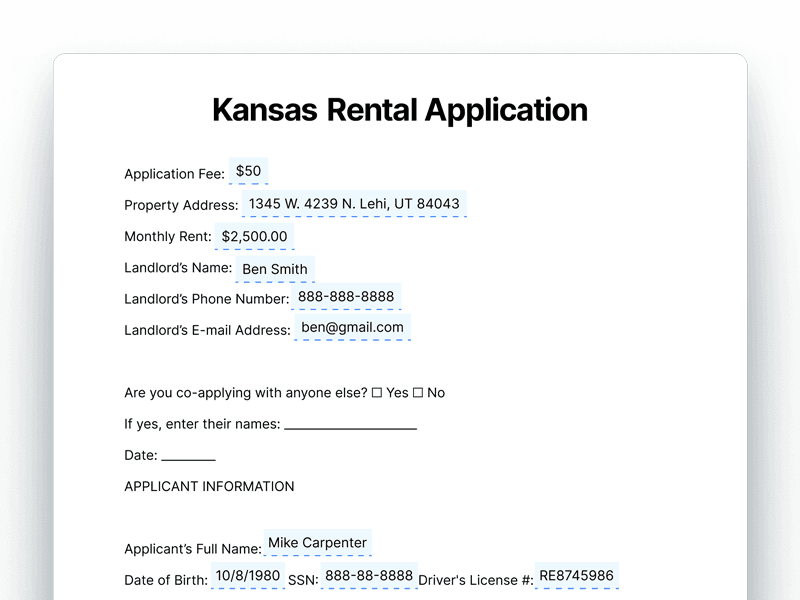
A Kansas rental application serves as a form that allows landlords to collect relevant information about potential tenants to select reliable renters for properties. This screening document typically requests personal details, employment information, and consent for background checks including credit reports. The application helps property owners make informed decisions while ensuring compliance with Kansas fair housing laws.
Download as PDF when complete


(No Ratings Yet)


Kansas Rental Application Laws Overview
Understanding State Regulations
Kansas maintains specific regulations regarding rental applications with unique requirements for deposit limitations and comprehensive fair housing protections. This regulatory framework provides tenant protections while allowing landlords flexibility in screening procedures and fee structures. Property owners must understand these requirements to ensure legal compliance throughout the application process.
Legal Framework Requirements
State law addresses key aspects of the screening process including application fees, security deposit limitations based on property type, and extensive discrimination protections. Property owners must comply with both state and federal regulations while processing tenant applications. Kansas laws provide specific protections that extend beyond federal minimums in several areas.
Application Fee Structure
Fee Regulations and Flexibility
In Kansas, landlords can charge any amount they deem reasonable for application fees used to cover tenant screening costs. No state laws cap these charges, providing landlords flexibility in fee setting based on actual screening expenses. However, application fees remain non-refundable under Kansas regulations.
Fee Purpose and Usage
Application fees help cover comprehensive tenant screening costs including background checks, credit reports, and administrative processing. Professional landlords align fees with actual expenses to demonstrate reasonable business practices while maintaining competitive positioning. Clear fee structures support efficient screening processes.
Non-Refundable Fee Policies
Kansas law establishes application fees as non-refundable, requiring landlords to communicate this policy clearly to prospective tenants. Transparent fee policies prevent disputes while ensuring applicants understand financial commitments before submitting applications. Professional communication protects both parties throughout the screening process.
Security Deposit Regulations
Deposit Limits by Property Type
Landlords can charge maximum security deposits equal to one month’s rent for unfurnished properties under Kansas law. For furnished properties, maximum deposits increase to one and a half months’ rent, reflecting additional property value. These distinctions help balance tenant protection with adequate property security.
Pet Deposit Provisions
When rental agreements allow pets, landlords may demand additional deposits up to half month’s rent as pet deposits. However, total deposits including pet deposits cannot exceed two months’ rent under Kansas regulations. This limitation ensures reasonable deposit requirements while accommodating pet-owning tenants.
Total Deposit Limitations
Kansas law establishes comprehensive deposit limitations with total deposits capped at two months’ rent regardless of property type or pet policies. This protection prevents excessive deposit requirements while ensuring landlords can collect adequate security. Professional deposit policies should balance protection needs with tenant accessibility.
Fair Housing Protections
Kansas Fair Housing Law Coverage
Under Kansas Fair Housing law, discrimination based on protected characteristics remains illegal throughout the application process. Protected categories include race, religion, color, sex, disability, familial status, and national origin. Additionally, Kansas includes ancestry as a protected characteristic beyond federal requirements.
Prohibited Discriminatory Actions
Kansas law prohibits various discriminatory actions including refusing to sell or rent properties after serious offers are made. Changing terms or conditions based on discriminatory factors remains illegal throughout application processing. Discriminatory advertising and misrepresenting property availability also violate Kansas fair housing protections.
Additional Prohibited Practices
Fair housing violations include inducing property sales or rentals by suggesting certain groups are moving into neighborhoods. Denying access to real estate services based on discriminatory characteristics remains prohibited throughout the application process. Different treatment in property use or occupancy based on protected characteristics violates Kansas law.
Disability-Specific Protections
For individuals with disabilities, Kansas law prohibits refusing sales or rentals based on disability status during application review. Landlords cannot prevent necessary modifications for full property enjoyment by disabled tenants. Failure to make reasonable accommodations in policies or practices also violates disability protection requirements.
Application Evaluation Process
Credit Verification Procedures
Landlords obtain credit reports with tenant consent during application review to assess financial responsibility and payment history. Credit verification provides essential information about outstanding debts, payment patterns, and financial management capabilities. Common minimum credit score requirements range between 600-650 for approval consideration.
Income and Employment Verification
Landlords confirm tenants’ employment status and income through pay stubs or direct employer contact during screening. Income verification ensures applicants can meet rental payment obligations consistently throughout their tenancy period. Employment assessment provides stability indicators for successful long-term rental relationships.
Rental History Assessment
Previous landlords receive contact to assess tenants’ rental behavior, payment reliability, and property care standards. These verifications reveal lease compliance records and tenant responsibility indicators throughout previous tenancies. Thorough rental history checks help identify potential issues before approving applications.
Eviction History Investigation
Landlords verify past evictions during application review, typically covering the previous seven years of rental history. This verification process reveals important information about tenant legal compliance and payment reliability patterns. Eviction history assessment helps property owners make informed decisions about tenant suitability.
Criminal Background Review
Landlords confirm disclosed criminal history through relevant databases during the application process. Background verification helps assess safety risks and liability concerns for property management operations. Professional background screening balances safety considerations with fair housing requirements and legal compliance.
Application Response Requirements
Applications receive approval for suitable candidates or rejection with adverse action notices when applications fail to meet established criteria. Clear communication maintains professional relationships throughout the screening process while ensuring compliance with notification requirements. Timely responses demonstrate professional service and respect for applicant investment.
Adverse Action Notice Requirements
When Notices Apply
Landlords must provide adverse action notices when taking actions based on consumer credit report information obtained during screening. These actions include application rejection, requiring additional conditions, or imposing different rental terms during evaluation. Proper notice procedures protect both landlords and applicants throughout the screening process.
Required Notice Components
Adverse action notices must include statements that adverse decisions resulted from consumer credit report information obtained during screening. Notices must provide details about consumer reporting agencies used in evaluation processes. Landlords must declare that they made decisions independently, not the reporting agencies themselves.
Applicant Rights Information
Notices must inform applicants about their rights regarding credit reports used in evaluation decisions. Applicants have rights to obtain credit report copies and dispute inaccurate information within 60 days of notification. These rights ensure fair treatment and accurate information throughout the screening process.
Important Considerations for Kansas Applications
Application Fee Policies
Kansas imposes no caps on application fee amounts that landlords can charge for processing tenant applications. This flexibility allows property owners to set reasonable fees based on actual screening costs and market conditions. Professional landlords should align fees with documented expenses while maintaining competitive positioning.
Security Deposit Guidelines
Property-specific deposit limits help landlords collect appropriate security while protecting tenant interests through reasonable limitations. Unfurnished properties allow one month’s rent deposits while furnished properties permit one and a half months’ rent. Total deposits cannot exceed two months’ rent including pet deposits.
Pet Fee Management
Additional pet fees up to half month’s rent provide flexibility for accommodating pet-owning tenants while protecting property investments. However, total deposit calculations must remain within two months’ rent limitations under Kansas law. Professional pet policies balance accommodation with property protection needs.
Compliance Considerations
Landlords should ensure compliance with both state and local regulations throughout the application process, as local jurisdictions may impose stricter rules. Property owners must stay current with regulatory changes and municipal requirement variations. Comprehensive compliance protects landlords while ensuring professional service delivery.
Best Practices for Kansas Applications
Establishing Professional Screening Procedures
Professional landlords develop comprehensive screening procedures that comply with Kansas’ specific requirements including deposit limitations and extensive fair housing protections. Consistent practices help prevent legal issues while promoting fair treatment throughout the application process. Documented procedures provide clear guidelines for staff and ensure compliance consistency.
Maintaining Legal Compliance
Successful application management requires understanding Kansas’ unique requirements including property-specific deposit limits and comprehensive discrimination protections. Property owners must stay current with state law changes and local ordinance variations that affect screening procedures. Professional compliance protects landlords while ensuring exceptional service delivery.
Professional Communication Standards
Effective application processing includes clear communication about fees, deposit policies, screening procedures, and decision factors with prospective tenants. Professional correspondence builds positive relationships while demonstrating accountability throughout the evaluation process. Transparent communication supports successful landlord-tenant relationships from application through lease execution.
Understanding Kansas rental application requirements helps landlords and tenants navigate the screening process effectively while maintaining legal compliance and professional standards throughout the comprehensive evaluation procedure.
Statutes
- Kan. Stat. § 58-2505 – Termination of tenancy from year-to-year; notice
- Kan. Stat. § 58-2507 – Termination of lease for three months or longer; notice; effect of payment of rent
- Kan. Stat. § 58-2508 – Termination of tenancy of less than three months for nonpayment of rent; notice
- Kan. Stat. § 58-2509 – Notice to quit not necessary, when
- Kan. Stat. § 58-2542 – Jurisdiction of courts; procedure
- Kan. Stat. § 58-2545 – Rental agreement; terms and conditions in absence thereof
- Kan. Stat. § 58-2546 – Same; agreement not signed and delivered given effect by certain actions; limitation on term
- Kan. Stat. § 58-2547 – Same; prohibited terms and conditions; damages
- Kan. Stat. § 58-2550 – Security deposits; amounts; retention; return; damages for noncompliance
- Kan. Stat. § 58-2551 – Disclosures required of landlord or person authorized to enter rental agreement; person failing to comply becomes landlord’s agent for certain purposes
- Kan. Stat. § 58-2553 – Duties of landlord; agreement that tenant perform landlord’s duties; limitations
- Kan. Stat. § 58-2555 – Duties of Tenant
- Kan. Stat. § 58-2557 – Landlord’s right to enter; limitations
- Kan. Stat. § 58-2558 – Use of premises; extended absence of tenant
- Kan. Stat. § 58-2559 – Material noncompliance by landlord; notice; termination of rental agreement; limitations; remedies; security deposit
- Kan. Stat. § 58-2563 – Unlawful removal or exclusion of tenant; diminished services; damages; security deposit
- Kan. Stat. § 58-2564 – Material noncompliance by tenant; notice; termination of rental agreement; limitations; nonpayment of rent; remedies
- Kan. Stat. § 58-2565(c) – Extended absence of tenant; damages; entry by landlord; abandonment by tenant, when; reasonable effort to rent required; termination of rental agreement, when; personal property of tenant; disposition, procedure; proceeds; rights of person receiving property
- Kan. Stat. § 58-2565(d) – Extended absence of tenant; damages; entry by landlord; abandonment by tenant, when; reasonable effort to rent required; termination of rental agreement, when; personal property of tenant; disposition, procedure; proceeds; rights of person receiving property
- Kan. Stat. § 58-2570(a) – Termination of tenancy; notice; holdover by tenant; remedies; notice obligating tenant beyond terms of lease agreement, form
- Kan. Stat. § 58-2570(b) – Termination of tenancy; notice; holdover by tenant; remedies; notice obligating tenant beyond terms of lease agreement, form
- Kan. Stat. § 58-2572 – Certain retaliatory actions by landlord prohibited; remedies; increased rent, when; action for possession, when
- Kan. Stat. § 60-511 – Actions limited to five years
- Kan. Stat. § 60-512 – Actions limited to three years
- Kan. Stat. § 60-2610(a)(1)(2) – Returned Check Fees
- Kan. Stat. § 58-2548 – Notice of date/time of Move-Out Inspection
- K.S.A. § 58-2511 – Subleasing
Sample
FAQs
In Kansas, there is no limit on the maximum application fee that landlords can charge. The fee is typically non-refundable and is used to cover tenant screening costs.
In Kansas, landlords can charge a security deposit of up to one month’s rent for unfurnished properties and one and a half months’ rent for furnished properties. Additionally, if pets are allowed, an extra half month’s rent may be charged.
A Kansas rental application typically collects personal information, employment details, rental history, and consent for a credit check. This information helps landlords evaluate potential tenants.
Under Kansas Fair Housing law, it is illegal to discriminate against potential tenants based on race, religion, color, sex, disability, familial status, national origin, or ancestry. This includes refusing to rent or changing rental terms based on these characteristics.
An adverse action notice must include details that the rejection was based on information from a consumer credit report, the name of the reporting agency, and the applicant’s right to obtain a copy of the report and dispute it within 60 days.
Landlords can verify a potential tenant’s rental history by contacting previous landlords to confirm their rental behavior. Additionally, they can check public records for any eviction history through the Kansas Courts Online Search.
In Kansas, application fees are typically non-refundable. Landlords must clearly state this in writing to prospective tenants.
To check a potential tenant’s credit in Kansas, landlords must obtain written consent from the tenant, which can be included in the rental application. They can then order a credit report to evaluate the tenant’s creditworthiness.