
Washington D.C. Roommate Agreement
A Washington D.C. roommate agreement serves as a contract that allows multiple individuals to share a dwelling. This roommate contract establishes rules and responsibilities for those sharing living space. Also, it ensures that all parties understand their obligations regarding rent, utilities, and shared responsibilities.
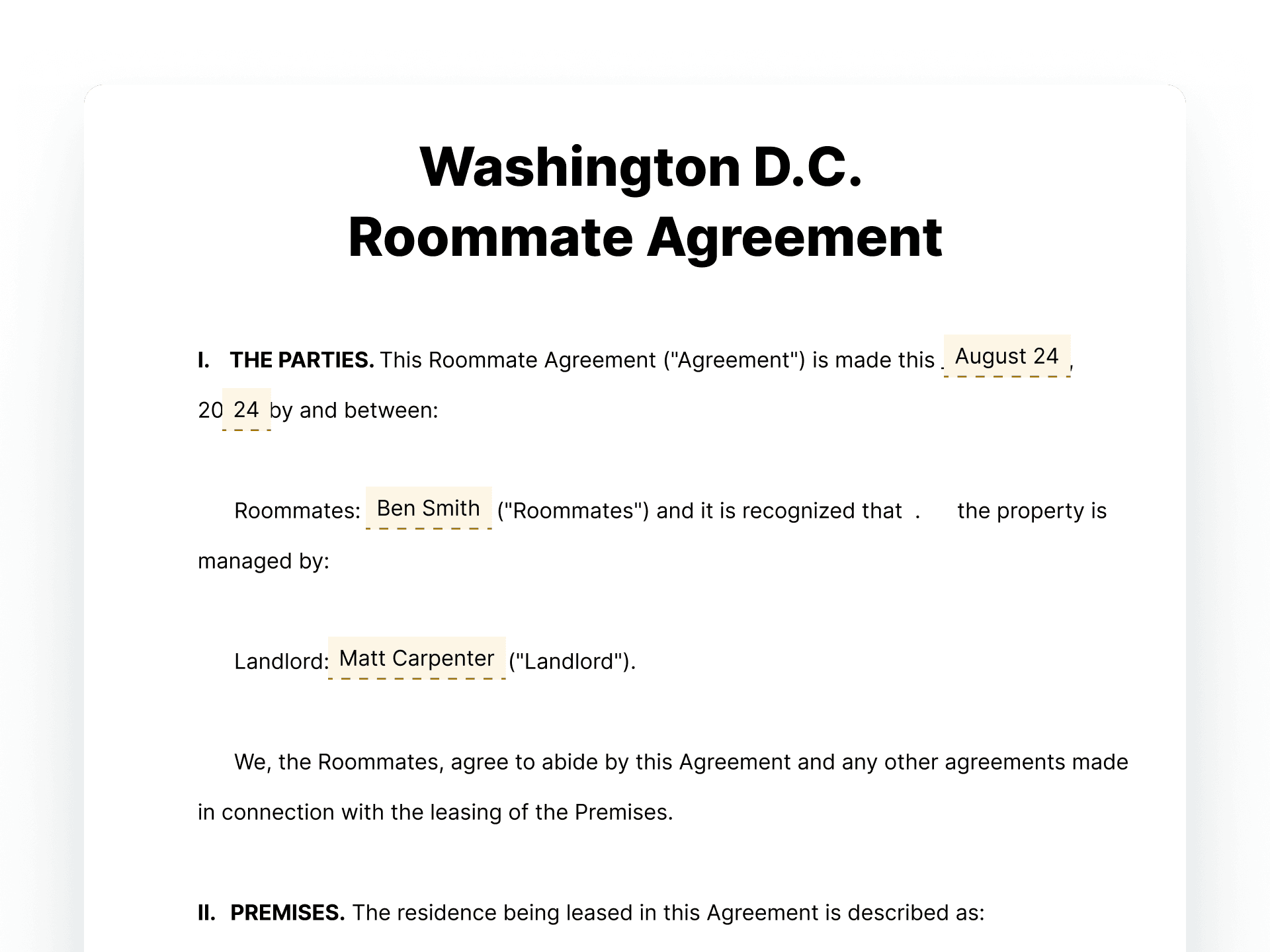


Essential Components of Washington D.C. Roommate Agreement
Parties and Property Information in Room Rental Agreement
The Washington D.C. room rental agreement should identify who makes the contract. Moreover, include the property location and identify the landlord clearly. Additionally, provide current contact information for all signatories in your roommate contract.
Lease Duration Terms for Washington D.C. Room Rental Agreement
You must specify the duration of the existing lease in your roommate contract. Furthermore, outline the length of time the Washington D.C. room rental agreement will remain in effect. Therefore, both timelines help establish clear expectations for all parties involved.
Security Deposit Management in Roommate Contract
The room rental agreement should detail how roommates will divide the security deposit among themselves. Additionally, outline the rules regarding its return or any deductions. Moreover, specify each party’s responsibility for potential damage costs in your Washington D.C. roommate contract.
Financial Arrangements in Washington D.C. Roommate Agreement
Rent Payment Structure for Roommate Contract
State the total rent amount clearly in your Washington D.C. room rental agreement. Moreover, detail how roommates will split the payment among themselves. Additionally, specify due dates and payment methods to prevent confusion and disputes.
Utility Payment Responsibilities in Roomate Agreement
The roommate contract must outline how roommates will divide utility payments among themselves. Furthermore, specify who takes responsibility for making these payments to utility companies. Therefore, clear arrangements prevent service disruptions and billing conflicts.
Rules and Enforcement in Washington D.C. Roommate Contract
Lease Violation Procedures for Room Rental Agreement
You should establish rules for handling violations of the lease or Washington D.C. room rental agreement. Additionally, include procedures for early move-outs when circumstances change. Moreover, specify consequences for breaking established rules or failing to meet obligations.
House Rules in Washington D.C. Room Rental Agreement
List house rules regarding food, cleaning, guests, and other shared responsibilities in your roommate contract. Furthermore, outline expectations for common area maintenance. Additionally, establish quiet hours and visitor guidelines to maintain harmony among residents.
Space Allocation in Washington D.C. Roommate Contract
Room Assignment Process for Room Rental Agreement
The Washington D.C. room rental agreement should specify bedroom assignments for each roommate. Moreover, clarify which areas will remain shared or private. Additionally, define storage space allocation and parking arrangements when applicable.
Common Area Guidelines in Roommate Contract
Define usage rules for shared spaces like kitchens, living rooms, and bathrooms. Furthermore, establish guidelines for personal belongings in common areas. Therefore, clear boundaries prevent territorial disputes in your Washington D.C. room rental agreement.
Legal Documentation for Washington D.C. Roommate Agreement
Signature Requirements in Roommate Contract
All parties must sign and date the Washington D.C. room rental agreement properly. Additionally, attach a completed landlord consent form when required by lease terms. Moreover, provide copies to all signatories for their records and future reference.
Landlord Approval Process for Room Rental Agreement
Obtain written consent from your landlord before finalizing the roommate contract arrangements. Furthermore, verify that the arrangement complies with existing lease terms and building policies. Therefore, proper approval prevents potential legal complications and eviction risks.
Types of Washington D.C. Roommate Agreement Arrangements
Co-tenancy Structure in Roommate Contract
In co-tenancy arrangements, all roommates appear on the same lease document. Additionally, they share equal responsibility for lease terms under the Washington D.C. room rental agreement. Moreover, co-tenants pay rent directly to the same landlord each month.
Co-tenant Rights and Limitations in Room Rental Agreement
Co-tenants cannot evict one another without going through the landlord first. Furthermore, they must address misconduct issues through proper landlord channels. Therefore, understanding these limitations helps prevent conflicts in your Washington D.C. roommate contract.
Subtenancy Arrangements in Washington D.C. Room Rental Agreement
In subtenancy setups, the original tenant acts as landlord to the subtenant. Additionally, the subtenant pays rent directly to the original tenant. Moreover, the original tenant handles the subtenant’s rental issues and can evict for misconduct.
Subletting Requirements for Roommate Contract
Subleasing typically requires the landlord’s permission under most lease agreements. Furthermore, unauthorized subletting can lead to eviction if done without proper consent. Therefore, always obtain written approval before creating subletting arrangements in your Washington D.C. room rental agreement.
At-Will Tenancy in Washington D.C. Roommate Contract
This arrangement operates informally and may occur with or without landlord consent. Additionally, guests who begin acting like tenants face classification changes under D.C. law. Moreover, receiving mail at the address can trigger subtenant status automatically.
Guest Tenancy Rights in Room Rental Agreement
If guests begin acting like tenants, they may assume full rights and responsibilities. Furthermore, landlords can limit the duration of guest stays in lease agreements. Therefore, understanding these rules protects all parties in Washington D.C. room rental agreements.
Liability Issues in Washington D.C. Roommate Agreement
Joint and Several Liability in Roommate Contract
Roommates face “joint and several liability” for original lease terms as co-tenants. Additionally, this means any co-tenant can bear full responsibility for lease violations. Moreover, landlords can seek complete recovery from any individual co-tenant for damages.
Individual Liability Examples in Washington D.C. Room Rental Agreement
The landlord can seek full recovery from any co-tenant for unpaid rent. Furthermore, each roommate becomes financially responsible for the entire rental obligation. Therefore, understanding this liability helps roommates make informed decisions about their roommate contract.
Unauthorized Roommate Consequences in Room Rental Agreement
Different rules apply if a roommate has not signed the original lease document. Additionally, without landlord consent to the Washington D.C. room rental agreement, the original tenant becomes liable. Moreover, unauthorized roommates can create significant legal and financial risks for existing tenants.
Dispute Resolution for Washington D.C. Roommate Contract
Legal Precedence in Room Rental Agreement Disputes
The lease takes precedence over the Washington D.C. room rental agreement in dispute situations. Additionally, this limitation affects the enforceability of house rules regarding shared responsibilities. Moreover, courts generally focus on lease violations rather than roommate contract disputes.
Court Enforceability in Washington D.C. Room Rental Agreement
House rules regarding food sharing, chores, and quiet hours typically lack court enforceability. Furthermore, judges prioritize lease terms over roommate contract provisions in legal proceedings. Therefore, understanding these limitations helps set realistic expectations for your roommate agreements.
Alternative Resolution Options for Roommate Contract
Roommates can consider using neutral third-party services to resolve disagreements not related to lease terms. Additionally, mediation provides a collaborative approach to settling Washington D.C. room rental agreement disputes. Moreover, arbitration offers another structured option for conflict resolution.
Mediation Benefits in Room Rental Agreement
Mediation allows roommates to resolve conflicts collaboratively while preserving relationships. Furthermore, it typically costs less than litigation and provides faster resolution. Therefore, mediators help parties find mutually acceptable solutions within their Washington D.C. roommate contract framework.
Legal Considerations for Washington D.C. Roommate Agreement
District-Specific Requirements in Roommate Contract
Washington D.C. law establishes specific requirements for roommate agreements and rental arrangements. Additionally, understanding these regulations ensures compliance and protects all parties involved. Moreover, consulting legal professionals helps ensure your Washington D.C. room rental agreement meets local standards.
Contract Enforcement and Validity in Room Rental Agreement
Proper execution ensures your roommate contract maintains legal validity under D.C. law. Furthermore, following established procedures protects all parties from potential legal complications. Therefore, attention to detail becomes crucial for successful Washington D.C. room rental agreement implementation and long-term success.
Washington D.C. Roommate Agreement PDF
FAQs
A Washington D.C. roommate agreement is a contract for tenants sharing a dwelling, outlining rules and responsibilities for co-tenants. It ensures that all roommates are on the same lease and share equal responsibilities to the landlord.
Key components include specifying the parties involved, the lease term, security deposit arrangements, rent distribution, utility payment responsibilities, rules for lease violations, house rules, and the division of shared spaces.
Co-tenancy means all roommates are on the same lease and share equal responsibility to the landlord, while subtenancy involves one original tenant acting as the landlord to a subtenant, who may have different rights and responsibilities.
In Washington D.C., roommates are jointly and severally liable for lease terms, meaning any co-tenant can be held responsible for violations. If one roommate fails to pay rent, the landlord can demand full payment from any of the co-tenants.
The roommate agreement should outline the process for early move-out, including any financial responsibilities and how to handle the security deposit. It’s important to discuss this with all roommates to avoid disputes.
Generally, house rules regarding food sharing, chores, and quiet hours are not enforceable in a court of law. The lease takes priority, and disputes not related to the lease may require mediation or arbitration.
The agreement should specify how utility payments will be split among roommates, including who is responsible for sending payments to utility companies. Clear guidelines help prevent misunderstandings.
Yes, a landlord can evict a subtenant for misconduct, even if the original tenant has not consented to the subtenant’s presence. This is because the original tenant remains liable for the subtenant’s actions.