
Washington, DC
A Washington, DC rent-to-own agreement creates a legal arrangement that allows tenants to live in properties while providing them with exclusive options to purchase them at predetermined prices. This Washington, DC lease-to-own agreement facilitates homeownership by enabling tenants to gradually build equity through monthly rent payments. Also, these arrangements offer structured pathways to property ownership throughout the District.
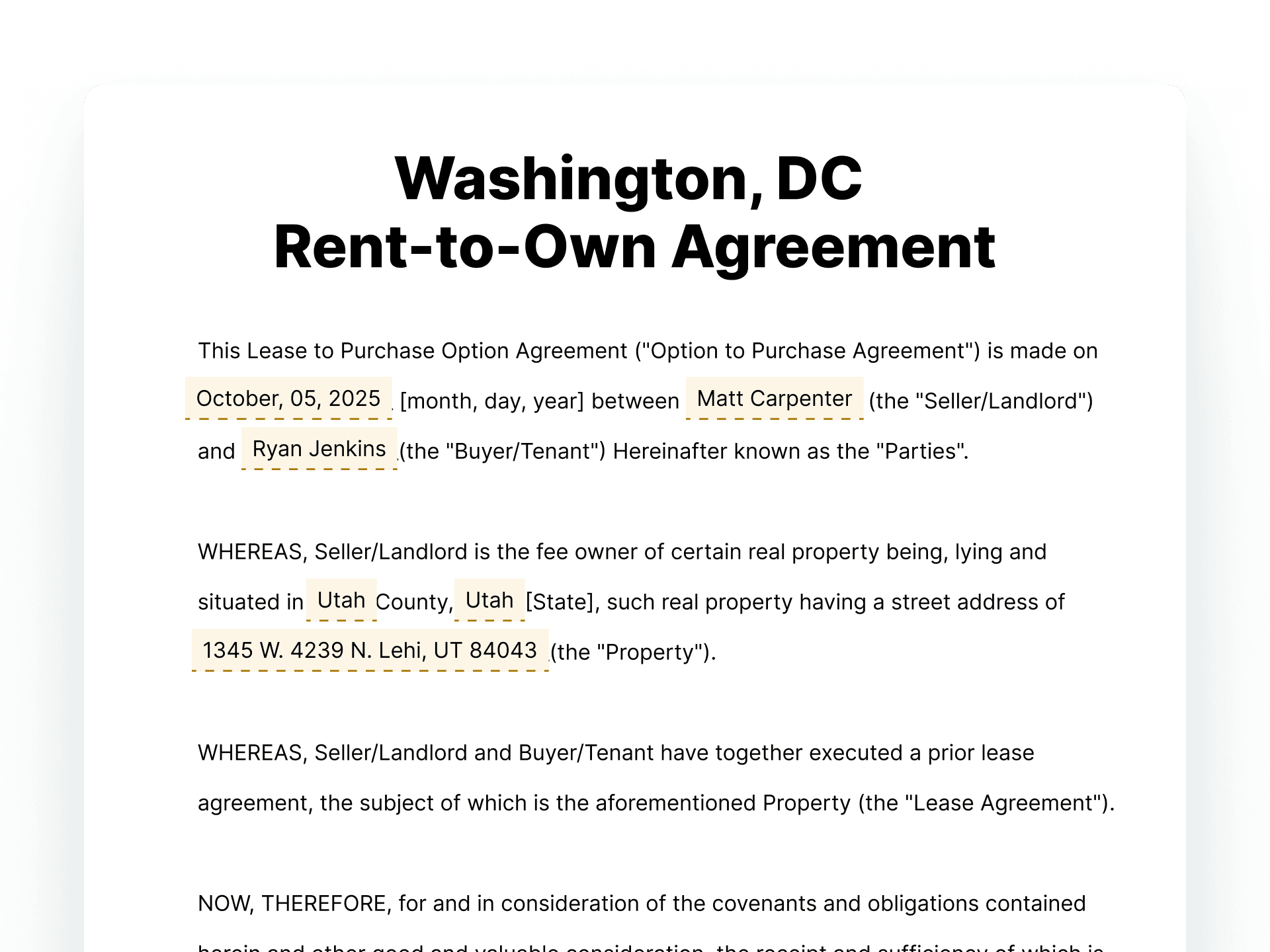


Key Features of Washington, DC Rent-to-Own Agreement Benefits
The Washington, DC rent-to-own agreement includes several key features that benefit both tenants and landlords throughout arrangements. Moreover, these components establish comprehensive frameworks for successful lease-to-own relationships. Therefore, well-structured agreements protect both parties under Washington, DC lease-to-own agreement terms.
Monthly Rent Credit System and Equity Building
One of the primary advantages for tenants involves accumulating portions of monthly rent as credit toward future property purchases under Washington, DC rent-to-own agreement terms. Furthermore, this mechanism allows tenants to build equity over time throughout lease periods. Additionally, accumulated credits make transitions from renting to owning easier for qualified tenants.
Homeownership Transition Benefits and Financial Preparation
The Washington, DC lease-to-own agreement structure helps tenants prepare financially for homeownership while residing in properties. Moreover, extended preparation periods allow tenants to improve credit scores and save additional funds. Therefore, gradual transitions provide better homeownership outcomes for committed tenants.
Application Process for Washington, DC Rent-to-Own Agreement
Rental Application Requirements and Tenant Screening
Before entering Washington, DC rent-to-own agreement contracts, landlords typically require prospective tenants to complete comprehensive rental applications. Furthermore, this application process helps landlords assess the suitability of potential tenants thoroughly. Additionally, proper screening ensures qualified candidates proceed with lease-to-own arrangements successfully.
Tenant Evaluation and Qualification Assessment
The screening process helps landlords evaluate tenant financial stability, credit history, and employment status for Washington, DC lease-to-own agreement candidates. Moreover, comprehensive assessment includes income verification and rental reference checks. Therefore, thorough evaluation ensures qualified tenants enter agreements with strong homeownership potential.
Agreement Details for Washington, DC Rent-to-Own Agreement Components
The Washington, DC rent-to-own agreement generally encompasses various components that outline responsibilities and rights for both parties involved. Furthermore, these detailed provisions ensure clear expectations throughout arrangements. Additionally, comprehensive agreements prevent disputes and protect all parties’ interests.
Maintenance Duties and Property Care Responsibilities
This section specifies responsibilities for both landlords and tenants regarding property upkeep under Washington, DC lease-to-own agreement terms. Moreover, clear maintenance duties ensure clarity on who handles repairs and ongoing care. Therefore, defined responsibilities prevent disputes and protect property values throughout arrangements.
Property Inspection Procedures and Standards
The Washington, DC rent-to-own agreement outlines conditions under which property inspections take place throughout lease periods. Furthermore, these procedures provide frameworks for maintaining property conditions systematically. Additionally, regular inspections protect both parties’ investments and ensure compliance with agreement terms.
Property Appraisal Process and Market Value Determination
This section details property appraisal processes under Washington, DC lease-to-own agreement arrangements, which remain essential for determining market values at purchase times. Moreover, professional appraisals ensure fair pricing for both parties. Therefore, established appraisal procedures protect both landlords and tenants during ownership transfers.
Lease Renewal and Extension Conditions
The Washington, DC rent-to-own agreement describes terms under which leases may be renewed or extended throughout arrangements. Furthermore, these provisions offer tenants possibilities of continuing their residency when needed. Additionally, flexible renewal options accommodate changing circumstances and financial situations.
Termination Terms and Agreement Conclusion
This section provides comprehensive information on how either party can terminate Washington, DC lease-to-own agreement contracts throughout arrangements. Moreover, clear termination terms ensure both parties understand their rights regarding agreement conclusions. Therefore, defined procedures facilitate smooth exits when necessary.
Dispute Resolution Procedures and Conflict Management
The Washington, DC rent-to-own agreement establishes methods for resolving disputes that may arise during agreement terms. Furthermore, these procedures promote fair and efficient resolution processes for all parties. Additionally, established frameworks prevent minor issues from becoming major conflicts.
Purchase Option Execution for Washington, DC Rent-to-Own Agreement
Residential Purchase Agreement Requirements
When tenants decide to exercise purchase options, both parties must sign residential purchase agreements under Washington, DC lease-to-own agreement arrangements. Moreover, these documents formalize property sale terms and ensure legally binding transactions. Therefore, purchase agreements provide comprehensive protection for all parties involved.
Transaction Formalization and Legal Documentation
The Washington, DC rent-to-own agreement completion process ensures transactions remain clearly defined and legally enforceable. Furthermore, proper documentation protects both parties throughout ownership transfer processes. Additionally, formalized agreements comply with District regulations and standards.
Legal Framework for Washington, DC Rent-to-Own Agreement Compliance
District Landlord-Tenant Law Overview
Title 42, Chapters 32-36A and District of Columbia Municipal Regulations Title 14, Chapter 14-3 govern landlord-tenant relationships relevant to Washington, DC lease-to-own agreement arrangements. Furthermore, these comprehensive statutes establish rights and responsibilities for both parties. Additionally, the laws provide essential protection and operational guidelines throughout the District.
Purchase Agreement Laws and Lease-Purchase Regulations
Title 42, Chapter 36B (Lease-Purchase Agreements) and Title 42, Chapter 34, Subchapter IV (Opportunity to Purchase) address purchase agreement laws that apply to Washington, DC rent-to-own agreement ownership transfers. Moreover, these regulations ensure proper documentation and legal compliance during property transactions. Therefore, comprehensive legal frameworks protect both parties throughout ownership transfer processes effectively.
Washington, DC PDF
FAQs
A Washington, DC rent-to-own agreement allows tenants to rent a property with the option to purchase it at a predetermined price. A portion of the monthly rent accumulates as credit towards the future purchase, helping tenants build equity over time.
Key components of a rent-to-own agreement include maintenance duties, property inspections, appraisals, lease renewal conditions, termination terms, and dispute resolution procedures. These elements ensure clarity and protection for both landlords and tenants.
In a rent-to-own agreement, once the tenant decides to exercise the purchase option, both parties sign a residential purchase agreement to formalize the terms of the property sale. This process allows the tenant to transition from renting to owning the property.
Rent-to-own agreements in Washington, DC are governed by Title 42, Chapters 32-36A and District of Columbia Municipal Regulations Title 14, Chapter 14-3 for landlord-tenant laws, and Title 42, Chapter 36B for lease-purchase agreements.
Before entering a rent-to-own agreement, tenants should complete a rental application as required by landlords to assess their suitability. This step is crucial for ensuring that both parties are aligned on expectations and responsibilities.
If a tenant wishes to terminate a rent-to-own agreement, the terms for termination are outlined in the agreement itself. It is important for tenants to review these terms to understand their rights and obligations regarding termination.
Tenants can build equity in a rent-to-own agreement by having a portion of their monthly rent payments credited towards the purchase price of the property. This accumulation of credit allows tenants to gradually invest in the property they are renting.