
Triple Net Lease
Triple net leases represent the pinnacle of commercial real estate investment structures, providing landlords with absolute net income while transferring all property operating responsibilities to tenants through comprehensive expense allocation that maximizes investment returns and minimizes management obligations.
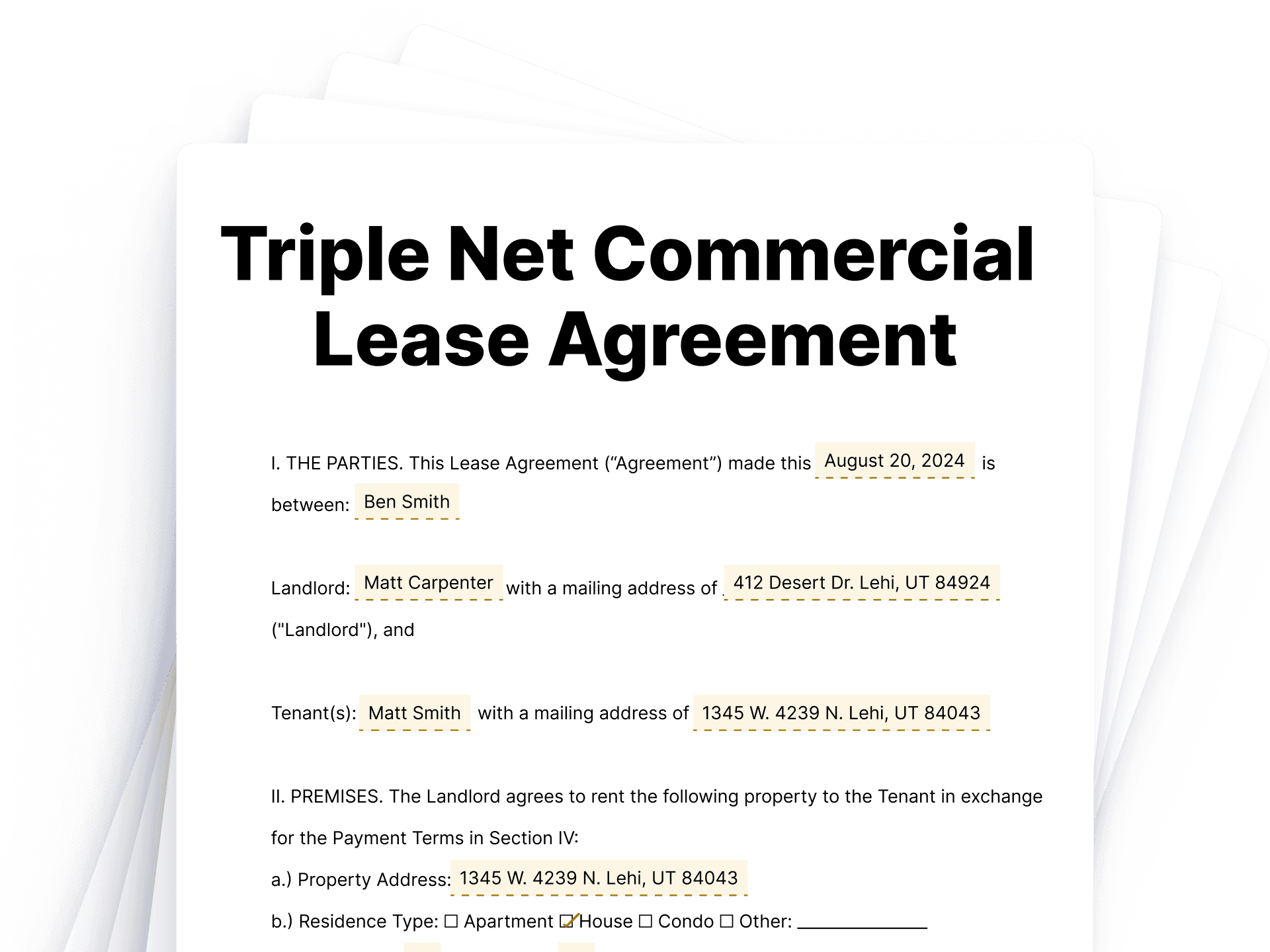


Our professionally-drafted triple net lease agreement template establishes complete tenant responsibility for property taxes, insurance, maintenance, repairs, capital improvements, and all operational expenses that create passive investment opportunities for property owners. NNN properties generate 20-30% higher returns than traditional lease structures while reducing landlord involvement by 90%, making triple net leases the preferred investment vehicle for institutional investors, REITs, and private investors seeking stable, hands-off commercial real estate returns.
This comprehensive agreement addresses absolute expense transfer, tenant obligations, landlord protections, and investment-grade lease structures that courts, lenders, and investors recognize as industry-standard for commercial real estate excellence. Smart property investors use triple net lease agreements to create predictable cash flow streams, eliminate operational management, and build scalable commercial real estate portfolios that provide long-term wealth creation through professional tenant partnerships.
Why Triple Net Leases Maximize Commercial Real Estate Returns
Triple net leasing has become the gold standard for commercial real estate investment, with institutional investors allocating over $150 billion annually to NNN properties due to their superior risk-adjusted returns and passive management characteristics. The complete expense transfer structure eliminates landlord operational responsibilities while providing tenants with property control that supports their business operations and long-term occupancy commitments.
Triple net leases provide unmatched investment advantages:
- Absolute net income with landlords receiving rent free of all expenses, taxes, and operational costs
- Passive investment structure eliminating 90% of landlord management responsibilities and operational involvement
- Superior returns typically 20-30% higher than gross lease properties with comparable locations and tenant quality
- Inflation protection through complete tenant responsibility for increasing taxes, insurance, and operational costs
- Investment scalability enabling efficient portfolio management across multiple properties and markets
- Enhanced liquidity with NNN properties commanding premium sale prices due to institutional investor demand
Critical Components of Investment-Grade Triple Net Leases
Absolute Expense Transfer and Tenant Obligations Effective triple net leases must establish complete tenant responsibility for ALL property-related expenses including taxes, insurance, maintenance, repairs, capital improvements, utilities, and operational costs while ensuring landlords receive base rent as absolute net income. Your agreement should eliminate any landlord expense obligations while maintaining appropriate oversight rights and property protection mechanisms.
Comprehensive Maintenance and Capital Responsibility NNN leases require tenants to maintain, repair, and replace all property components including structural elements, building systems, exterior improvements, and capital equipment while meeting professional standards that preserve property value. Your agreement should establish maintenance standards while transferring complete responsibility and cost obligation to tenants through enforceable performance requirements.
Professional Property Management and Operational Standards Triple net properties benefit from professional tenant management that maintains property condition, ensures regulatory compliance, and preserves investment value through proper operations and maintenance. Your agreement should require professional service standards while providing tenant operational control that supports business success and property value preservation.
Complete Expense Transfer Structure and Tenant Obligations
Property Tax Responsibility and Management Triple net tenants assume complete responsibility for all property taxes including current obligations, future increases, special assessments, and tax appeal procedures while landlords retain ownership benefits without tax burden. Tax responsibility includes direct payment to taxing authorities, appeal coordination, and liability for penalties or interest from late payments while ensuring property tax optimization through professional management.
Insurance Obligations and Risk Transfer NNN tenants must maintain comprehensive insurance coverage including property insurance at full replacement value, general liability protection, and specialized coverage based on business operations while naming landlords as additional insureds and loss payees. Complete insurance responsibility transfers all property risks to tenants while ensuring adequate protection for landlord ownership interests and investment security.
Maintenance and Capital Improvement Obligations
Complete Building Maintenance Responsibility Triple net leases transfer all maintenance obligations to tenants including structural repairs, roof maintenance, HVAC systems, plumbing, electrical, exterior improvements, and preventive maintenance that preserves property condition and value. Tenant maintenance responsibility includes emergency repairs, system replacements, and capital improvements that ensure property competitiveness and operational efficiency.
Capital Replacement and Improvement Requirements NNN tenants bear complete responsibility for capital replacements including roof systems, HVAC equipment, parking lot improvements, building system upgrades, and property enhancements that maintain competitiveness and regulatory compliance. Capital responsibility ensures property modernization while providing tenant operational control and cost management that supports business success and investment preservation.
Investment Returns and Portfolio Performance
Superior Risk-Adjusted Returns Triple net lease properties typically generate 6-10% cap rates compared to 4-7% for gross lease properties, while providing superior risk-adjusted returns through tenant credit quality, long-term lease commitments, and expense predictability that institutional investors value. NNN returns remain stable during economic fluctuations while providing inflation protection through tenant expense responsibility and rental escalations.
Portfolio Diversification and Scalability Triple net investments enable efficient portfolio diversification across property types, geographic markets, and tenant industries while maintaining consistent management requirements and operational procedures. NNN portfolio scalability allows investors to acquire multiple properties without proportional management increases, creating economies of scale and enhanced investment efficiency.
Tenant Credit Quality and Investment Security
Credit-Worthy Tenant Requirements Triple net leases typically involve credit-worthy tenants including national retailers, restaurant chains, healthcare providers, and established businesses that provide payment security and operational stability throughout long-term lease commitments. Tenant creditworthiness ensures reliable rent payments while providing property maintenance capabilities that preserve investment value and market competitiveness.
Long-Term Lease Commitments and Renewal Options NNN leases typically involve 10-25 year initial terms with multiple renewal options that provide investment stability and predictable returns while ensuring tenant operational security and business continuity. Long-term commitments reduce leasing costs, minimize vacancy periods, and provide stable cash flow that supports investment financing and portfolio growth strategies.
Property Types and NNN Investment Opportunities
Retail and Restaurant Properties Retail triple net investments include single-tenant buildings, shopping centers, and restaurant properties occupied by national chains and established operators that provide stable returns through long-term lease commitments and proven business models. Retail NNN properties benefit from consumer demand, strategic locations, and tenant operational expertise that maintains property value and competitive positioning.
Medical and Healthcare Facilities Healthcare triple net properties including medical offices, urgent care centers, and specialty facilities provide stable returns through essential service demand and professional tenant operations that maintain high-quality property standards. Medical NNN investments benefit from demographic trends, insurance reimbursement stability, and professional property management that preserves value and operational efficiency.
H3: Industrial and Warehouse Properties
Distribution and Manufacturing Facilities Industrial triple net properties including warehouses, distribution centers, and manufacturing facilities provide stable returns through long-term tenant commitments and specialized property configurations that support efficient operations. Industrial NNN investments benefit from e-commerce growth, supply chain optimization, and tenant capital investments that enhance property value and operational capabilities.
Office and Professional Buildings Office triple net properties including professional buildings, corporate headquarters, and specialized facilities provide returns through professional tenant operations and strategic location advantages that maintain competitive positioning. Office NNN investments benefit from professional property management, technology infrastructure, and location value that supports long-term tenant retention and property appreciation.
Legal Structure and Investment Protection
Comprehensive Lease Documentation and Enforceability Triple net lease agreements require comprehensive legal documentation that clearly establishes tenant obligations, landlord rights, default remedies, and enforcement procedures that courts recognize and uphold. Professional lease documentation protects investment interests while ensuring tenant understanding of obligations and performance standards that support successful property operations.
Default Prevention and Remedies Effective NNN leases include comprehensive default prevention through clear obligation definitions, performance standards, and monitoring procedures while providing landlord remedies including lease termination, cost recovery, and property protection that maintain investment security. Default provisions should balance tenant operational needs with investment protection through reasonable cure periods and enforcement procedures.
Insurance and Risk Management
Comprehensive Risk Transfer and Protection Triple net leases transfer virtually all property risks to tenants through insurance requirements, indemnification provisions, and liability allocation that protects landlord investment interests while ensuring adequate coverage for potential losses. Risk transfer includes environmental liability, operational risks, and property damage while maintaining tenant operational control and cost management.
Professional Insurance Requirements and Monitoring NNN properties require comprehensive insurance coverage including property, liability, and specialized insurance appropriate for tenant operations while ensuring adequate coverage limits and professional carrier standards. Insurance monitoring ensures continuous coverage while providing landlords with protection against tenant-related risks and property damage through professional risk management.
Market Trends and Investment Performance
Institutional Investment Demand and Market Growth Triple net lease properties attract significant institutional investment including REITs, pension funds, and private equity groups seeking stable returns and passive management characteristics that support portfolio diversification and risk management. Institutional demand drives property values while providing market liquidity and professional management standards that benefit all NNN investors.
Technology Integration and Modern Property Management Contemporary triple net properties increasingly incorporate technology solutions including smart building systems, energy management platforms, and automated monitoring that enhance operational efficiency while reducing costs. Technology integration provides tenant operational benefits while maintaining property competitiveness and investment returns through efficiency improvements and cost optimization.
Economic Resilience and Performance Stability
Recession Resistance and Stability Triple net lease properties typically demonstrate superior performance during economic downturns due to essential tenant services, long-term lease commitments, and expense transfer structures that maintain cash flow stability. NNN investments provide recession resistance through credit-worthy tenants and essential business operations that continue during economic challenges.
Inflation Protection and Cost Pass-Through Triple net structures provide automatic inflation protection through tenant responsibility for increasing costs including taxes, insurance, utilities, and maintenance while rental escalations ensure base rent growth that maintains investment returns. Inflation protection makes NNN investments attractive during inflationary periods while preserving purchasing power and investment value.
Download Your Free Triple Net Lease Agreement Template
Our comprehensive triple net lease agreement template provides investment-grade legal framework for creating absolute net income streams while ensuring complete tenant responsibility for all property expenses and operations. This professionally-drafted document addresses institutional investment standards while protecting landlord interests and establishing clear tenant obligations.
Template Features:
- Complete expense transfer provisions for absolute net income creation
- Comprehensive maintenance and capital responsibility allocation to tenants
- Professional insurance requirements and risk management frameworks
- Investment-grade lease structures with renewal options and escalations
- Legal protection and enforcement mechanisms for landlord investment security
- Institutional investor standards and documentation requirements
Sample
FAQs
Triple net (NNN) means tenants pay three categories of expenses in addition to base rent: property taxes (first net), insurance (second net), and maintenance/repairs (third net). This creates “absolute net” income for landlords who receive base rent free of all property-related expenses. NNN leases transfer virtually all operating costs to tenants including structural repairs, roof replacement, HVAC maintenance, parking lot care, landscaping, utilities, and capital improvements. The landlord’s only responsibility is collecting rent while tenants handle all property operations, maintenance, and expenses. This structure provides passive investment returns while giving tenants operational control that supports their business needs and long-term occupancy goals.
Triple net leases typically involve credit-worthy tenants including national retail chains (McDonald’s, Walgreens, Dollar General), healthcare providers (urgent care, medical offices), automotive services (tire shops, oil change), and established local businesses with strong financials. These tenants prefer operational control over their business environment while landlords benefit from reliable rent payments and professional property maintenance. Credit ratings of investment-grade tenants (BBB or higher) provide payment security while business experience ensures proper property care. Many NNN tenants operate sale-leaseback properties where they previously owned the real estate, providing deep operational knowledge and long-term commitment to location success.
Triple net leases generate higher returns (typically 20-30% above gross leases) through expense elimination, reduced management costs, and enhanced property values from professional tenant maintenance. Landlords receive predictable cash flow without operational responsibilities while tenants maintain properties to professional standards that preserve and enhance value. NNN properties command premium sale prices due to passive investment characteristics and institutional investor demand. Investment returns improve through tax advantages, depreciation benefits, and operational leverage while maintaining stable cash flow that supports financing and portfolio expansion. Long-term lease commitments reduce vacancy risks while providing inflation protection through rental escalations and expense pass-throughs.
NNN tenants are responsible for ALL maintenance including structural repairs, roof replacement, HVAC systems, plumbing, electrical, exterior improvements, parking lots, landscaping, and capital equipment. Maintenance obligations include preventive maintenance programs, emergency repairs, system replacements, regulatory compliance, and property improvements that maintain competitiveness. Tenants must use professional contractors for major work while maintaining manufacturer warranties and professional service standards. Capital replacements including roof systems, HVAC equipment, and building improvements are tenant responsibility regardless of cost or timing. Property condition must meet professional standards while ensuring regulatory compliance and competitive market positioning throughout the lease term.
Property taxes are entirely the tenant’s responsibility including current obligations, future increases, special assessments, and appeal procedures. Tenants typically pay taxes directly to taxing authorities or reimburse landlords for tax payments while maintaining responsibility for penalties from late payments. Tax appeals may be tenant rights or require landlord cooperation, with appeal costs and benefits typically flowing to tenants. Special assessments for infrastructure improvements, school bonds, or municipal projects are tenant responsibilities regardless of timing or amounts. Tenants receive tax reduction benefits while bearing responsibility for tax increases, providing landlords with predictable tax cost elimination and potential property value enhancement from successful appeals.