
Net Lease
Commercial net leasing provides property owners with stable, long-term investment returns. Furthermore, it transfers operating responsibilities to tenants through comprehensive expense allocation structures. Additionally, this approach enhances property management efficiency and investment predictability. Moreover, our professionally-drafted commercial net lease agreement template addresses single net, double net, and triple net lease arrangements.
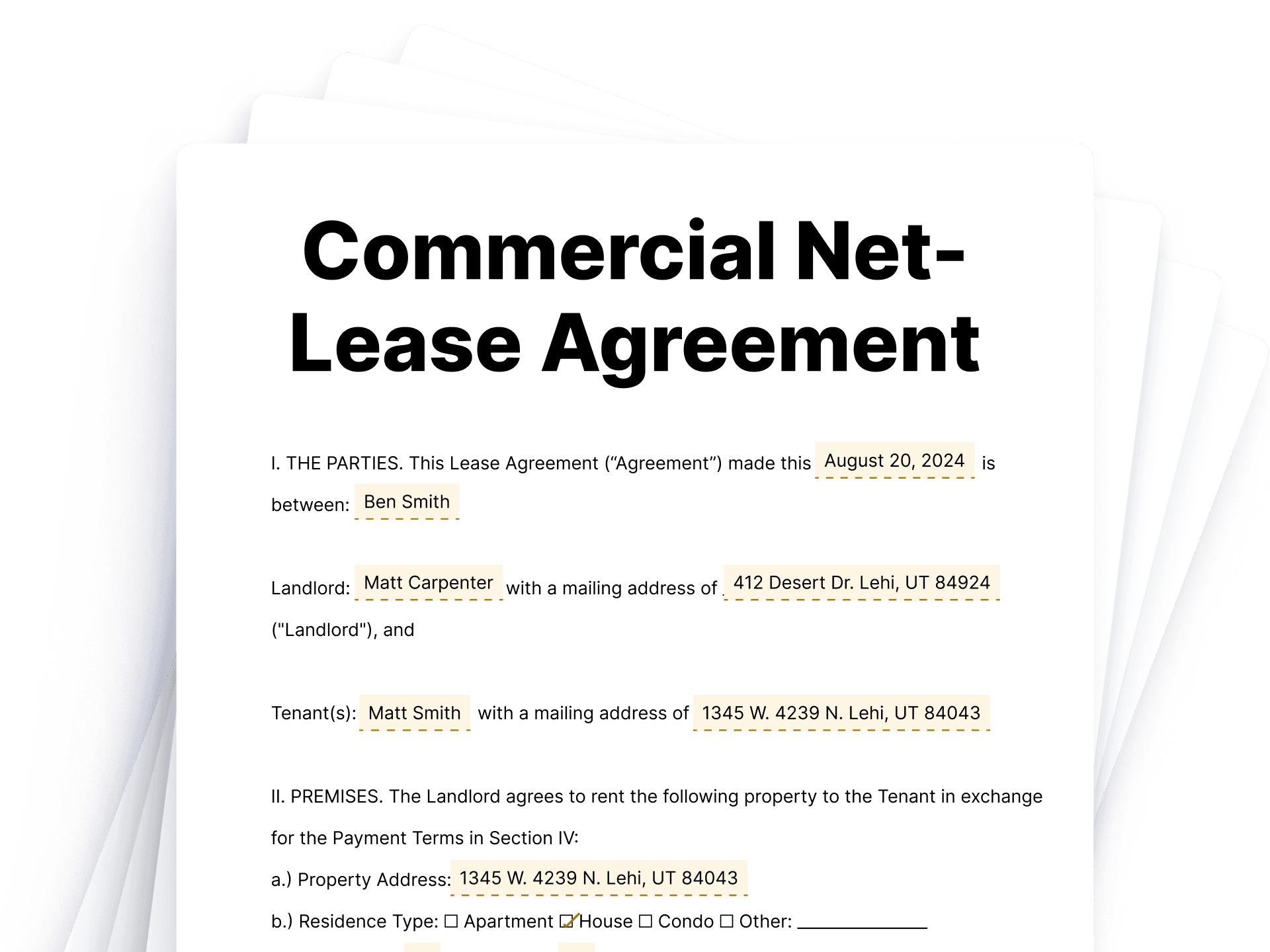


Net lease properties generate 15-25% higher investor returns compared to gross lease structures. Furthermore, they reduce landlord management responsibilities by 60-80%. Therefore, net leasing has become the preferred structure for commercial real estate investment and ownership. Additionally, this customizable agreement addresses expense allocation, maintenance responsibilities, tax obligations, and insurance requirements that institutional investors recognize as industry-standard.
Why Commercial Net Leases Maximize Investment Returns
Commercial net leasing has become the dominant structure for institutional-grade commercial real estate investments. Furthermore, over 80% of commercial properties utilize some form of net lease arrangement. Additionally, these structures transfer operating responsibilities to tenants while providing landlords with predictable returns. Moreover, net lease structures eliminate the uncertainty of operating expense fluctuations.
Essential Investment Advantages
Commercial net leases provide several key investment advantages:
Predictable Cash Flow: Base rent plus tenant-paid operating expenses create stable returns. Furthermore, this structure provides consistent income streams for investors.
Reduced Management Burden: Daily operations, maintenance, and compliance transfer to tenants. Additionally, landlords experience significantly reduced day-to-day management responsibilities.
Enhanced Property Value: Professional tenant maintenance and long-term lease commitments increase property values. Moreover, tenants have financial incentives to maintain properties properly.
Inflation Protection: Tenant responsibility for increasing taxes, insurance, and maintenance costs protects against inflation. Therefore, landlords maintain purchasing power over time.
Investment-Grade Returns: Returns typically run 15-25% higher than gross lease properties with comparable risk profiles. Additionally, these returns often exceed market averages for commercial real estate.
Portfolio Scalability: Standardized tenant responsibilities enable efficient management of multiple properties. Furthermore, investors can build larger portfolios without proportional increases in management complexity.
Critical Components of Effective Net Lease Agreements
Clear Expense Allocation and Responsibility Matrix
Effective net lease agreements must precisely define which expenses are tenant responsibilities. Furthermore, they must clearly distinguish landlord obligations from tenant duties. Additionally, particular attention should focus on structural repairs, capital improvements, and extraordinary maintenance. Moreover, these distinctions prevent disputes without proper allocation.
Agreements should establish comprehensive expense categories while maintaining appropriate boundaries. Furthermore, clear responsibility matrices protect both parties from unexpected costs. Additionally, well-defined allocations enhance property management efficiency.
Comprehensive Maintenance Standards and Procedures
Net lease agreements require detailed maintenance specifications including preventive maintenance schedules. Furthermore, they must outline professional service requirements and performance standards. Additionally, these standards ensure property value preservation while clearly establishing tenant obligations.
Agreements should balance tenant operational control with property protection. Moreover, appropriate maintenance standards provide oversight rights for landlords. Therefore, both parties benefit from clear maintenance frameworks.
Tax and Insurance Compliance Frameworks
Commercial net leases must address complex tax payment procedures and insurance requirements. Furthermore, they need compliance monitoring that protects property ownership interests. Additionally, tenant understanding of financial obligations and payment mechanisms is essential.
Agreements should establish clear procedures for tax appeals and insurance claims. Moreover, compliance verification protects all parties’ interests. Therefore, comprehensive frameworks prevent costly disputes.
Net Lease Types and Expense Allocation Structures
Single Net Lease (N) – Property Tax Responsibility
Single net leases require tenants to pay property taxes in addition to base rent. Furthermore, landlords retain responsibility for insurance and maintenance costs. Additionally, this structure provides moderate expense transfer suitable for properties where landlords maintain active management roles.
Single net structures work well for multi-tenant properties. Moreover, they suit situations where landlords prefer operational control while transferring tax burden fluctuations. Therefore, this arrangement balances control and expense management.
Double Net Lease (NN) – Tax and Insurance Responsibility
Double net leases transfer property taxes and insurance costs to tenants. Furthermore, landlords retain maintenance and repair responsibilities in these arrangements. Additionally, this creates balanced arrangements for properties requiring professional management but benefiting from expense predictability.
Double net structures provide moderate risk transfer while maintaining landlord involvement. Moreover, they support property operations and value preservation activities. Therefore, this structure appeals to both active landlords and cost-conscious tenants.
Triple Net Lease (NNN) – Comprehensive Expense Transfer
Complete Operational Responsibility Transfer
Triple net leases transfer virtually all operating expenses to tenants. Furthermore, these include property taxes, insurance, maintenance, repairs, and utilities. Additionally, NNN leases create absolute net income streams for landlords while providing tenants with operational control.
NNN leases represent the most comprehensive expense transfer structure. Moreover, they suit single-tenant properties and long-term investment strategies. Therefore, these arrangements maximize landlord returns while minimizing management responsibilities.
Absolute Net Lease Considerations
Absolute net leases extend beyond triple net structures to include structural repairs. Furthermore, they cover roof replacement and extraordinary maintenance typically retained by landlords. Additionally, these arrangements create complete expense transfer suitable for sale-leaseback transactions.
Absolute net leases serve institutional investment strategies requiring absolute return predictability. Moreover, they eliminate virtually all landlord expenses and responsibilities. Therefore, these structures appeal to passive investors seeking maximum returns.
Property Tax Management and Appeal Procedures
Tax Payment Structures and Procedures
Commercial net leases require clear tax payment mechanisms including direct tenant payment. Furthermore, they may involve landlord collection and payment or escrow arrangements. Additionally, these procedures ensure timely tax payments while maintaining appropriate oversight.
Tax payment procedures should address late payment consequences and appeal rights. Moreover, they must establish communication requirements between parties. Therefore, clear procedures prevent tax-related disputes and penalties.
Tax Appeal Rights and Cost Allocation
Property tax appeals can significantly impact tax obligations. Furthermore, they require clear allocation of appeal rights and cost responsibilities. Additionally, benefit sharing between landlords and tenants must be addressed appropriately.
Agreements should establish procedures for tax appeals while ensuring appropriate cost-benefit allocation. Moreover, they should maintain property tax optimization opportunities for both parties. Therefore, well-structured appeal provisions benefit all stakeholders.
Assessment Increases and Tax Escalation Management
Base Year Establishment and Escalation Procedures
Net lease tax provisions typically establish base year tax amounts. Furthermore, tenants become responsible for increases above baseline levels. Additionally, clear calculation methods and escalation procedures ensure fair allocation while protecting against excessive tax burden shifts.
Base year establishment should reflect current market conditions. Moreover, it should provide predictable escalation frameworks for future planning. Therefore, appropriate base year selection benefits both parties.
Special Assessment and Capital Improvement Taxation
Special assessments and capital improvement taxes require specific allocation procedures. Furthermore, these must consider benefit distribution, payment timing, and long-term value impacts. Additionally, both landlords and tenants should understand their responsibilities for these exceptional charges.
Agreements should address special assessment responsibilities while ensuring appropriate cost allocation. Moreover, allocation should be based on benefit realization and property value enhancement. Therefore, fair special assessment procedures protect both parties’ interests.
Insurance Requirements and Risk Management
Comprehensive Insurance Coverage Specifications
Net lease insurance requirements must address property coverage and liability protection. Furthermore, they should include business interruption insurance and specialized coverage based on property type. Additionally, tenant operations must be considered when determining appropriate coverage levels.
Insurance specifications should reflect property values and operational risks. Moreover, they should meet industry standards while providing comprehensive protection against potential losses. Therefore, appropriate insurance requirements protect both landlord and tenant interests.
Additional Insured and Loss Payee Designations
Commercial net leases typically require landlords to be named as additional insureds on liability policies. Furthermore, they should be designated as loss payees on property insurance. Additionally, these designations ensure direct coverage access while maintaining appropriate claim handling procedures.
Agreements should specify insurance designations while establishing claim procedures. Moreover, they should ensure settlement coordination between parties. Therefore, proper designations streamline insurance claims and protect all parties.
Insurance Claims and Settlement Procedures
Claim Handling and Restoration Obligations
Insurance claims in net lease arrangements require clear procedures for claim filing. Furthermore, they need settlement negotiation and restoration coordination protocols. Additionally, these procedures ensure efficient claim resolution while maintaining property operation.
Agreements should establish claim handling procedures while ensuring appropriate restoration standards. Moreover, they should include timeline management for restoration activities. Therefore, clear claim procedures minimize disruption and protect property values.
Business Interruption and Rent Continuation
Business interruption insurance and rent continuation during casualty repairs require specific provisions. Furthermore, these must address rent payment obligations and insurance proceeds allocation. Additionally, operational continuity during property restoration periods needs protection.
Agreements should address interruption scenarios while ensuring appropriate financial protection. Moreover, they should provide restoration incentives for timely completion. Therefore, business interruption provisions protect both parties during casualty events.
Maintenance Responsibilities and Property Management
Preventive Maintenance Programs and Standards
Net lease properties require comprehensive preventive maintenance programs. Furthermore, these include HVAC servicing, roof maintenance, and parking lot care. Additionally, building system upkeep preserves property value while ensuring operational efficiency.
Agreements should establish maintenance standards while providing tenant operational flexibility. Moreover, they should enable cost management capabilities for tenants. Therefore, appropriate maintenance programs benefit both parties.
Major Repair and Replacement Responsibilities
Net lease agreements must clearly allocate responsibility for major repairs. Furthermore, these include HVAC replacement, roof restoration, and structural repairs. Additionally, building system upgrades can involve significant costs and property impact.
Agreements should establish clear responsibility boundaries while ensuring appropriate coordination. Moreover, they should include approval procedures for major expenditures. Therefore, clear allocation prevents disputes over expensive repairs.
Capital Improvements and Building Modifications
Tenant Improvement Rights and Approval Procedures
Net lease tenants typically have broad improvement rights that support business operations. Furthermore, these require appropriate landlord approval procedures that protect property value. Additionally, lease compliance must be maintained throughout improvement processes.
Agreements should balance tenant operational needs with property protection. Moreover, they should include reasonable approval procedures and improvement standards. Therefore, appropriate improvement frameworks benefit both parties.
Building Upgrade Responsibilities and Cost Allocation
Building-wide improvements including accessibility upgrades require clear cost allocation. Furthermore, energy efficiency improvements and system modernization need benefit sharing procedures. Additionally, fair distribution of improvement costs and value benefits must be ensured.
Agreements should address upgrade responsibilities while ensuring appropriate coordination. Moreover, they should include cost management procedures for major improvements. Therefore, clear upgrade provisions protect both parties’ interests.
Technology Integration and Modern Property Management
Smart Building Systems and Operational Efficiency
Modern commercial properties increasingly feature smart building technologies. Furthermore, these include energy management systems, security platforms, and operational monitoring. Additionally, these technologies enhance efficiency while requiring clear responsibility allocation.
Net lease agreements should address technology responsibilities while ensuring appropriate access. Moreover, they should include cost allocation for advanced building systems. Therefore, technology integration enhances property value and operational efficiency.
Property Management Software and Reporting Systems
Contemporary net lease arrangements benefit from integrated property management software. Furthermore, these systems automate expense tracking, maintenance scheduling, and compliance monitoring. Additionally, they provide transparent reporting for both landlords and tenants.
Agreements should accommodate technology integration while ensuring appropriate data sharing. Moreover, they should provide system access for effective property management. Therefore, modern software enhances lease administration and compliance.
Energy Efficiency and Sustainability Requirements
Green Building Standards and Environmental Compliance
Commercial net leases increasingly incorporate sustainability requirements. Furthermore, these include energy efficiency standards and environmental compliance obligations. Additionally, green building certifications enhance property value while ensuring environmental responsibility.
Agreements should address sustainability obligations while providing appropriate cost allocation. Moreover, they should include compliance frameworks for environmental requirements. Therefore, sustainability provisions benefit both parties and the community.
Utility Management and Conservation Programs
Net lease properties benefit from comprehensive utility management including conservation programs. Furthermore, efficiency monitoring and cost optimization strategies reduce operational expenses. Additionally, these programs maintain operational standards while reducing environmental impact.
Agreements should encourage conservation while ensuring appropriate utility responsibility allocation. Moreover, they should include cost management procedures for utility expenses. Therefore, conservation programs benefit both parties and the environment.
Lease Term Management and Investment Optimization
Long-Term Lease Structures and Renewal Options
Net lease investments typically involve long-term lease commitments ranging from 10-25 years. Furthermore, multiple renewal options provide investment stability while ensuring tenant operational security. Additionally, these structures enhance property marketability to investors.
Agreements should establish renewal procedures while maintaining market-appropriate rent adjustments. Moreover, they should continue expense responsibility allocation through renewal periods. Therefore, long-term structures benefit both parties.
Rent Escalation and Market Adjustment Mechanisms
Net lease rent escalations typically include fixed annual increases or CPI adjustments. Furthermore, periodic market reviews ensure rental income keeps pace with inflation. Additionally, these mechanisms maintain investment returns and market competitiveness.
Agreements should establish escalation mechanisms while ensuring predictable returns. Moreover, they should include market-appropriate adjustments for changing conditions. Therefore, appropriate escalation protects both parties’ interests.
Investment Exit Strategies and Property Disposition
Sale and Transfer Procedures
Net lease properties offer enhanced marketability to investors seeking stable returns. Furthermore, minimal management responsibilities increase buyer appeal. Additionally, clear sale procedures and lease assignment provisions maintain investment characteristics.
Agreements should address transfer procedures while ensuring continued lease performance. Moreover, they should include investor protection provisions. Therefore, clear transfer procedures enhance property marketability.
Tenant Assignment and Subletting Rights
Net lease tenants may require assignment or subletting capabilities for business expansion. Furthermore, operational changes or strategic restructuring may necessitate these options. Additionally, appropriate approval procedures maintain property investment characteristics.
Agreements should balance assignment flexibility with investment protection. Moreover, they should include appropriate approval criteria and financial standards. Therefore, reasonable assignment provisions accommodate legitimate business needs.
Template Features and Download
Comprehensive Commercial Net Lease Agreement Template
Our comprehensive commercial net lease agreement template provides essential legal framework for all net lease structures. Furthermore, it ensures optimal investment returns and clear expense allocation. Additionally, this professionally-drafted document addresses single net, double net, and triple net arrangements.
Key Template Components
Complete Expense Allocation: Matrices for all net lease types with clear responsibility definitions.
Comprehensive Maintenance: Responsibility and standards specifications for all property types.
Professional Tax Procedures: Payment and appeal procedure frameworks that protect all parties.
Insurance Requirements: Risk management provisions that ensure adequate protection.
Technology Integration: Modern property management accommodation for contemporary needs.
Investment-Grade Structures: Lease structures and renewal option procedures that institutional investors recognize.
Conclusion
Commercial net lease agreements provide superior investment returns while transferring operational responsibilities to tenants. Furthermore, these structures enhance property management efficiency and investment predictability. Additionally, proper documentation protects both parties while maximizing returns. Therefore, comprehensive net lease agreements represent the optimal structure for commercial real estate investment and ownership.
FAQs
Single net leases require tenants to pay property taxes plus base rent, while landlords cover insurance and maintenance costs. Double net leases add insurance responsibility to tenant obligations, with landlords retaining maintenance and repair costs. Triple net leases transfer virtually all operating expenses to tenants including taxes, insurance, and maintenance, with landlords receiving absolute net rental income. Absolute net leases extend beyond triple net to include structural repairs and extraordinary maintenance typically retained by landlords. The choice depends on investment strategy, property type, and desired management involvement, with triple net leases providing maximum expense transfer and investment return predictability.
Property taxes in net leases are typically paid directly by tenants or collected by landlords and paid on tenants’ behalf, with clear procedures for tax bill delivery, payment timing, and appeal coordination. Many net leases establish base year tax amounts with tenants responsible for increases above baseline levels, protecting landlords from tax escalation while providing tenants with cost predictability. Tax appeal rights may be allocated to tenants, landlords, or require joint decision-making, with appeal costs and benefits shared appropriately. The agreement should specify tax payment procedures, appeal rights, and cost allocation for special assessments while ensuring compliance with local tax payment requirements and deadlines.
Commercial net lease tenants typically must maintain comprehensive property insurance covering full replacement value, general liability coverage ($1-5 million), and specialized insurance based on business operations. Landlords are usually named as additional insureds on liability policies and loss payees on property insurance, ensuring direct coverage access and claim involvement. Insurance requirements should include A.M. Best rating minimums, annual certificate delivery, and 30-day cancellation notice provisions. The agreement should specify coverage amounts, deductible responsibilities, and claim handling procedures while ensuring adequate protection for both parties and compliance with lender requirements for financed properties.
Maintenance responsibility allocation varies by net lease type, with single and double net leases typically retaining landlord responsibility for maintenance while triple net leases transfer maintenance obligations to tenants. Structural repairs, roof replacement, and major building systems may be allocated differently based on lease negotiation and property characteristics. The agreement should clearly specify maintenance responsibilities, performance standards, and approval procedures for major repairs while establishing preventive maintenance requirements that preserve property value. Emergency repair procedures, contractor approval requirements, and maintenance record keeping should be addressed to ensure proper property care and compliance monitoring.
Net lease tenants typically have broad improvement rights that support business operations, though significant alterations usually require landlord approval to protect property value and ensure lease compliance. Improvement approval procedures should address architectural review, permit acquisition, contractor requirements, and restoration obligations upon lease termination. The agreement should specify improvement ownership, removal requirements, and cost responsibilities while balancing tenant operational needs with property protection. Capital improvements that benefit the entire property may require cost sharing or rent adjustment negotiations, while tenant-specific improvements typically remain tenant responsibility and ownership.