
Work Order Request
A work order request is a formal document or electronic submission initiating maintenance activities by describing specific problems requiring attention. This request includes detailed issue descriptions, property locations, requestor information, urgency classifications, and preferred scheduling details. Tenants, property managers, or maintenance staff submit these requests triggering systematic evaluation, prioritization, assignment, and tracking processes ensuring all maintenance needs receive appropriate attention.


(No Ratings Yet)
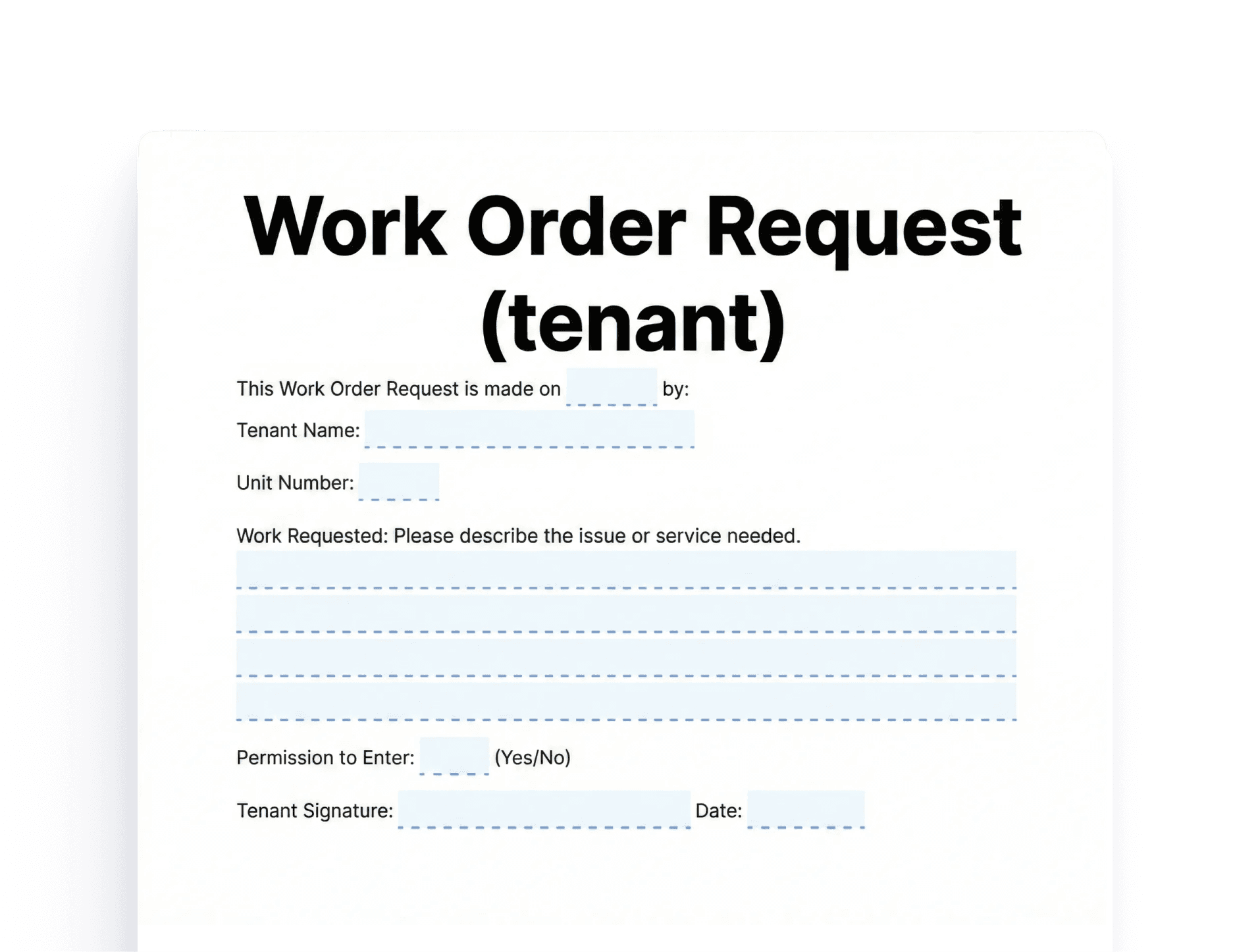
What Is a Work Order Request?
The request serves multiple critical functions in property maintenance management. First, it creates official records of reported problems establishing accountability for response timing. Second, it provides detailed information helping maintenance teams understanding issues before arriving on-site. Third, it enables systematic prioritization ensuring urgent problems receive immediate attention while routine requests get scheduled appropriately. Finally, it establishes documentation supporting dispute resolution if questions arise about maintenance responsiveness or repair quality.
Common Request Sources
Tenant-Submitted Requests
Tenants represent the primary source of work order requests reporting problems discovered during daily property use. These requests range from emergency situations like burst pipes or heating failures to routine issues like dripping faucets or burnt-out light bulbs. Additionally, tenants report cosmetic concerns, functionality problems, or safety hazards requiring landlord attention.
Provide multiple request submission methods accommodating tenant preferences including phone calls, email, online portals, mobile apps, or in-person visits. Easy accessible request systems encourage prompt reporting preventing minor problems from escalating. Furthermore, clear submission processes demonstrate professionalism and responsiveness improving tenant satisfaction.
Inspection-Generated Requests
Routine property inspections identify maintenance needs requiring attention before tenants notice problems. Property managers conducting periodic walk-throughs discover issues like roof damage, exterior deterioration, system malfunctions, or safety hazards. Additionally, move-out inspections reveal repair needs preparing properties for new tenants.
Inspection-generated requests enable proactive maintenance preventing problems from worsening. Systematic inspection schedules ensure all properties receive regular attention identifying maintenance needs consistently. Furthermore, inspection documentation supports capital improvement planning by tracking property condition trends over time.
Preventive Maintenance Programs
Scheduled preventive maintenance generates work order requests for routine servicing activities. HVAC annual maintenance, gutter cleaning, pest control treatments, and filter replacements create predictable request patterns. Additionally, equipment manufacturer recommendations generate scheduled maintenance ensuring warranty compliance.
Preventive maintenance requests differ from reactive repairs by following predetermined schedules rather than responding to failures. This proactive approach extends equipment lifespan and prevents emergency breakdowns. Furthermore, systematic preventive programs demonstrate professional property management protecting long-term investment value.
Emergency Situations
Emergency work order requests demand immediate attention for situations threatening property damage, tenant safety, or habitability. Examples include active water leaks, gas odors, electrical sparks, security breaches, or heating failures during extreme weather. These urgent requests bypass normal processing receiving highest priority.
Establish clear emergency request channels ensuring tenants know how to report urgent problems immediately. After-hours emergency numbers or automated emergency response systems provide tenant access regardless of timing. Additionally, define emergency criteria clearly helping tenants distinguishing genuinely urgent situations from routine problems.
Essential Request Components
Detailed Problem Description
Work order requests must include specific problem descriptions explaining exactly what’s wrong, observable symptoms, and any relevant history. Instead of “toilet broken,” specify “toilet in unit 2B continuously running, refill valve appears stuck, tenant reports problem started yesterday.” This detail helps maintenance staff understanding issues and bringing appropriate tools.
Include information about problem severity, frequency, and tenant impact. A leak dripping occasionally differs dramatically from continuous water flow. Additionally, note any temporary solutions tenants implemented like shutting off water supplies or using space heaters. Furthermore, describe any unusual circumstances like recent work in affected areas that might provide problem context.
Accurate Location Information
Provide complete location details including property addresses, unit numbers, specific rooms, and affected fixtures or systems. For multi-unit properties, general building addresses prove insufficient. Specify “Oakwood Apartments, Building C, Unit 301, master bathroom, shower faucet” ensuring maintenance teams reach correct locations efficiently.
Include access information noting whether tenants will be present, if lockbox access is available, or if property manager assistance is necessary. Additionally, document any access restrictions like pet presence requiring advance notice or specific entry times tenant schedules allow. Furthermore, note if multiple keys or special tools are needed accessing particular areas.
Contact Information
Document complete requestor contact information including names, phone numbers, email addresses, and preferred contact methods. For tenant requests, note whether tenants prefer calls, texts, or emails for scheduling and updates. Additionally, include backup contacts if primary requestors might be unavailable.
Specify availability for scheduling including work hours, days off, or times when property access is restricted. This information enables efficient scheduling minimizing coordination attempts. Furthermore, note any communication preferences like advance notice requirements or after-hours contact restrictions.
Urgency Classification
Assign urgency levels helping maintenance teams prioritizing work appropriately. Common classifications include Emergency (immediate response required), Urgent (within 24 hours), High Priority (2-3 days), Medium Priority (1 week), and Low Priority (as scheduling allows). Clear classifications ensure critical problems receive necessary immediate attention.
Base urgency classifications on objective criteria like safety hazards, habitability impacts, property damage potential, or tenant disruption severity. Personal preferences or convenience issues rarely justify emergency classifications. Additionally, document reasoning supporting urgency assignments preventing disputes about response timing expectations.
Preferred Scheduling
Include preferred scheduling information when urgency permits advance planning. Note whether tenants prefer specific days, times, or scheduling windows. Additionally, indicate any scheduling constraints like upcoming travel or work schedules. However, clarify that emergency situations might not accommodate preferences.
For non-tenant requests, specify any coordination needs with other activities like concurrent projects, seasonal considerations, or property showing schedules. Strategic scheduling maximizes efficiency and minimizes tenant disruption. Furthermore, flexible scheduling options often yield better contractor pricing.
Best Practices for Request Processing
Centralized Intake System
Implement centralized work order request systems channeling all submissions through consistent processes. Property management software typically includes request modules capturing submission details automatically. Additionally, centralized systems prevent requests getting lost in individual email inboxes or voicemail systems.
Automated request acknowledgment reassures requestors that submissions were received and logged. Immediate confirmation includes request numbers enabling tracking and reference. Furthermore, acknowledgments set response time expectations managing tenant anticipation appropriately.
Systematic Prioritization
Evaluate all requests systematically applying consistent prioritization criteria across properties and tenants. Never allow personal relationships influencing priority decisions. Additionally, establish clear standards determining urgency classifications preventing subjective bias.
Review pending work orders regularly reprioritizing as circumstances change. A low priority cosmetic issue might escalate if inspections reveal underlying structural concerns. Furthermore, seasonal factors might affect priority like addressing heating issues before winter or cooling problems before summer.
Clear Assignment Procedures
Assign work orders to specific individuals whether internal maintenance staff or external contractors establishing accountability. Document assignment dates, expected completion timeframes, and any special instructions. Additionally, notify assigned personnel immediately ensuring they understand responsibilities.
Match work requirements to technician skills and availability. Complex specialized repairs require qualified professionals while routine tasks might suit general maintenance staff. Furthermore, consider geographic proximity when assigning work to contractors minimizing travel time and expenses.
Regular Status Updates
Communicate work order status updates to requestors throughout processing. Notify when requests are received, assigned, scheduled, in progress, and completed. Additionally, explain any delays or complications requiring schedule adjustments managing expectations proactively.
For extended repairs, provide interim updates preventing requestors feeling ignored. Regular communication demonstrates attentiveness even when immediate resolution isn’t possible. Furthermore, updates allow identifying changing circumstances requiring priority adjustments.
Technology and Automation
Online Tenant Portals
Modern property management software includes tenant portals where residents submit work order requests online anytime. These portals capture detailed information through structured forms ensuring complete request documentation. Additionally, tenants track request status and communication history through portal dashboards.
Online portals reduce phone call volumes freeing staff time while providing tenant convenience. After-hours submissions get logged immediately rather than waiting for office hours. Furthermore, portal systems automatically generate confirmation numbers and email notifications.
Mobile Work Order Apps
Mobile applications enable on-site request submission with integrated photo capture documenting problems visually. Maintenance staff conducting inspections can create work orders immediately including location-tagged photos. Additionally, mobile apps allow real-time status updates from job sites improving communication.
Mobile solutions particularly benefit maintenance teams working across multiple properties. They access work order details, update statuses, and close completed requests without returning to offices. Furthermore, offline functionality ensures connectivity issues don’t prevent field documentation.
Conclusion
A work order request initiates systematic maintenance processes ensuring property needs receive appropriate attention through organized documentation and tracking. By providing detailed problem descriptions, accurate location information, clear urgency classifications, and efficient processing procedures, you establish professional maintenance management supporting property preservation and tenant satisfaction. Always implement centralized intake systems, prioritize requests objectively, assign work appropriately, and communicate status regularly. Professional work order request systems demonstrate operational organization while ensuring no maintenance need falls through cracks supporting successful long-term property management.
FAQs
Work order requests must include detailed problem descriptions, complete property and unit locations, requestor contact information, urgency classifications, and preferred scheduling details. Additionally, include access information, any temporary solutions implemented, and relevant problem history providing maintenance teams complete context.
Emergency requests involve immediate threats to safety, habitability, or property damage requiring same-day response, while routine requests address non-critical issues allowing scheduled repairs. Define emergency criteria clearly including examples like active leaks, gas odors, electrical failures, or heating loss during extreme weather.
Yes, implement 24/7 request submission through online portals, mobile apps, or emergency phone lines ensuring tenants can report problems anytime. However, clarify that non-emergency requests submitted after hours will be processed during next business day, while emergencies receive immediate response.
Response times should vary by urgency – emergencies within 2-4 hours, urgent issues within 24 hours, high priority within 2-3 days, and routine requests within one week. Establish clear service level agreements and communicate expected timelines when acknowledging requests.
While accepting verbal requests for emergencies or convenience, always convert them into written documentation through formal work order systems. Written records prevent miscommunication, establish accountability, enable tracking, and provide evidence if disputes arise about maintenance responsiveness.