
Work Order Authorization
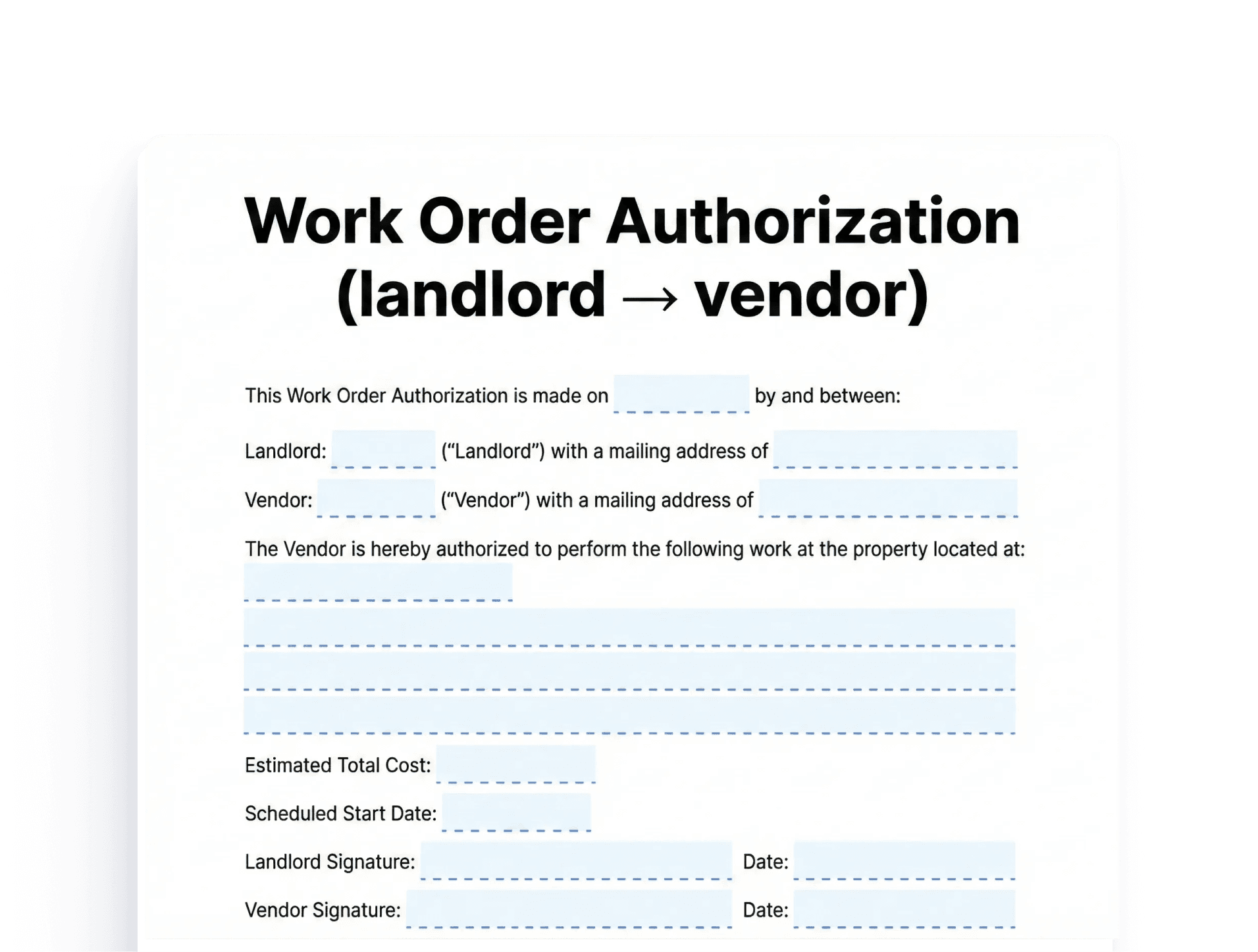
Work order authorization is the formal approval process granting permission for maintenance work to proceed after evaluating necessity, cost, and urgency. This authorization involves reviewing work order details, verifying budget availability, selecting contractors, and documenting approval decisions before work begins.
Download as PDF when complete


(No Ratings Yet)
What Is Work Order Authorization?
Property managers implement authorization workflows establishing who can approve different work types and expense levels creating accountability and preventing unauthorized expenditures. The authorization process serves multiple critical functions protecting property management operations. First, it prevents unnecessary or premature work by requiring justification before proceeding. Second, it ensures appropriate decision-makers with budget authority review significant expenses. Third, it creates documentation proving expenditures received proper approval if owners question spending. Finally, it enables cost control through competitive bidding requirements and expense threshold enforcement.
Authorization Workflow Levels
Emergency vs Non-Emergency Work
Emergency situations threatening immediate property damage, safety hazards, or habitability loss typically bypass normal authorization requiring instant action. Examples include burst pipes, gas leaks, electrical failures, or security breaches. However, even emergency work requires retroactive authorization documentation explaining circumstances and costs.
Non-emergency work follows standard authorization workflows allowing time for proper evaluation. Routine maintenance, cosmetic repairs, and preventive service requests proceed through established channels. Additionally, non-emergency classifications enable scheduling flexibility optimizing contractor availability and pricing. Furthermore, deliberate review prevents reactive decisions that might overlook more cost-effective solutions.
Tiered Approval Authority
Establish tiered authorization levels based on expense amounts distributing approval authority appropriately. Common structures grant maintenance supervisors authority under $500, property managers up to $5,000, regional managers for $5,000-$25,000, and executives for amounts exceeding $25,000. This tiered approach balances oversight needs against operational efficiency.
Adjust threshold amounts based on organizational size and risk tolerance. Large portfolios might use higher thresholds reducing administrative burden while smaller operations require lower limits maintaining tighter controls. Additionally, review and adjust thresholds annually accounting for inflation ensuring they remain appropriate.
Work Type Considerations
Some work categories require different authorization approaches regardless of cost. Capital improvements exceeding normal maintenance always need higher-level approval even when costs fall below standard thresholds. Additionally, work affecting multiple properties, changing building systems fundamentally, or creating ongoing obligations warrant special authorization attention.
Conversely, routine preventive maintenance covered under annual contracts might proceed automatically without individual approvals. HVAC servicing, pest control, and landscaping often operate under blanket authorizations. Furthermore, tenant safety issues or habitability concerns might receive expedited authorization recognizing time-sensitive nature.
Essential Authorization Components
Work Order Details and Justification
Authorization requests must include comprehensive work descriptions explaining exactly what needs repair, why work is necessary, and what problems it addresses. Generic descriptions like “fix plumbing” prove insufficient for informed decisions. Instead, specify “replace corroded shut-off valve under kitchen sink causing slow leak damaging cabinet, tenant reported Saturday.”
Include discovery information noting how problems were identified through tenant complaints, routine inspections, or preventive maintenance schedules. This context helps evaluating urgency and necessity. Additionally, explain consequences of delaying work informing priority decisions and supporting approval justification.
Cost Estimates and Budget Impact
Provide detailed cost breakdowns showing labor, materials, permits, and other anticipated expenses. Require multiple quotes for significant work demonstrating competitive pricing research. Additionally, specify whether costs represent firm bids or rough estimates affecting approval conditions.
Document budget impact explaining which accounts or properties bear expenses. Note whether adequate budget remains or if approvals require budget modifications. Furthermore, indicate whether work qualifies as operating expense or capital improvement affecting accounting treatment and financial reporting.
Contractor Selection and Scheduling
Identify proposed contractors including company names, relevant experience, licensing information, and insurance verification. Explain contractor selection rationale particularly when bypassing competitive bidding. Additionally, note contractor availability and proposed completion timelines balancing urgency against cost considerations.
Include contractor performance history from previous work supporting selection decisions. Reliable contractors with quality track records justify premium pricing versus unknown providers. Furthermore, established vendor relationships often enable faster mobilization during emergencies.
Approval Routing and Signatures
Design clear routing showing who must approve requests before work proceeds. Include signature lines for each approval level with date fields documenting decision timing. Additionally, provide comment sections where approvers note conditions, modifications, or concerns.
Establish backup approvers for when primary decision-makers are unavailable preventing bottlenecks. Specify maximum response times for different priority levels ensuring timely decisions. Furthermore, implement automatic escalation if approvers don’t respond within established timeframes.
Best Practices for Implementation
Clear Written Policies
Create comprehensive authorization policies distributed to maintenance staff, contractors, and management teams outlining approval requirements, dollar thresholds, emergency exceptions, and documentation standards. Clear policies prevent confusion about authorization necessity and establish consistent expectations.
Include specific examples illustrating when authorization is required versus situations allowing independent action. These concrete scenarios help staff making correct judgment calls. Additionally, establish consequences for bypassing authorization such as personal financial responsibility or disciplinary action.
Efficient Digital Systems
Implement property management software with authorization workflow automation. Digital systems route requests automatically, send approval notifications, and track authorization status eliminating manual coordination. Additionally, mobile access enables approvers reviewing and authorizing work from anywhere preventing delays.
Electronic systems maintain comprehensive audit trails documenting submission times, approval actions, and modification history. This transparency supports accountability and compliance verification. Furthermore, automated systems generate reports analyzing authorization patterns and identifying process improvements.
Timely Review Standards
Establish service level agreements for authorization response times based on urgency levels. Emergency requests require 1-2 hour responses, high priority work needs 4-8 hours, and routine requests allow 24-48 hours. Consistent timely responses demonstrate respect while maintaining necessary oversight.
Send automatic reminders when requests approach response deadlines. Additionally, implement escalation procedures forwarding requests to backup approvers if primary decision-makers don’t respond. These mechanisms prevent authorization bottlenecks from delaying necessary work.
Post-Authorization Verification
Verify authorized work gets completed as approved comparing final invoices against authorized amounts. Significant cost overruns require explanation and potentially additional authorization. Additionally, conduct quality inspections ensuring work meets specifications before releasing final payments.
Track authorization-to-completion timelines identifying delays between approval and work start. Excessive delays might indicate scheduling problems, contractor reliability issues, or communication gaps. Furthermore, completion tracking supports accurate budget forecasting revealing actual spending patterns.
Common Authorization Scenarios
Tenant-Requested Repairs
Tenant maintenance requests require evaluation determining repair necessity, urgency, and responsibility. Assess whether reported problems represent legitimate maintenance needs or tenant preferences for upgrades. Additionally, determine if damage resulted from tenant actions potentially making them financially responsible.
Communicate authorization decisions to tenants explaining repair timelines for approved work. For denied requests, provide clear explanations about why work won’t proceed. Furthermore, document all tenant communications supporting decision rationale if disputes arise.
Preventive Maintenance Programs
Preventive maintenance often operates under standing authorizations rather than individual approvals. Annual HVAC servicing, pest control programs, and landscape maintenance proceed automatically within established budgets. However, unexpected additional work discovered during preventive service requires separate authorization.
Review preventive maintenance program effectiveness annually adjusting frequencies or scopes based on results. Document that programs deliver value preventing more expensive repairs. Additionally, ensure preventive work contractors don’t exploit standing authorizations performing unnecessary services.
Emergency Situations
True emergencies proceed immediately with authorization following afterward. Require detailed emergency authorization documentation explaining why normal processes weren’t followed and what consequences delay would have caused. Additionally, attach supporting evidence like photographs showing emergency conditions.
Limit emergency override authority to specific senior personnel preventing abuse. Review emergency authorizations collectively identifying patterns suggesting systematic problems. Furthermore, establish protocols distinguishing genuine emergencies from urgent but non-emergency situations.
Conclusion
Work order authorization establishes essential financial controls ensuring maintenance expenditures receive proper approval before proceeding. By implementing tiered approval workflows, requiring detailed work justifications, setting clear dollar thresholds, and maintaining systematic documentation, you balance necessary oversight against operational efficiency. Always establish emergency procedures for urgent situations, implement digital systems streamlining authorization processes, and verify completed work matches authorizations. Professional authorization procedures demonstrate fiscal responsibility protecting property budgets while ensuring necessary maintenance proceeds supporting tenant satisfaction and long-term investment preservation.
FAQs
Most property management organizations establish tiered thresholds with maintenance supervisors approving under $500-$1,000, property managers up to $5,000, and executives for higher amounts. Set thresholds balancing oversight needs against operational efficiency, adjusting annually for inflation and organizational growth.
Yes, genuine emergencies threatening immediate property damage or safety can proceed without prior approval, but require prompt retroactive authorization documentation. Define emergency criteria clearly preventing abuse, and limit override authority to specific senior personnel ensuring accountability.
Response times should vary by urgency – emergency requests within 1-2 hours, high priority within 4-8 hours, and routine work within 24-48 hours. Establish service level agreements and implement automatic escalation if approvers don’t respond timely preventing unnecessary delays.
Require contractors obtaining additional authorization before exceeding approved amounts by significant margins, typically 10-20%. Small overages may proceed with explanation, but substantial increases need re-evaluation and explicit approval preventing budget surprises.
No, routine preventive maintenance often operates under standing annual authorizations reducing administrative burden. However, specify maximum per-service costs and annual budget limits, and require separate authorization for unexpected additional work discovered during preventive service.