
Tenant Ledger
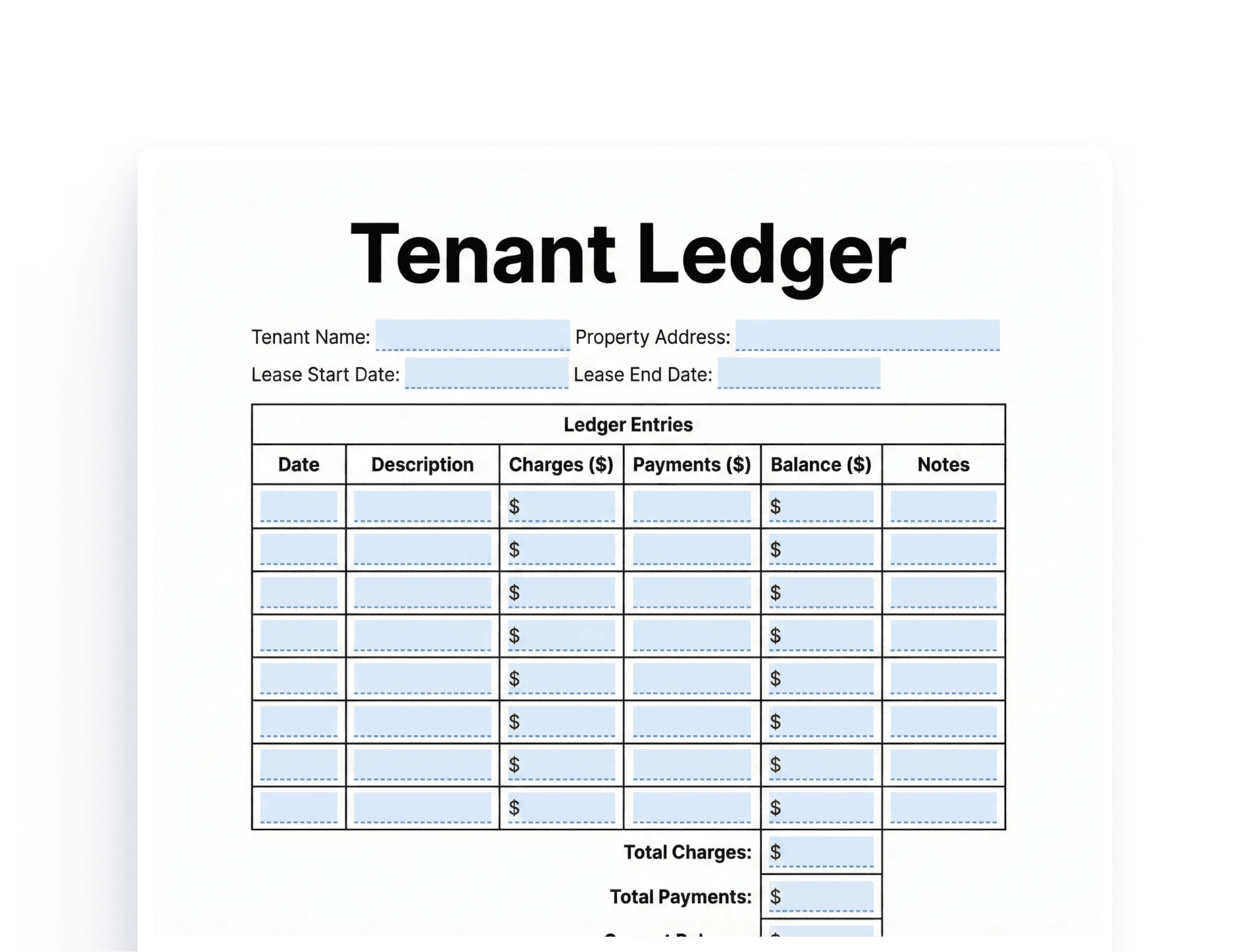
A tenant ledger is a detailed financial statement recording every monetary transaction between landlords and tenants chronologically from lease commencement through termination. This document tracks rent charges, additional fees, payments received, late charges, credits applied, and running account balances.
Download as PDF when complete


(No Ratings Yet)
What Is a Tenant Ledger?
Property managers maintain individual ledgers for each tenant creating complete financial histories supporting accurate accounting and transparent communication about money owed or credited. The ledger serves multiple critical functions in rental property management. First, it creates indisputable records of all financial transactions preventing disputes about payment history or outstanding balances. Second, it supports rent collection efforts by clearly showing when payments are overdue and amounts owed. Third, it provides essential documentation for eviction proceedings proving non-payment patterns. Finally, it facilitates tax preparation by organizing rental income and tenant-related expenses systematically throughout the year.
Essential Ledger Components
Header and Identification Information
Begin tenant ledgers with complete identification details including tenant names, property addresses, unit numbers, lease start dates, monthly rent amounts, and security deposit information. Add landlord or property management company contact information. Additionally, include lease reference numbers and any account identifiers from your property management system.
Document payment terms from lease agreements including due dates, grace periods, late fee structures, and acceptable payment methods. This header information establishes context for all subsequent transactions. Furthermore, it provides quick reference ensuring everyone understands basic account parameters without reviewing entire lease documents.
Transaction Date and Description
Record transaction dates chronologically showing when charges were assessed or payments received. Use consistent date formats preventing confusion between month and day ordering. Additionally, include transaction types like “Rent Charge,” “Payment Received,” “Late Fee,” “Security Deposit,” or “Utility Charge” providing clear categorization.
Write detailed transaction descriptions explaining what each entry represents. Instead of vague “charge” or “payment” entries, specify “July 2024 Rent,” “Pet Rent – July,” or “NSF Fee – Returned Check #1234.” This specificity prevents confusion about charge purposes. Furthermore, detailed descriptions support quick account review without requiring additional documentation reference.
Charge and Payment Columns
Create separate columns for charges and payments maintaining clear distinction between money owed and money received. Charge columns show rent, fees, and other amounts billed to tenants. Payment columns document all funds received regardless of payment method. This separation enables quick visual scanning identifying periods when charges exceeded payments or vice versa.
Some ledgers include additional columns for different charge types like base rent, pet fees, utilities, or late charges. This detailed categorization supports analysis of specific cost components. Additionally, separate columns simplify tax preparation by organizing deductible versus non-deductible income categories.
Balance Calculation
Include running balance columns showing account status after each transaction. Calculate balances by adding charges and subtracting payments from previous balances. Display positive balances when tenants owe money and negative balances when credits exist. Additionally, clearly label whether balances represent amounts owed or credits preventing confusion about balance direction.
Some property managers maintain separate current balance versus aging balance columns. Current balances show total amounts owed while aging balances track overdue amounts specifically. This distinction helps prioritizing collection efforts focusing on seriously delinquent accounts versus those recently late.
Payment Method and Reference Numbers
Document payment methods for all received funds noting whether cash, check, money order, electronic transfer, or credit card. Include check numbers, transaction IDs, or authorization codes providing verification references. This information supports bank reconciliation and helps investigating payment discrepancies.
Additionally, note any special payment circumstances like partial payments, payment plan installments, or third-party payments from assistance programs. These notations provide context explaining unusual payment patterns. Furthermore, they document when tenants complied with alternative payment arrangements.
Best Practices for Ledger Maintenance
Real-Time Entry Updates
Update tenant ledgers immediately when transactions occur rather than batching entries periodically. Real-time updates ensure accuracy and prevent forgotten charges or payments creating discrepancies. Additionally, current ledgers enable providing instant account status information when tenants inquire about balances.
Property management software typically updates ledgers automatically when recording charges or processing payments. These systems maintain real-time accuracy eliminating manual entry delays. However, verify that automated entries post correctly preventing system errors from corrupting ledger data.
Consistent Transaction Coding
Establish standardized transaction codes or descriptions used consistently across all tenant ledgers. Consistent terminology simplifies financial reporting and analysis across your entire portfolio. For example, always use “Rent – [Month/Year]” rather than mixing “Monthly Rent,” “Rent Payment Due,” or other variations.
Create reference guides documenting approved transaction types and description formats. Distribute to all staff members who access ledgers ensuring uniform entry practices. Furthermore, consistent coding enables automated reporting and analysis identifying portfolio-wide trends or patterns.
Regular Reconciliation
Reconcile tenant ledgers regularly against bank deposits and accounting system balances verifying accuracy. Monthly reconciliation catches errors early preventing cumulative discrepancies. Additionally, reconciliation identifies missing entries, duplicate transactions, or misapplied payments requiring correction.
Compare ledger totals against bank statements ensuring all received payments deposited correctly. Investigate discrepancies immediately determining whether ledger errors, bank errors, or missing transactions caused differences. Furthermore, document reconciliation completion dates and staff members performing reviews creating accountability.
Secure Access and Backup
Restrict ledger access to authorized staff members only protecting sensitive tenant financial information. Use password-protected systems with user-specific access controls tracking who views or modifies ledgers. Additionally, implement audit trails recording all ledger changes with timestamps and user identifications.
Maintain regular ledger backups protecting against data loss from system failures or disasters. Cloud-based property management systems typically include automatic backup features. However, periodically export ledger data creating independent backup copies stored separately from primary systems.
Common Ledger Applications
Rent Collection Management
Tenant ledgers provide essential tools for systematic rent collection showing exactly who owes what amounts and when payments became overdue. Generate collection reports from ledgers identifying all accounts with outstanding balances. Additionally, prioritize collection efforts based on delinquency amounts and aging helping you focus limited resources effectively.
Ledgers document payment patterns revealing which tenants consistently pay late, frequently bounce checks, or regularly make partial payments. This historical information informs decisions about lease renewals or payment plan offerings. Furthermore, ledgers prove payment history during eviction proceedings demonstrating chronic non-payment patterns.
Dispute Resolution
When payment disputes arise, tenant ledgers provide definitive records resolving disagreements about payment amounts, dates, or application. Show ledgers to disputing tenants walking through every transaction explaining charges and payments chronologically. This transparency often resolves misunderstandings quickly preventing escalation.
Ledgers prove particularly valuable during security deposit disputes documenting unpaid rent or fees justifying withholding. Additionally, they support claims about chronic late payments or payment plan defaults. Courts favor parties presenting detailed contemporaneous financial records versus those relying on memory or incomplete documentation.
Tax Preparation Support
Organize ledgers by calendar or fiscal year creating complete rental income documentation for tax preparation. Ledgers show exactly when rent was paid distinguishing cash versus accrual accounting treatments. Additionally, they categorize different income types like base rent, late fees, or NSF charges supporting proper tax form completion.
Provide copies of tenant ledgers to accountants or tax preparers simplifying their work and reducing preparation fees. Well-organized ledgers eliminate questions about income timing or categorization. Furthermore, they provide audit defense documentation if IRS questions rental income reporting.
Property Performance Analysis
Aggregate tenant ledger data across properties analyzing collection rates, average days to payment, late fee income, and bad debt write-offs. This portfolio-wide analysis reveals operational performance and identifies problem properties requiring attention. Additionally, historical trends inform budgeting and forecasting for future periods.
Compare actual collection patterns against budgeted expectations identifying variances requiring explanation or correction. Properties with significantly higher delinquency rates might have tenant screening problems, market challenges, or management issues. Furthermore, ledger analysis supports conversations with property owners about performance and improvement strategies.
Technology and Automation
Property Management Software
Modern property management platforms maintain automated tenant ledgers updating in real-time as you record charges and payments. These systems calculate balances automatically, generate aging reports, and provide dashboard views of portfolio-wide collection status. Additionally, integrated ledgers eliminate manual data entry reducing errors and saving significant time.
Software ledgers enable tenant portal access allowing tenants viewing their own payment histories online. This self-service capability reduces tenant inquiries about balances while improving transparency. Furthermore, online access helps tenants tracking their own payment obligations preventing forgotten payments.
Reporting and Analytics
Property management systems generate comprehensive reports from ledger data including rent rolls, delinquency reports, collection summaries, and income statements. Customize reports for different audiences like property owners, investors, or management team members. Additionally, scheduled automatic reports eliminate manual generation effort providing consistent regular updates.
Export ledger data to spreadsheets or accounting software for advanced analysis or specialized reporting. This flexibility supports custom financial analysis beyond standard system reports. Furthermore, data exports facilitate business intelligence tools providing sophisticated visualization and trend analysis.
Conclusion
A tenant ledger provides fundamental financial documentation tracking all transactions between landlords and tenants throughout rental relationships. By maintaining detailed chronological records, updating entries immediately, reconciling regularly, and leveraging technology for automation, you establish professional accounting practices supporting successful property management. Always document every transaction completely, maintain consistent entry standards, and provide transparent access to tenant financial information. Professional tenant ledger management prevents disputes, supports effective rent collection, and demonstrates the systematic financial practices that distinguish professional property management from amateur operations.
FAQs
Each entry should include transaction date, detailed description explaining the charge or payment purpose, amount, payment method if applicable, and updated running balance. Additionally, include reference numbers like check numbers or transaction IDs enabling verification and supporting bank reconciliation efforts.
Maintain tenant ledgers for at least seven years after tenancy ends covering potential legal claims and tax audit periods. However, many property managers retain ledgers permanently as they occupy minimal digital storage space and provide valuable historical reference for future tenant screening or landlord reference checks.
Yes, provide tenants access to their ledgers either through online portals or by request promoting transparency and reducing payment disputes. Tenant access helps them tracking payment obligations, verifying payment application, and identifying discrepancies early before they escalate into significant disagreements.
Make corrections through adjustment entries showing the error and correction separately rather than deleting or modifying original entries. Include detailed descriptions explaining correction reasons maintaining audit trails. Additionally, notify tenants about corrections affecting their balances ensuring they understand current amounts owed.
Yes, properly maintained tenant ledgers provide powerful evidence during eviction proceedings demonstrating payment history, outstanding balances, and chronic non-payment patterns. Courts favor detailed contemporaneous financial records over verbal testimony, making well-maintained ledgers essential documentation supporting landlord claims.