
Security Deposit Itemized Deductions Form
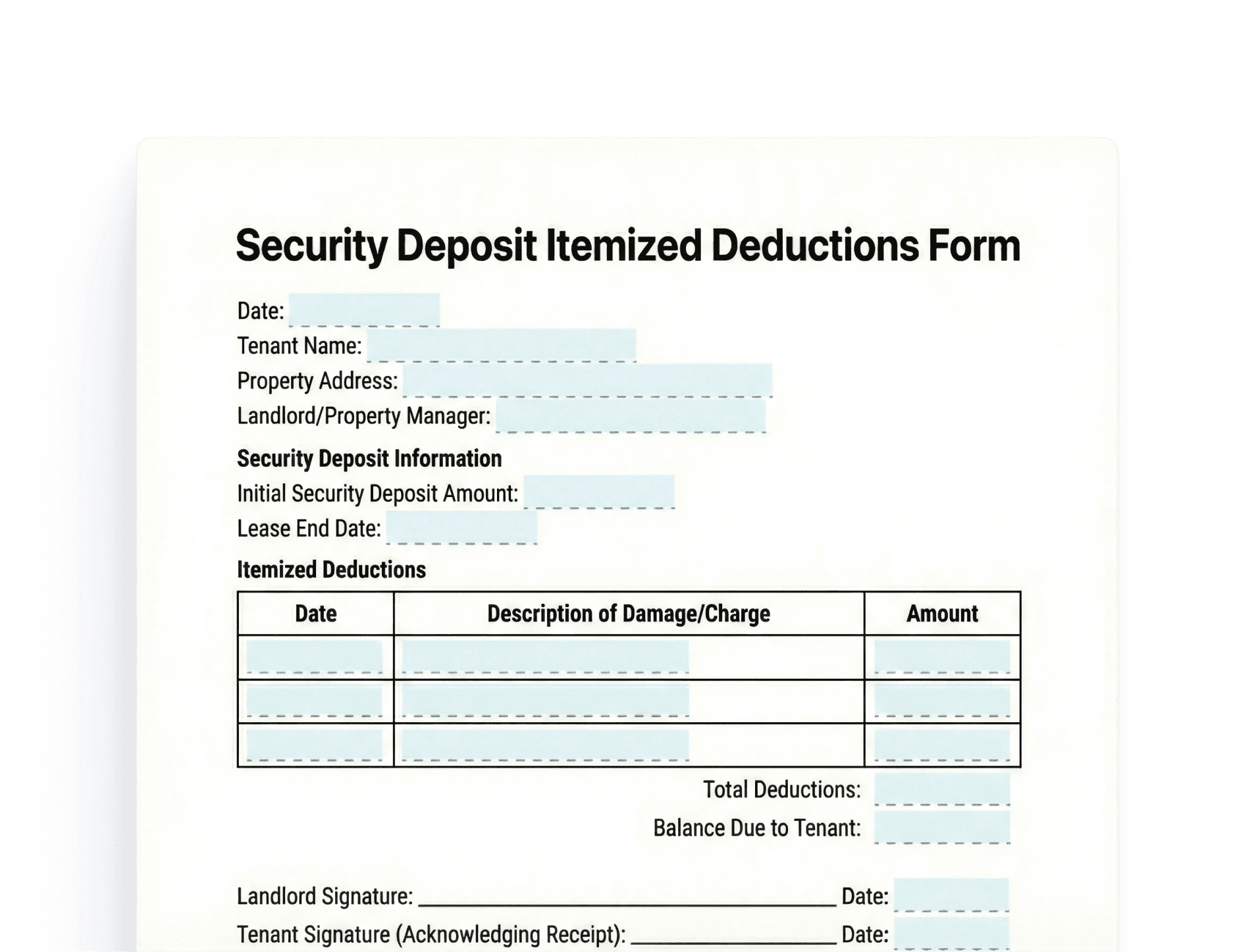
A security deposit itemized deductions form is a detailed written statement landlords provide to former tenants explaining all amounts deducted from security deposits. This form lists each deduction separately with specific descriptions, exact locations, itemized costs, and calculations showing original deposits minus deductions equaling refund amounts.
Download as PDF when complete


(No Ratings Yet)
What Is a Security Deposit Itemized Deductions Form?
State laws mandate providing these forms within specific timeframes after tenant move-out, typically 14-60 days depending on jurisdiction. The form serves multiple critical legal and practical purposes. First, it satisfies mandatory disclosure requirements preventing penalties for improper deposit handling. Second, it creates detailed documentation supporting deduction legitimacy during disputes or court proceedings. Third, it provides transparency helping tenants understanding why full deposits weren’t returned. Finally, it establishes professional standards demonstrating your systematic approach to deposit disposition building trust even when relationships end.
Legal Requirements by Jurisdiction
Mandatory Itemization Standards
Most states require itemized deduction forms listing each charge separately rather than lump-sum withholding amounts. Generic entries like “repairs $800” fail meeting legal standards. Instead, laws mandate specific descriptions identifying damage locations, repair types, and individual cost components. Additionally, many jurisdictions require attaching supporting documentation like receipts or estimates proving claimed amounts.
California, for example, requires very detailed itemization with receipts for work exceeding $126. New York mandates itemized statements within 14 days if withholding any amount. Texas requires itemization within 30 days with description and supporting documentation. Research your specific state’s requirements ensuring complete compliance preventing deposit forfeiture penalties.
Timing and Delivery Requirements
State deadlines for providing itemized deduction forms vary dramatically from 14 to 60 days after move-out. Missing these deadlines typically results in complete loss of deduction rights regardless of damage legitimacy. Additionally, many states impose penalty damages requiring landlords paying two or three times original deposit amounts for deadline violations.
Delivery method requirements also vary by state. Some mandate certified mail, others accept regular mail to last known addresses, and several allow email delivery if lease agreements authorize electronic communications. Document delivery attempts thoroughly proving timely compliance. Furthermore, calculate deadlines from actual move-out dates, not lease end dates or notice receipt dates.
Interest and Refund Inclusion
Several states require including accrued interest on security deposits with itemized deduction forms. Calculate interest using state-specified rates and methods ensuring accuracy. Additionally, some jurisdictions mandate showing interest calculations separately on deduction forms distinguishing between original deposits and earned interest.
Include any refund amounts with itemized deduction forms unless deductions equal or exceed total deposits. Send checks, money orders, or electronic transfers simultaneously with forms preventing additional communication cycles. Furthermore, clearly identify refund amounts on forms showing calculation from original deposit through deductions to final refund.
Essential Form Components
Header Information
Begin itemized deduction forms with complete property and tenant identification including rental addresses, unit numbers, tenant names, lease start and end dates, and move-out dates. Add landlord or property management company information with contact details. Additionally, include form preparation dates and any reference numbers linking to your accounting systems.
Document original security deposit amounts received at move-in including dates collected and receipt numbers. Show any interest accrued during tenancy if applicable. Furthermore, reference move-in inspection reports establishing baseline property conditions before deductions occurred.
Detailed Deduction Entries
Create separate line items for each deduction using highly specific descriptions. Instead of “wall repair,” write “Master bedroom north wall – repair 8-inch drywall hole caused by door handle impact, patch, sand, prime, and paint to match existing color.” This specificity prevents disputes about deduction nature and demonstrates legitimate charges.
Include exact locations for all physical damage noting rooms, walls, fixtures, or areas affected. Specify whether deductions represent repairs, replacements, cleaning, or unpaid charges. Additionally, note who performed work whether professional contractors, maintenance staff, or yourself affecting cost calculation methods.
Cost Breakdowns
Itemize costs showing labor and materials separately when possible. For professional repairs, state contractor names and invoice numbers. When performing repairs yourself, document hourly rates and material receipts supporting charges. Additionally, note whether costs represent actual expenses incurred or reasonable estimates for pending work.
Prorate replacement costs for items with limited remaining useful life. If replacing 8-year-old carpet with 10-year lifespan due to damage, charge only 20% of replacement cost representing remaining life destroyed prematurely. This fair calculation demonstrates good faith and complies with legal requirements in most states.
Supporting Documentation Section
Attach or reference supporting documentation for every deduction including photographs showing damage, contractor invoices, material receipts, or cleaning service bills. Organize attachments matching deduction list order simplifying tenant review. Additionally, highlight relevant information on receipts drawing attention to amounts, dates, and work descriptions.
Include comparison photographs showing move-in versus move-out conditions when available. These side-by-side images powerfully demonstrate condition changes during tenancy supporting deduction legitimacy. Furthermore, date-stamp all photographs preventing tenant claims about image timing or authenticity.
Calculation Summary
Display final calculations prominently showing original deposit amount, total deductions, any interest added, and final refund being returned. Use clear formatting making numbers easily readable. For example:
“Original Security Deposit: $1,500.00 Total Itemized Deductions: -$650.00 Accrued Interest: +$25.00 Final Refund Amount: $875.00”
This transparent calculation helps tenants verifying arithmetic accuracy and understanding final amounts. Additionally, it demonstrates your systematic approach to deposit accounting.
Best Practices for Form Preparation
Objective and Professional Language
Use factual, neutral language throughout itemized deduction forms avoiding emotional or accusatory terminology. Focus on observable conditions rather than assigning blame or making judgments about tenant behavior. Instead of “tenant destroyed carpet,” write “living room carpet contains multiple large stains requiring replacement.”
Professional presentation increases credibility and reduces defensive tenant reactions prompting disputes. Additionally, objective language demonstrates fairness if disputes escalate to legal proceedings. Furthermore, neutral terminology protects you from claims about harassment or bad faith deposit handling.
Accuracy and Completeness
Verify all information accuracy before sending forms to tenants. Double-check arithmetic calculations, receipt amounts, and description details. Additionally, ensure attached documentation matches listed deductions preventing confusion about supporting evidence. Errors undermine credibility and might invalidate otherwise legitimate deductions.
Include every deduction no matter how small rather than selectively listing only major charges. Comprehensive itemization demonstrates thorough accounting and prevents tenant suspicions about hidden or arbitrary withholding. Furthermore, complete disclosure satisfies legal requirements even when small charges barely justify documentation effort.
Timely Preparation and Delivery
Begin preparing itemized deduction forms immediately after move-out inspections rather than waiting until deadlines approach. Prompt processing ensures adequate time for contractor quotes, repair completion if required, and thorough documentation assembly. Additionally, early preparation prevents rushed work causing errors or incomplete information.
Mail forms and refunds well before state deadlines building buffer periods for postal delays. Use certified mail with return receipt providing delivery proof protecting against tenant claims about late or missing forms. Furthermore, retain mailing receipts and tracking information documenting compliance timing.
Proportional and Fair Charges
Charge only amounts actually spent or reasonably expected for necessary repairs restoring properties to pre-tenancy condition accounting for normal wear. Resist inflating charges or including questionable deductions seeking maximum withholding. Fair reasonable charges reduce dispute likelihood while demonstrating good faith.
Consider whether damages truly justify charges or represent minor issues better absorbed as normal turnover costs. Small nail holes, minor scuffs, or minimal carpet wear might not warrant deductions despite technical damage. Furthermore, strategic generosity on borderline items often prevents disputes costing more than contested amounts.
Common Deduction Categories
Physical Damage Repairs
Document repairs for holes, scratches, stains, broken fixtures, or other physical damage exceeding normal wear. Specify damage size, location, and repair methods. For example, “Kitchen – replace broken cabinet door damaged by excessive force, $125 materials and installation.”
Distinguish between damage requiring deduction and normal deterioration expected from reasonable use. Additionally, photograph damage clearly showing severity and extent supporting repair necessity claims.
Cleaning Expenses
Itemize cleaning charges specifically rather than generic “cleaning fee” deductions. List “Oven interior professional degreasing $75,” “Bathroom tile and grout deep cleaning $100,” or “Carpet steam cleaning for pet odors $150.” This specificity demonstrates legitimate charges versus routine turnover preparation.
Only charge for cleaning returning properties to move-in condition accounting for reasonable use. Additionally, distinguish between cleaning correcting tenant neglect versus normal preparation considered landlord operating expenses.
Unpaid Rent and Fees
List unpaid rent by billing period showing amounts originally due, payments received, and outstanding balances. For example, “May 2024 rent – due $1,500, paid $0, balance $1,500.” Additionally, itemize any late fees, NSF charges, or other financial obligations specified in lease agreements.
Provide payment ledgers or account statements supporting unpaid charge claims. Furthermore, document collection attempts made before applying deposits proving you followed normal procedures.
Conclusion
A security deposit itemized deductions form provides essential transparency and legal compliance during deposit disposition protecting both landlord financial interests and tenant rights. By preparing detailed descriptions, organizing charges clearly, attaching supporting documentation, and delivering forms timely, you satisfy state requirements while minimizing dispute potential. Always use specific objective language, verify accuracy thoroughly, and charge only legitimate fair amounts. Professional itemized deduction forms demonstrate your commitment to transparent business practices while establishing strong documentation supporting your position if disagreements arise despite careful preparation and good faith efforts.
FAQs
Descriptions must be highly specific including exact locations, damage types, repair methods, and individual costs rather than vague generic categories. Courts reject forms with insufficient detail, so specify “master bedroom north wall 6-inch drywall hole repair $150” rather than “wall repairs.”
Most states accept reasonable estimates for pending work, though actual paid invoices provide strongest documentation. Some jurisdictions require completing repairs and providing receipts within specified timeframes after initial disposition, so check your state’s specific requirements.
Missing deadlines typically results in complete forfeiture of all deduction rights regardless of damage legitimacy. Additionally, many states impose penalty damages requiring landlords paying 2-3 times original deposit amounts, so always prioritize timely compliance over perfect documentation.
Yes, include every deduction regardless of amount demonstrating complete transparency and satisfying legal disclosure requirements. Omitting small charges might appear arbitrary or suggest incomplete accounting undermining your credibility during disputes.
This depends on state law and lease agreement terms, with some jurisdictions requiring written consent for electronic delivery. When email is permitted, send forms from reliable addresses, request read receipts, and retain delivery confirmations proving timely transmission.