
Security Deposit Accounting / Disposition
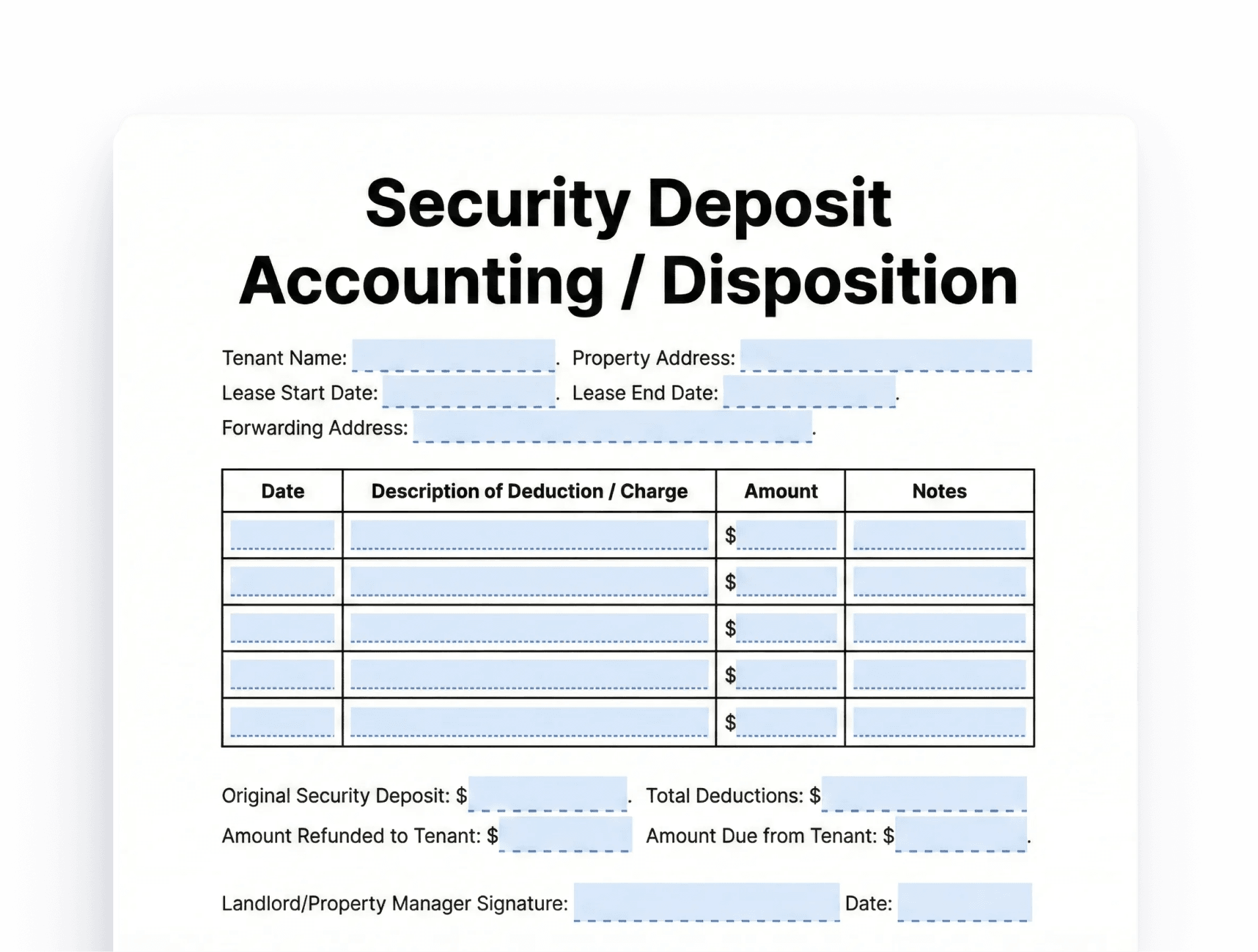
Security deposit accounting is the comprehensive financial process tracking deposits from collection through final disposition including interest accrual, authorized deductions, and remaining balance returns. This accounting encompasses separate ledger maintenance, detailed transaction recording, supporting documentation collection, and compliant final statements preparation.
Download as PDF when complete


(No Ratings Yet)
What Is Security Deposit Accounting?
The accounting process serves multiple essential functions protecting both landlords and tenants. First, it maintains clear records proving deposits were collected, held properly, and disposed of according to law. Second, it documents all legitimate deductions with supporting evidence justifying withholding amounts. Third, it ensures timely compliance with state deadlines preventing forfeiture penalties. Finally, it creates transparency building tenant trust and reducing disputes about deposit handling. Property managers must track every deposit dollar ensuring accurate accounting supporting proper legal disposition when tenancies end.
State-Specific Legal Requirements
Deadline Variations by State
State laws establish strict deadlines for returning security deposits and providing itemized accounting statements. These deadlines range from 14 to 60 days after tenant move-out depending on jurisdiction. For example, Arizona requires 14 days, California mandates 21 days, Texas allows 30 days, and Illinois specifies 30-45 days depending on circumstances.
Missing these deadlines typically results in severe penalties including forfeiture of all deduction rights and potential statutory damages requiring landlords paying two or three times original deposit amounts. Calculate deadlines carefully from actual move-out dates and build buffer periods ensuring timely compliance. Additionally, some states measure deadlines from when landlords receive forwarding addresses rather than move-out dates.
Interest Payment Requirements
Several states require landlords paying interest on security deposits held throughout tenancies. Interest rates, calculation methods, and payment timing vary significantly by jurisdiction. Some states like Florida and New York mandate interest payments while others impose no such requirements. Additionally, certain jurisdictions only require interest for deposits held beyond specific timeframes or property sizes.
Track interest accrual accurately when required using state-specified rates and calculation methods. Some states require annual interest payments while others allow accumulation until lease termination. Furthermore, verify whether you can deduct administrative fees from interest payments or must pay full calculated amounts.
Separate Account Requirements
Many states mandate maintaining security deposits in separate bank accounts distinct from operating funds preventing commingling. These requirements often specify account types, interest-bearing mandates, and institution registration obligations. Additionally, some jurisdictions require posting bonds or maintaining minimum account balances as alternatives to separate account maintenance.
Violation of separate account requirements can trigger serious penalties including deposit forfeiture and statutory damages regardless of whether actual financial harm occurred. Establish compliant account structures before collecting first deposits. Furthermore, maintain meticulous records proving separate account compliance throughout deposit holding periods.
Allowable Deduction Categories
Unpaid Rent and Fees
Security deposits can be applied to unpaid rent, late fees, and other monetary obligations specified in lease agreements. However, most states require attempting collection through normal channels before applying deposits. Additionally, clearly document unpaid amounts with ledgers showing charges, payments received, and outstanding balances.
Prorate final month rent accurately if tenants vacate mid-month. Charge only for actual occupancy days rather than full monthly amounts. Furthermore, ensure late fees comply with state caps and lease provisions supporting their legitimacy.
Damage Beyond Normal Wear and Tear
Deposits cover repair costs for damage exceeding normal wear and tear resulting from ordinary residential use. Distinguishing legitimate damage from acceptable wear proves critical and frequently contentious. Broken fixtures, large holes, pet damage, and excessive filth qualify as deductible damage. Conversely, minor scuffs, small nail holes, carpet wear in traffic areas, and paint fading represent normal wear.
Document damage thoroughly with dated photographs showing problems clearly. Compare move-out conditions against move-in inspection reports demonstrating condition changes during tenancy. Additionally, obtain repair estimates or invoices supporting claimed deduction amounts.
Cleaning Costs
Charge cleaning costs when properties require more than routine turnover cleaning returning them to move-in condition. Professional deep cleaning, carpet shampooing, oven degreasing, or extensive debris removal justify deductions. However, you cannot charge for routine cleaning considered normal turnover preparation.
Distinguish between cleaning correcting tenant neglect versus normal preparation for new tenants. Properties should be returned in the same cleanliness level received at move-in accounting for reasonable use. Furthermore, itemize specific cleaning tasks and costs rather than vague “cleaning fee” deductions.
Prohibited Deductions
Never deduct for normal wear and tear, pre-existing damage, improvements increasing property value, or expenses unrelated to tenant responsibility. Additionally, most states prohibit deducting anticipated future damages or charging for your own time performing repairs at inflated rates. These prohibited deductions violate landlord-tenant laws and expose you to penalties.
Some jurisdictions specifically prohibit certain deductions like key replacement unless keys aren’t returned, carpet replacement for normal wear, or painting unless tenants caused actual damage beyond wear. Research your state’s specific prohibitions before withholding any amounts.
Documentation Requirements
Move-In and Move-Out Inspections
Conduct comprehensive move-in inspections before tenancy start documenting baseline property condition. Use detailed checklists covering every room, surface, fixture, and system. Take extensive photographs and videos creating visual records supplementing written descriptions. Additionally, have tenants sign inspection reports acknowledging documented conditions.
Perform equally thorough move-out inspections immediately after tenants vacate comparing current condition against move-in documentation. Photograph all damage or issues justifying deductions. Furthermore, conduct inspections systematically following identical patterns ensuring complete coverage without overlooking areas.
Receipts and Invoices
Collect and retain all receipts, invoices, and estimates supporting deduction amounts. Actual paid invoices provide strongest documentation though reasonable estimates for work you plan performing are acceptable in most states. Additionally, estimates must reflect fair market rates rather than inflated amounts seeking profit from deposits.
Organize supporting documents clearly matching each deduction line item. Highlight relevant information on receipts showing dates, amounts, vendor names, and work descriptions. Furthermore, photograph receipts creating digital backups preventing lost documentation from undermining deduction claims.
Itemized Statements
Prepare detailed itemized statements listing every deduction with specific descriptions, locations, and amounts. Vague entries like “repairs $500” prove legally insufficient. Instead, specify “Master bedroom north wall – repair 6-inch drywall hole, prime and paint – $150 materials, $200 labor.”
Calculate final balances clearly showing original deposit amounts, total deductions, and remaining refunds being returned. Display this calculation prominently preventing confusion. Additionally, include your contact information encouraging tenant questions about statement entries.
Best Practices for Compliance
Organized Record-Keeping Systems
Maintain comprehensive security deposit files for each tenant including deposit receipts, interest calculations, inspection reports, photographs, repair documentation, and final statements. Organize chronologically facilitating quick information retrieval during disputes or audits. Additionally, store records for at least seven years covering legal claim periods.
Use property management software tracking deposit accounting automatically. These systems calculate interest, generate compliant statements, and maintain audit trails supporting proper disposition. Furthermore, digital systems enable quick reporting and analysis identifying patterns or compliance gaps.
Timely Processing
Begin disposition processes immediately after tenant move-out rather than waiting until deadlines approach. Schedule move-out inspections within 24-48 hours of vacancy. Obtain repair quotes promptly and prepare itemized statements well before deadline expiration. This proactive approach prevents rushed processing causing errors or missed deadlines.
Build buffer periods into your timeline accounting for unexpected delays like contractor unavailability or documentation difficulties. Mail statements and refunds several days before deadlines ensuring timely delivery. Furthermore, use certified mail providing delivery proof protecting you from tenant claims about late or missing statements.
Fair and Reasonable Deductions
Charge only legitimate costs actually incurred or reasonably expected for necessary repairs. Resist temptation to inflate charges or deduct questionable items. Fair treatment reduces disputes and protects your reputation. Additionally, courts favor landlords demonstrating reasonable good faith deduction practices.
Consider property age and condition when evaluating damage versus wear. Hold tenants responsible only for premature damage, not deterioration matching normal usage patterns. Furthermore, prorate replacement costs for items with limited remaining useful life rather than charging full replacement amounts.
Clear Communication
Communicate proactively with tenants during move-out processes explaining deposit disposition procedures and timelines. Provide forwarding address forms ensuring you can deliver statements and refunds timely. Additionally, encourage tenants asking questions about deductions before disputes escalate.
When disagreements arise, respond professionally providing additional documentation supporting deductions. Consider negotiating reasonable compromises for genuinely borderline situations. Furthermore, maintain respectful tone even when denying tenant challenges to deduction legitimacy.
Conclusion
Security deposit accounting demands meticulous attention to state-specific regulations, comprehensive documentation, and scrupulous fairness ensuring legal compliance while protecting your financial interests. By understanding deadline requirements, maintaining proper separate accounts, documenting deductions thoroughly, and processing returns promptly, you prevent costly penalties while demonstrating professional property management. Always photograph property conditions extensively, retain all supporting receipts, and prepare detailed itemized statements explaining every deduction clearly. Professional security deposit disposition protects your business while ensuring departing tenants receive fair treatment and transparent accounting of their funds.
FAQs
State deadlines vary from 14 to 60 days after tenant move-out, with penalties for missing deadlines including complete deposit forfeiture and statutory damages of 2-3 times deposit amounts. Always check your specific state requirements and process returns well before deadlines expire.
You can only charge for damage beyond normal wear, prorated for remaining useful life. If carpet is 8 years old with 10-year lifespan, you can only charge 20% of replacement cost for damage requiring premature replacement.
Most states accept reasonable estimates for work not yet completed, though actual paid invoices provide strongest documentation. Estimates must reflect fair market rates, and some jurisdictions require completing repairs and providing receipts within specified timeframes after disposition.
Many states require only mailing to the rental unit address if tenants don’t provide forwarding information, though some mandate additional efforts locating tenants. Document all attempts contacting tenants proving reasonable efforts, and hold unclaimed refunds according to state abandonment laws.
No, routine turnover cleaning costs are normal business expenses that you cannot charge to security deposits. Only deduct for cleaning that restores property to move-in condition when tenants left it excessively dirty beyond normal use expectations.