
Rent Invoice
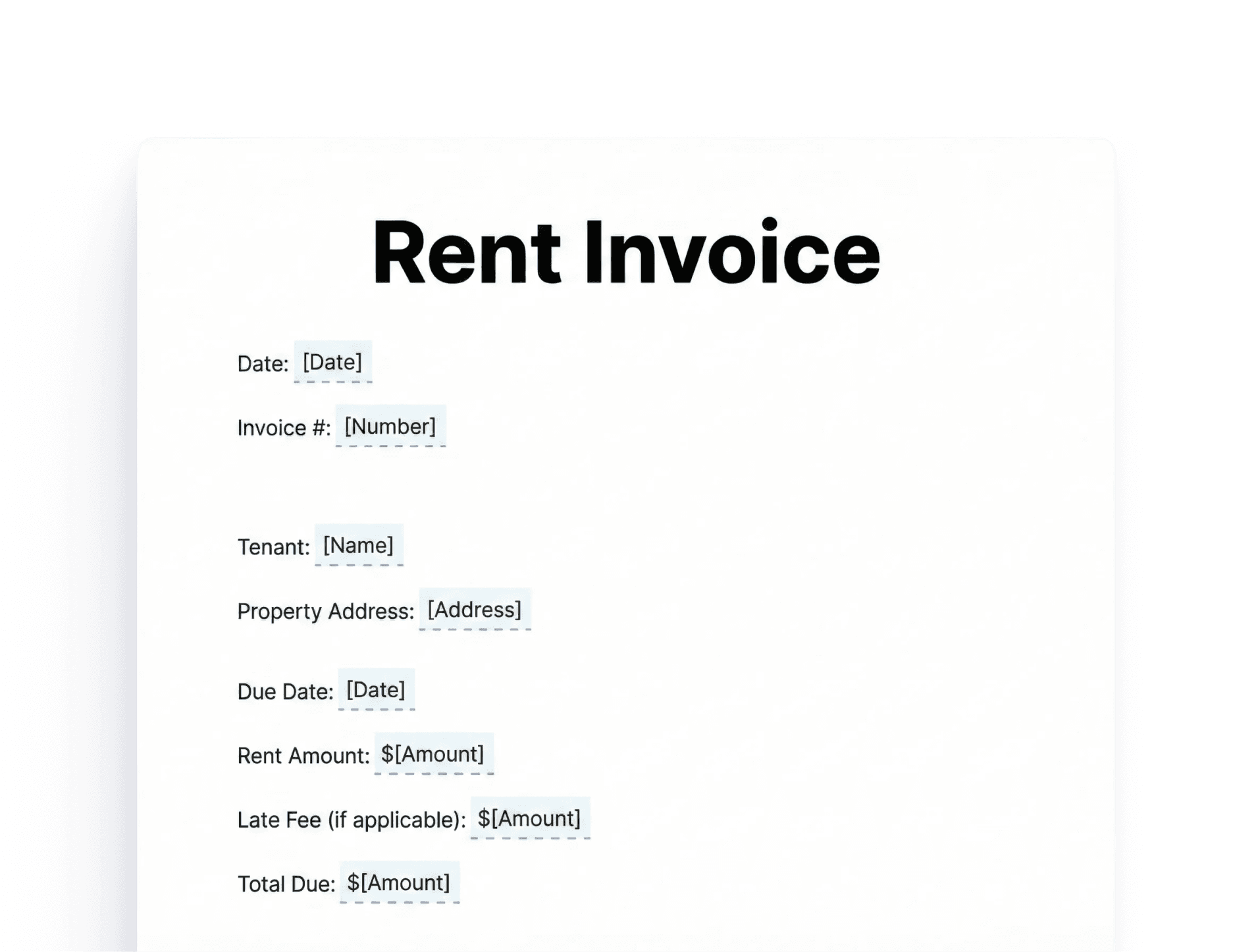
A rent invoice is a formal billing document landlords send to tenants specifying rent amounts due, payment deadlines, account balances, and payment instructions. This invoice lists current month charges, any outstanding balances, late fees if applicable, and additional charges like pet rent or utilities. Property managers send these invoices before due dates, typically 5-10 days in advance, reminding tenants about upcoming obligations and providing payment guidance.
Download as PDF when complete


(No Ratings Yet)
What Is a Rent Invoice?
The invoice serves multiple important functions beyond simple payment reminders. First, it creates official records documenting rent billing and tenant payment obligations. Second, it establishes clear communication preventing misunderstandings about amounts owed or due dates. Third, it provides payment tracking supporting accurate accounting and financial reporting. Finally, it demonstrates professionalism elevating your property management from informal arrangements to legitimate business operations attracting quality tenants.
Benefits of Sending Rent Invoices
Improved Payment Timeliness
Regular rent invoices remind tenants about upcoming due dates reducing forgotten payments. Busy tenants juggling multiple obligations appreciate advance notices helping them budget and schedule payments. Additionally, invoices create routine expectations where tenants anticipate monthly billing establishing payment habits.
Invoices sent consistently demonstrate your organized approach to management. This professionalism encourages tenants taking rental obligations seriously and prioritizing payments. Furthermore, advance invoicing allows tenants planning around temporary cash flow difficulties by requesting payment arrangements before defaults occur.
Clear Financial Documentation
Rent invoices create comprehensive payment request records supporting accurate bookkeeping and tax preparation. These documents show exactly what you billed tenants and when, establishing baselines for tracking actual payments received. Additionally, invoices help you identifying overdue accounts quickly by comparing billed amounts against received payments.
During tax preparation, rent invoices provide organized documentation of rental income supporting IRS filings. They also help distinguishing between different income types like base rent, late fees, and utility reimbursements. Furthermore, detailed invoices support deduction claims for property expenses by documenting income against which expenses offset.
Dispute Prevention and Resolution
Written invoices prevent disputes about amounts owed or charge composition. Tenants seeing itemized breakdowns understand exactly what they’re paying for rather than receiving vague payment demands. Additionally, advance invoices allow tenants questioning charges before due dates rather than disputing after late fees accrue.
When payment disputes arise, invoices provide clear evidence of what you billed and when. This documentation proves particularly valuable during eviction proceedings where you must demonstrate proper rent demand before filing actions. Furthermore, invoices showing consistent billing patterns demonstrate fairness and transparency strengthening your legal positions.
Essential Invoice Components
Header and Identification Information
Begin rent invoices with professional headers including your business name, logo if applicable, contact information, and invoice date. Add unique invoice numbers creating tracking systems for your records. Additionally, include property addresses and unit numbers linking invoices to specific rental units.
Document tenant names exactly as they appear on lease agreements and include any account or tenant reference numbers from your property management system. This identification ensures invoices reach correct recipients and get applied to proper accounts. Furthermore, complete headers demonstrate professionalism creating positive impressions.
Billing Period and Due Date
Clearly specify the billing period your invoice covers such as “Rent for May 2024” or “Billing Period: 5/1/24 – 5/31/24.” This clarity prevents confusion about which month’s rent you’re requesting. Additionally, prominently display payment due dates using bold text or highlighting ensuring tenants notice deadline importance.
Include grace period information if your lease provides several days after the first before late fees apply. For example, “Due Date: May 1, 2024. Late fees apply after May 5, 2024.” This transparency helps tenants understanding exact deadlines. Furthermore, it documents grace period acknowledgment preventing tenant claims about unclear policies.
Itemized Charge Breakdown
List all charges separately showing base rent, pet fees, parking charges, utility reimbursements, and any other recurring or one-time fees. Use descriptive names for each line item like “Base Monthly Rent,” “Pet Rent (1 dog),” or “Water/Sewer Reimbursement.” Itemization helps tenants understanding what they’re paying preventing questions about total amounts.
Show per-item amounts and calculate subtotals for grouped charges. Additionally, display any outstanding balances from previous months separately from current charges. This organization creates transparency while establishing clear records of all amounts owed. Furthermore, detailed breakdowns support security deposit deduction justifications if tenants leave owing money.
Payment Instructions
Provide clear payment instructions including acceptable methods like checks, money orders, online payments, or direct deposits. Specify where to send checks or drop off payments including complete addresses and office hours. Additionally, include online payment portal URLs or app download links for digital options.
Note any fees associated with specific payment methods such as credit card processing charges or convenience fees for online payments. This disclosure prevents tenant surprise and complaints about unexpected deductions. Furthermore, it ensures compliance with state laws requiring fee disclosure before tenants incur charges.
Account Balance and Payment History
Include current account status showing previous balance, current charges, total amount due, and any credits applied. This summary helps tenants tracking their payment status and identifying any discrepancies. Additionally, brief payment histories showing last payment dates and amounts provide helpful context.
Highlight any overdue amounts using red text or special formatting drawing attention to delinquent balances. Specify total amounts due including both current rent and any arrearages. Furthermore, note consequences of continued non-payment like late fees or eviction proceedings encouraging prompt payment.
Best Practices for Invoice Delivery
Timing and Consistency
Send rent invoices consistently on the same schedule each month creating predictable routines. Common practices include sending invoices 7-10 days before due dates giving tenants adequate notice. Additionally, some landlords send invoices on the 20th of each month for the following month’s rent.
Consistent timing trains tenants anticipating invoices and planning payments accordingly. Furthermore, it demonstrates your systematic approach to management. Avoid sporadic or last-minute invoicing that appears disorganized and might reduce tenant payment urgency.
Electronic vs Physical Delivery
Electronic delivery through email or tenant portals offers numerous advantages including instant delivery, cost savings, and environmental benefits. Digital invoices enable quick distribution to all tenants simultaneously. Additionally, email tracking confirms delivery preventing tenant claims about never receiving invoices.
However, some tenants prefer physical mail delivery or lack reliable email access. Consider tenant preferences when selecting delivery methods or offer multiple options accommodating different needs. Furthermore, retain proof of delivery through certified mail receipts or email delivery confirmations protecting you from non-receipt claims.
Follow-Up Communication
Send payment reminders 2-3 days before due dates for tenants who haven’t paid yet. These gentle nudges often prompt action from tenants who received invoices but delayed payment. Additionally, follow-up communication demonstrates your attention to collections encouraging timely payment.
Contact tenants individually when due dates pass without payment rather than waiting extended periods. Prompt outreach shows you monitor accounts closely and take collections seriously. Furthermore, early contact allows catching legitimate oversights or addressing financial difficulties before they escalate.
Digital Invoicing Solutions
Property Management Software
Modern property management platforms include automated invoicing features generating and sending invoices on predetermined schedules. These systems pull data from lease agreements automatically populating invoice amounts, tenant information, and charge breakdowns. Additionally, they track invoice delivery and payment status providing comprehensive oversight.
Software automation eliminates manual invoice creation saving significant time especially for multi-unit properties. Furthermore, integrated systems link invoices directly to accounting records ensuring financial consistency. However, verify that automatically generated invoices contain accurate information before distribution preventing embarrassing errors.
Online Payment Integration
Combine rent invoices with online payment links allowing tenants clicking directly from invoices to payment portals. This convenience reduces payment friction encouraging on-time payments. Additionally, integrated payment systems automatically mark invoices as paid updating your records instantly.
Online payment options appeal to tech-savvy tenants preferring digital transactions over checks. They also speed payment processing by eliminating mail delays and check deposit time. Furthermore, digital payments create automatic transaction records simplifying reconciliation and reducing bookkeeping effort.
Template Customization
Develop professional invoice templates reflecting your brand identity through logos, colors, and formatting. Consistent branding across all tenant communications strengthens your professional image. Additionally, templates ensure you include all necessary information on every invoice preventing omissions.
Most word processors and spreadsheet applications offer invoice templates requiring minimal customization. Alternatively, dedicated invoicing software provides sophisticated options with automatic calculations and professional designs. Furthermore, customized templates save time by requiring only variable information updates each billing cycle.
Legal and Compliance Considerations
State Disclosure Requirements
Some states require specific information inclusion on rent invoices or billing statements. Common requirements include late fee policies, grace period notifications, and payment application methods. Research your jurisdiction’s particular requirements ensuring invoice compliance.
Additionally, certain locations mandate providing bilingual invoices when serving non-English speaking tenant populations. Fair housing considerations also require ensuring invoice formats are accessible to tenants with disabilities. Furthermore, comply with any local rent control regulations affecting billing disclosure requirements.
Record Retention
Maintain copies of all sent rent invoices for at least seven years supporting tax audits and potential legal proceedings. Organized invoice files create comprehensive payment demand histories demonstrating your diligent collection efforts. Additionally, historical invoices help resolving disputes about past charges or payment applications.
Store invoices digitally even if you originally distributed paper versions. Digital storage saves physical space while enabling easy searching and retrieval. Furthermore, cloud backup protects against lost records from disasters or system failures.
Conclusion
A rent invoice transforms rent collection from informal requests into professional business processes that improve payment timeliness, prevent disputes, and maintain accurate financial records. By creating detailed itemized invoices, sending them consistently before due dates, providing clear payment instructions, and leveraging technology for efficiency, you establish systematic rent collection that serves both landlord and tenant interests. Whether using simple templates or sophisticated property management software, implement regular rent invoicing today demonstrating professionalism that attracts quality tenants while supporting organized financial management essential for rental property success.
FAQs
Most states don’t legally require rent invoices since lease agreements establish payment obligations. However, invoices demonstrate professionalism, improve payment rates, create clear documentation, and help preventing disputes making them valuable business practices regardless of legal requirements.
Send rent invoices 7-10 days before due dates giving tenants adequate payment planning time. Consistent monthly timing on the same date creates predictable routines helping tenants anticipating bills and organizing payments, which typically improves on-time payment rates.
Include late fee policies and amounts on invoices as informational warnings, but only add actual late fee charges after grace periods expire. This approach informs tenants about consequences while accurately reflecting currently owed amounts rather than potential future charges.
Email invoices are acceptable unless lease agreements specifically require physical mail delivery. Electronic delivery offers advantages including instant transmission, cost savings, and delivery confirmation tracking, though some jurisdictions require tenant consent for electronic communications.
Maintain delivery records through email tracking, certified mail receipts, or tenant portal access logs proving invoice distribution. Additionally, consistent delivery schedules create patterns where sudden non-receipt claims appear suspicious, and lease agreements establish payment obligations regardless of invoice receipt.