
Reimbursement Request Form
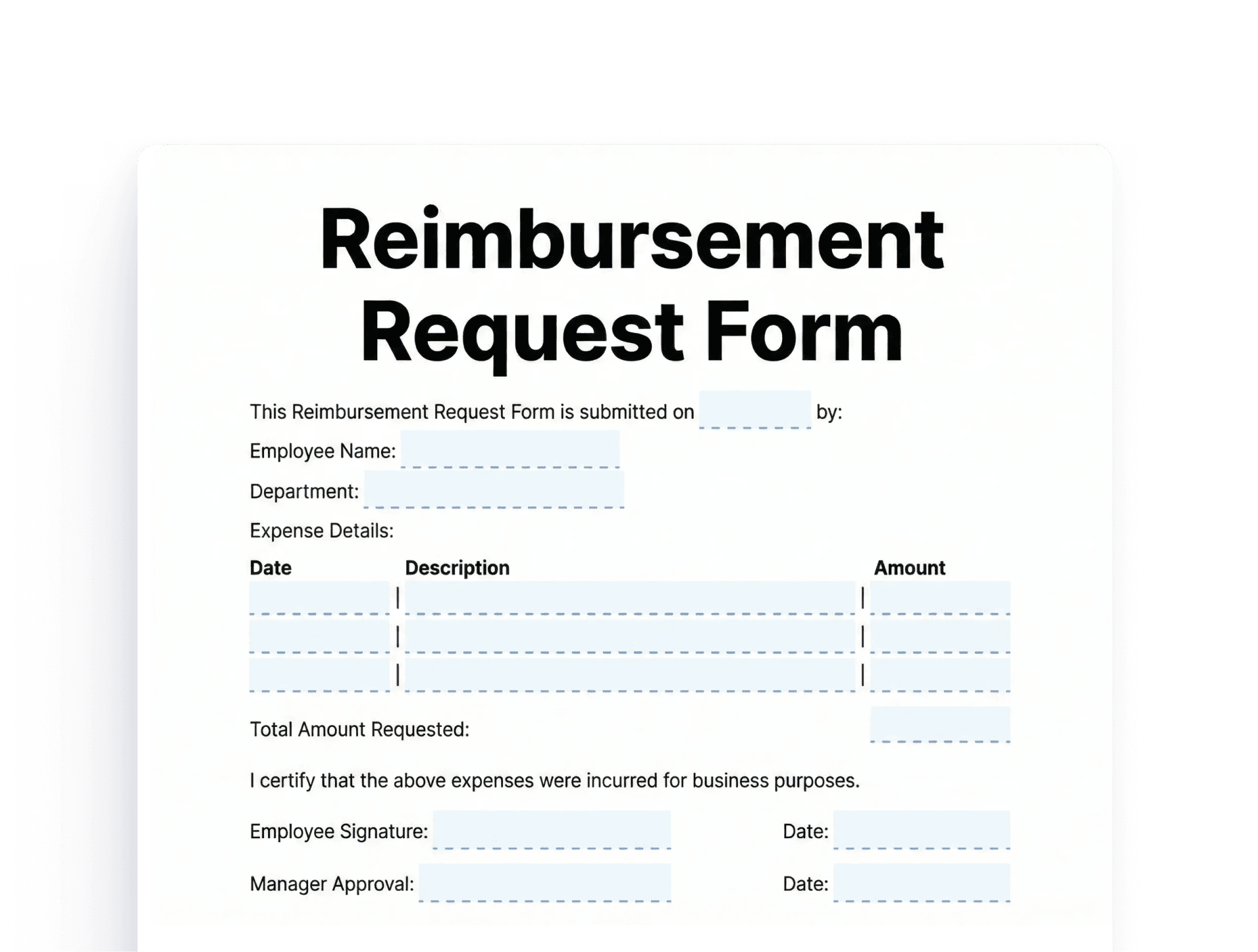
A reimbursement request form is a structured document that property managers submit to recover money spent personally on legitimate property-related expenses. This form itemizes each expense, explains business purposes, attaches supporting documentation like receipts, and routes through appropriate approval channels.
Download as PDF when complete


(No Ratings Yet)
What Is a Reimbursement Request Form?
The form serves multiple vital functions in property management operations. First, it creates documentation proving expenses were property-related business costs rather than personal spending. Second, it establishes approval processes preventing unauthorized expense reimbursement. Third, it provides audit trails connecting reimbursed amounts to actual expenditures supporting tax deductions. Finally, it maintains clear accounting separating personal funds from business operations essential for proper bookkeeping and financial reporting. Property owners or management companies review these requests verifying expense legitimacy before issuing reimbursement payments through checks, direct deposits, or expense account credits.
Common Reimbursable Expenses
Emergency Repairs and Supplies
Property managers often purchase emergency repair supplies or pay contractors immediately when situations demand instant action. Examples include plumbing parts for burst pipe repairs, emergency locksmith services for tenant lockouts, or HVAC repairs during extreme weather. These urgent situations require immediate payment preventing delays while processing purchase orders or obtaining advance approvals.
Additionally, property managers might buy cleaning supplies, light bulbs, air filters, or other maintenance materials during property visits rather than scheduling separate supply runs. These small purchases accumulate significantly over time warranting systematic reimbursement tracking. Furthermore, emergency situations sometimes require cash payments to contractors who don’t accept credit cards or checks.
Mileage and Travel Expenses
Property managers traveling between properties, meeting contractors, showing units, or attending property-related appointments incur mileage expenses eligible for reimbursement. The IRS establishes standard mileage rates annually, currently around 65 cents per mile, that property managers can claim. Detailed mileage logs documenting dates, destinations, purposes, and distances support these reimbursement requests.
Additionally, parking fees, tolls, and public transportation costs for property-related travel qualify for reimbursement. Long-distance property inspections might generate hotel and meal expenses when properties are located far from management offices. Proper documentation of these travel-related costs ensures full recovery of legitimate business expenses.
Office and Administrative Costs
Property managers working from home offices or purchasing administrative supplies personally can seek reimbursement for business-related expenses. These include printer paper, ink cartridges, postage, office supplies, and software subscriptions used for property management activities. Additionally, phone and internet expenses proportional to business use might qualify for reimbursement.
Professional development expenses like continuing education courses, licensing renewals, and industry association memberships also warrant reimbursement when required for property management practice. These investments benefit property owners through improved management quality justifying cost coverage.
Tenant-Related Expenses
Property managers sometimes advance funds for tenant-related costs expecting reimbursement from security deposits or owner accounts. Examples include lockbox purchases for vacant unit showings, utility connection fees for vacant properties, professional cleaning services between tenancies, and advertising costs for vacant unit marketing.
Additionally, property managers might pay small amounts to expedite tenant issues like temporary housing supplies during emergency repairs or meal reimbursements during extended utility outages. These goodwill expenditures maintain positive tenant relationships while protecting property owner interests through reduced liability and improved retention.
Essential Form Components
Requestor Information
Your reimbursement request form should begin with complete requestor identification including full name, title, contact information, and employee or contractor identification numbers. Add the request submission date and any internal reference numbers linking requests to accounting systems. This header establishes who seeks reimbursement and when requests entered processing pipelines.
Include requestor bank account or payment preference information streamlining reimbursement delivery. Specify whether requestors prefer checks, direct deposits, or credits to expense accounts. Additionally, provide emergency contact details if questions arise during request review.
Expense Details and Itemization
Create detailed line items for each reimbursable expense including purchase dates, vendor names, expense descriptions, business purposes, and amounts. Separate entries for different expenses rather than combining multiple items into single lines. This itemization provides transparency supporting approval decisions and accounting categorization.
Specify expense categories for each line item such as repairs, supplies, mileage, meals, or professional services. Category assignments simplify accounting by organizing expenses into appropriate general ledger accounts. Furthermore, categorized expenses support tax preparation by grouping deductible items correctly.
Supporting Documentation Requirements
Attach copies of receipts, invoices, or other proof of payment documents supporting every claimed expense. Highlight relevant information on receipts including dates, amounts, vendor names, and items purchased. Additionally, provide explanations for any missing receipts explaining why documentation is unavailable.
For mileage reimbursement, include detailed logs showing trip dates, starting locations, destinations, purposes, and miles traveled. Online mapping tools can verify distances supporting claimed mileage. Furthermore, photograph receipts creating digital backups preventing lost documentation from delaying reimbursement.
Business Purpose Justification
Explain the business purpose for each expense connecting expenditures to specific properties, projects, or management activities. Generic descriptions like “supplies” prove insufficient. Instead, specify “cleaning supplies for 123 Main St unit turnover” or “emergency plumbing repair at Oakwood Apartments.”
Link expenses to specific work orders, maintenance requests, or projects when possible. These connections demonstrate expense legitimacy and help property owners understanding cost necessity. Additionally, detailed justifications support audit defenses and tax deduction claims.
Approval Workflow
Design clear approval routing showing who must review and authorize reimbursement requests before payment processing. Small expenses under certain thresholds might require only supervisor approval while larger amounts need executive sign-off. Multi-level approval for significant expenses provides financial controls preventing unauthorized reimbursement.
Include signature lines with dates for each approval level documenting review completion. Add comment sections where approvers can note concerns, request additional information, or explain partial approvals. This documentation creates accountability and audit trails supporting financial transparency.
Best Practices for Implementation
Establishing Clear Policies
Create written reimbursement policies distributed to all property managers and staff outlining what expenses qualify for reimbursement, maximum amounts without pre-approval, submission deadlines, and required documentation. Clear policies prevent confusion about expense eligibility and establish consistent standards.
Specify circumstances requiring advance approval before incurring expenses versus situations allowing immediate spending with subsequent reimbursement. Emergency repairs typically allow immediate action while discretionary purchases might require pre-authorization. Additionally, establish spending limits for different expense categories providing guidance about approval requirements.
Timely Submission Requirements
Require reimbursement request submission within specific timeframes after expenses occur, typically 30-60 days. Timely submission maintains accurate accounting and prevents forgotten expenses accumulating into large unexpected reimbursement demands. Additionally, fresh documentation and clear memories support better expense verification.
Communicate submission deadlines clearly and send reminders to property managers about pending unreimbursed expenses. Some organizations establish monthly submission cycles creating predictable review and payment schedules. Furthermore, regular submissions prevent property managers self-financing excessive amounts straining personal finances.
Efficient Review and Payment
Process reimbursement requests promptly, ideally within 5-10 business days of submission. Delayed reimbursements frustrate property managers who advanced personal funds and might discourage them from taking necessary immediate actions during emergencies. Additionally, quick turnaround demonstrates respect for staff contributions.
Communicate clearly with requestors about review status and expected payment dates. If requests require corrections or additional documentation, explain deficiencies specifically rather than generic rejection notices. Furthermore, establish automated payment systems reducing manual processing delays.
Record Keeping and Organization
Maintain comprehensive files for all reimbursement requests including original forms, supporting documentation, approval records, and payment confirmations. Organize chronologically and by requestor facilitating easy retrieval during audits or accounting reconciliation. Digital scanning creates backup copies preventing lost paper documents.
Link reimbursement records to property-specific accounting showing which properties generated costs. This allocation supports accurate property-level profit and loss statements. Additionally, comprehensive records simplify tax preparation by providing organized documentation supporting business expense deductions.
Technology Solutions
Expense Management Software
Modern expense management platforms streamline reimbursement processes through mobile apps allowing instant expense submission with photo receipt capture. These systems route requests automatically through approval workflows and integrate with accounting software eliminating manual data entry.
Software solutions track submission status providing requestors real-time visibility into review progress and payment timing. Additionally, they generate reports showing reimbursement patterns, category spending, and approval bottlenecks helping organizations optimize processes.
Integration with Accounting Systems
Integrate reimbursement systems with property management and accounting software ensuring expense data flows seamlessly into financial records. This integration eliminates duplicate entry errors and ensures timely expense recognition. Furthermore, automated integration supports real-time financial reporting showing current expense levels.
Integration also enables automatic payment processing through existing accounts payable systems. Once requests gain approval, payments get generated automatically according to regular payment cycles. This automation reduces administrative burden while ensuring consistent reimbursement timing.
Conclusion
A reimbursement request form provides essential framework for recovering property-related expenses property managers advance personally. By establishing clear policies, requiring thorough documentation, implementing efficient approval processes, and maintaining comprehensive records, you ensure prompt reimbursement while protecting financial accountability. Whether using simple paper forms or sophisticated expense management software, implement standardized reimbursement procedures today ensuring property managers receive timely repayment for legitimate business expenses. Professional reimbursement management demonstrates organizational respect for staff contributions while maintaining accurate financial records supporting tax compliance and business analysis.
FAQs
Reimbursable expenses typically include emergency repairs, maintenance supplies, property-related mileage, professional services, and administrative costs directly related to property management activities. However, specific policies vary by organization, so always consult your management agreement and expense policies before incurring costs.
Most organizations process reimbursement requests within 5-10 business days of submission with complete documentation. Faster processing demonstrates respect for staff who advanced personal funds, while delays might discourage necessary immediate action during property emergencies.
Attach original receipts, invoices, or payment confirmations for all expenses. Additionally, provide detailed mileage logs for travel reimbursement, explanations of business purposes, and any relevant work order or project references connecting expenses to specific properties.
Most organizations establish submission deadlines, typically 30-60 days after expenses occur. Late submissions create accounting challenges and raise questions about expense legitimacy, so submit requests promptly after incurring costs to ensure timely processing.
Request specific explanation about denial reasons and whether corrections could make requests approvable. Common denial causes include insufficient documentation, non-covered expense categories, or missing pre-approvals, many of which are correctable with additional information.