
Punch List Template
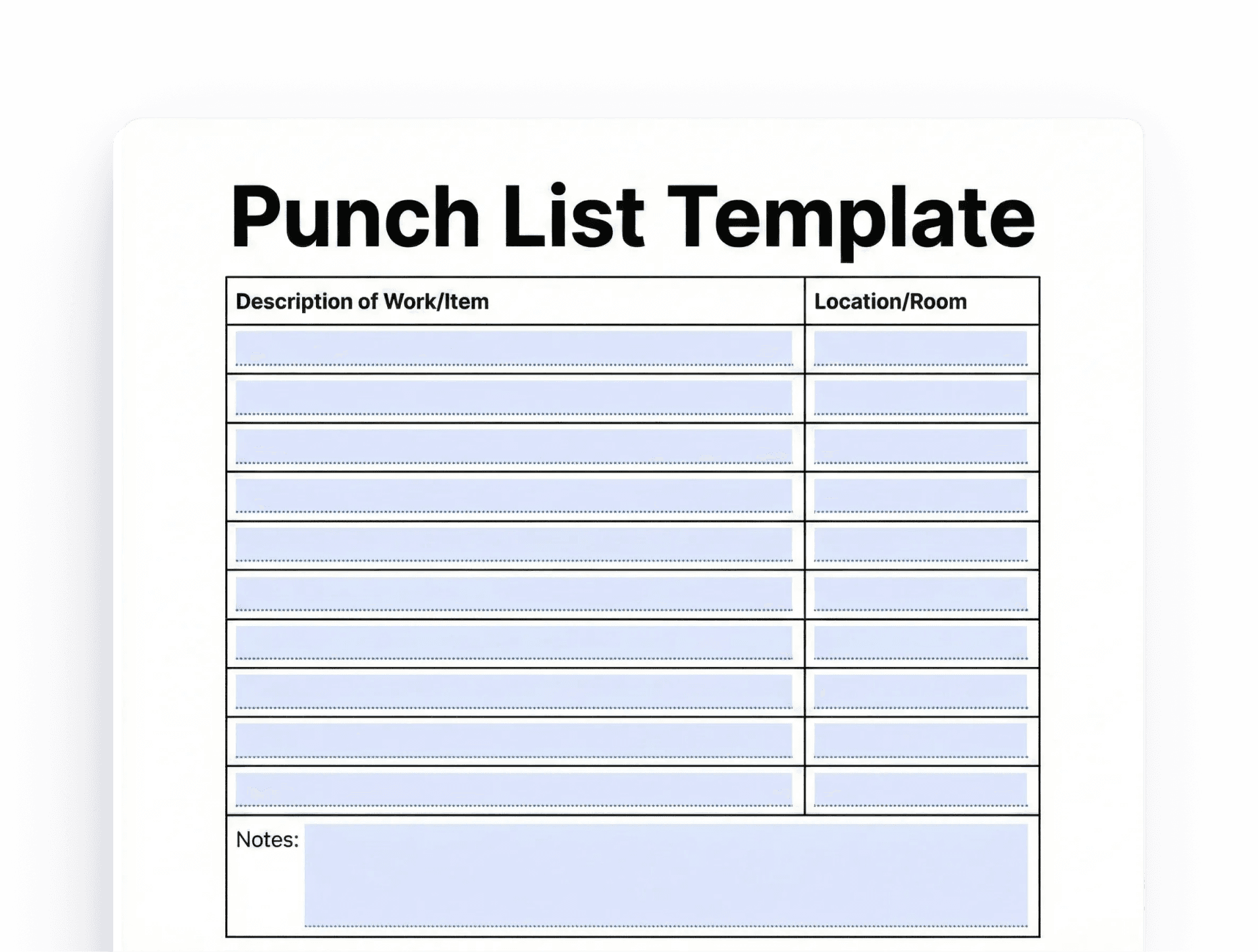
A punch list template is a structured checklist documenting all incomplete work items, defects, or deficiencies discovered during property inspections. This template organizes findings by location, priority, and responsible party creating clear action plans for addressing each issue.
Download as PDF when complete


(No Ratings Yet)
What Is a Punch List Template?
The template serves multiple critical functions in property management. First, it creates comprehensive records of work requiring completion preventing verbal disputes about outstanding tasks. Second, it establishes clear accountability assigning responsibility for each item to specific contractors or staff members. Third, it prioritizes issues by severity ensuring critical problems receive immediate attention while minor cosmetic items get scheduled appropriately. Finally, it provides verification checklists confirming completed work meets specifications before making final payments. Property managers use punch lists during renovation completions, contractor work inspections, move-in preparations, and move-out evaluations ensuring properties meet quality standards before tenant occupancy or final payment release.
Common Applications in Property Management
Renovation and Construction Projects
Major renovations generate extensive punch lists as projects near completion. These lists document all unfinished work, installation errors, cosmetic imperfections, and system malfunctions discovered during final walk-throughs. Common items include paint touch-ups, fixture adjustments, hardware installation, flooring repairs, and electrical or plumbing corrections.
Punch lists protect landlords from paying contractors before completing all contracted work satisfactorily. They also ensure renovated properties meet quality standards before marketing to prospective tenants. Furthermore, detailed punch lists prevent contractors claiming certain work wasn’t included in original agreements by documenting all deficiencies discovered.
Move-Out Preparations
After tenants vacate, punch lists organize all cleaning, repairs, and improvements needed before marketing units to new tenants. These lists typically include painting requirements, carpet cleaning or replacement, appliance repairs, fixture replacements, and deep cleaning tasks. Additionally, they document damage repairs distinguishing between normal wear and tenant responsibility.
Move-out punch lists streamline turnover processes by providing maintenance teams clear work orders. Staff members check off completed items systematically rather than working from memory or scattered notes. This organization reduces vacancy periods by ensuring efficient task completion without overlooking important preparations.
Move-In Property Condition Documentation
Pre-occupancy punch lists document property condition immediately before tenants move in creating baseline records for future move-out comparisons. These lists note any existing imperfections, wear patterns, or minor issues present at occupancy start. Comprehensive documentation protects landlords from disputes about whether damage occurred during tenancy or existed previously.
Share copies of move-in punch lists with new tenants encouraging them adding their own observations. This collaborative approach builds trust and prevents misunderstandings about property condition. Additionally, tenant acknowledgment of existing conditions strengthens your position during move-out security deposit disputes.
Contractor Work Verification
Punch lists verify that contractor work meets specifications and quality standards before making final payments. These lists document all deficiencies requiring correction under original contracts or warranties. Common items include installation errors, finish quality issues, functionality problems, or incomplete scope elements.
Withhold final payments, typically 5-10% of contract amounts, until contractors address all punch list items satisfactorily. This retention creates motivation for timely completion while protecting you from abandoned projects. Furthermore, documented punch lists provide evidence supporting your payment withholding if contractors dispute retention.
Essential Template Components
Header and Identification Information
Begin your punch list template with complete project identification including property address, unit number, project description, and inspection date. Document inspector names and any contractors or property owners present during walk-throughs. Add reference numbers linking punch lists to work orders, contracts, or renovation projects.
Include space for documenting inspection type whether pre-renovation, mid-construction, final completion, or move-out preparation. This context helps reviewers understanding list purposes and urgency. Additionally, header information creates audit trails connecting punch lists to specific projects and timelines.
Item Description and Location
Create detailed description fields for each punch list item avoiding vague language. Instead of “fix wall,” specify “repair 4-inch drywall hole in master bedroom north wall, prime and paint to match existing color.” Rather than “clean bathroom,” state “deep clean bathroom tile grout, remove hard water stains from fixtures, and clean inside cabinets.”
Include specific location details for every item noting rooms, walls, floors, or fixtures involved. This precision helps workers finding problems quickly without wasting time searching. Furthermore, detailed descriptions prevent disputes about what corrections entail and reduce contractor claims that certain items weren’t included.
Priority or Severity Rating
Assign priority levels to each punch list item helping workers and contractors understanding urgency. Common rating systems use Critical/High/Medium/Low classifications or numerical scales like 1-5. Critical items pose safety hazards or prevent property use requiring immediate attention. High priority items affect functionality or tenant comfort needing quick resolution.
Medium priority items involve cosmetic imperfections or minor functionality issues tolerating brief delays. Low priority items represent nice-to-have improvements or minor aesthetic concerns addressable during routine maintenance. Clear prioritization ensures limited resources focus on most important issues first preventing minor cosmetic concerns delaying occupancy.
Responsible Party Assignment
Designate specific individuals or companies responsible for completing each punch list item. Assign items to general contractors, specialized subcontractors, property maintenance staff, or cleaning services as appropriate. This accountability prevents confusion about who should address each issue.
Include contact information for responsible parties alongside assignments facilitating direct communication. Additionally, note any dependencies where completing certain items requires other work finishing first. These relationships help schedule work efficiently preventing crews arriving before prerequisites are complete.
Target Completion Dates
Establish realistic completion deadlines for each punch list item considering priority levels and responsible party availability. Critical items might require 24-48 hour completion while low priority cosmetic issues might allow 2-4 weeks. Reasonable deadlines create urgency without being unachievable.
Different items often have varying timelines based on complexity and resource availability. Some fixes take minutes while others require ordering parts or scheduling specialized trades. Document these estimated timeframes helping you plan overall project completion and tenant occupancy dates.
Verification and Sign-Off
Include checkboxes or signature spaces documenting when items get completed and verified. Note completion dates, verifying inspector names, and any comments about correction quality. This documentation proves work got finished satisfactorily supporting final payment release.
Some templates include separate completion confirmation from both contractors claiming work is done and property managers verifying acceptable quality. This dual sign-off prevents contractors marking items complete when work remains substandard. Furthermore, it creates clear accountability if quality disputes arise later.
Best Practices for Effective Punch Lists
Conducting Thorough Inspections
Perform comprehensive property walk-throughs documenting every deficiency regardless of size. Bring flashlights, measuring tools, and cameras ensuring you can inspect thoroughly and document findings. Additionally, test all systems, fixtures, and appliances rather than assuming functionality.
Inspect properties systematically room-by-room using consistent patterns preventing overlooked areas. Start at main entrances working through properties methodically. Check walls, floors, ceilings, fixtures, and systems in each space before moving forward. This systematic approach ensures completeness.
Photography and Visual Documentation
Photograph each punch list item providing visual references supplementing written descriptions. Images help contractors understanding exactly what needs correction and provide proof of deficiency conditions. Additionally, photos taken after completion verify corrections happened satisfactorily.
Take wide shots establishing context and close-ups showing specific problems. Include reference objects like measuring tapes showing defect sizes when relevant. Furthermore, organize photos by room or item number linking them clearly to punch list entries.
Regular Updates and Communication
Share punch lists with contractors and responsible parties immediately after inspections. Provide regular updates as items get completed showing progress. This communication maintains momentum and demonstrates your active project monitoring.
Schedule follow-up inspections verifying completed work meets standards. Never assume contractors completed items correctly without personal verification. Furthermore, document any newly discovered issues during follow-ups adding them to punch lists rather than overlooking them.
Realistic Expectations and Flexibility
Set reasonable expectations about completion timeframes considering item complexity and contractor availability. Some items require ordering specialty materials or scheduling specific trades creating inevitable delays. Balance your urgency against practical constraints.
Show flexibility for minor timing adjustments when contractors communicate proactively about delays. However, enforce deadlines firmly when contractors simply ignore commitments without explanation. This balanced approach maintains positive relationships while ensuring accountability.
Digital vs Paper Punch Lists
Mobile Apps and Software
Property management apps and construction software offer digital punch list features with numerous advantages. Mobile tools allow creating punch lists on-site during inspections using smartphones or tablets. Additionally, they enable attaching photos directly to specific items, assigning tasks automatically, and tracking completion progress in real-time.
Digital systems send automatic notifications to responsible parties when items get assigned or deadlines approach. Furthermore, they generate completion reports showing what percentage of items are finished helping you tracking project progress. Cloud storage ensures punch lists remain accessible from anywhere preventing lost paper documents.
Traditional Paper Methods
Paper punch lists remain viable for smaller projects or property managers preferring tangible documentation. Pre-printed checklists on clipboards work well during inspections allowing quick notation. However, paper systems require manual transcription for distribution and tracking.
If using paper punch lists, photograph or scan completed lists creating digital backups. Additionally, transcribe information into spreadsheets enabling sorting, filtering, and progress tracking. This hybrid approach combines paper’s simplicity with digital organization benefits.
Conclusion
A punch list template provides systematic framework for documenting incomplete work and ensuring quality standards across all property projects and transitions. By conducting thorough inspections, documenting deficiencies clearly, assigning responsibilities explicitly, and verifying completion carefully, you protect your investment while ensuring properties meet tenant expectations. Whether using sophisticated mobile apps or simple paper checklists, implement consistent punch list procedures today transforming project completions from chaotic rushes into organized quality assurance processes. Professional punch list management demonstrates your commitment to property excellence while preventing costly oversights that diminish value or tenant satisfaction.
FAQs
Create preliminary punch lists during mid-project inspections to catch issues early, then comprehensive final punch lists during completion walk-throughs before making final payments. Multiple inspection points throughout projects prevent accumulating extensive correction lists at the end when timelines are tightest.
Each item should include specific locations, detailed problem descriptions, and expected correction standards. Vague descriptions like “fix door” create confusion, while specific descriptions like “adjust master bedroom door hinges eliminating rubbing on frame” provide clear action guidance.
Always prioritize safety hazards and functional problems before cosmetic issues. Critical items preventing property use or posing dangers require immediate attention, while minor cosmetic imperfections can be scheduled during normal maintenance without delaying occupancy.
Withhold final payment retention amounts until all contracted work completes satisfactorily. If contractors abandon projects, use retention funds hiring other contractors for completion, and document situations thoroughly supporting any legal actions for breach of contract.
Yes, encouraging tenant participation during move-in inspections builds trust and ensures comprehensive condition documentation. Provide blank templates for tenants adding their observations, then sign mutually agreed punch lists establishing baseline property condition protecting both parties during move-out.