
Preventative Maintenance Schedule Template
A preventative maintenance schedule template is a structured calendar organizing all routine maintenance tasks, inspections, and servicing activities required to keep rental properties operating efficiently. This template lists specific maintenance items, recommended completion frequencies, responsible parties, and typical costs for each activity.
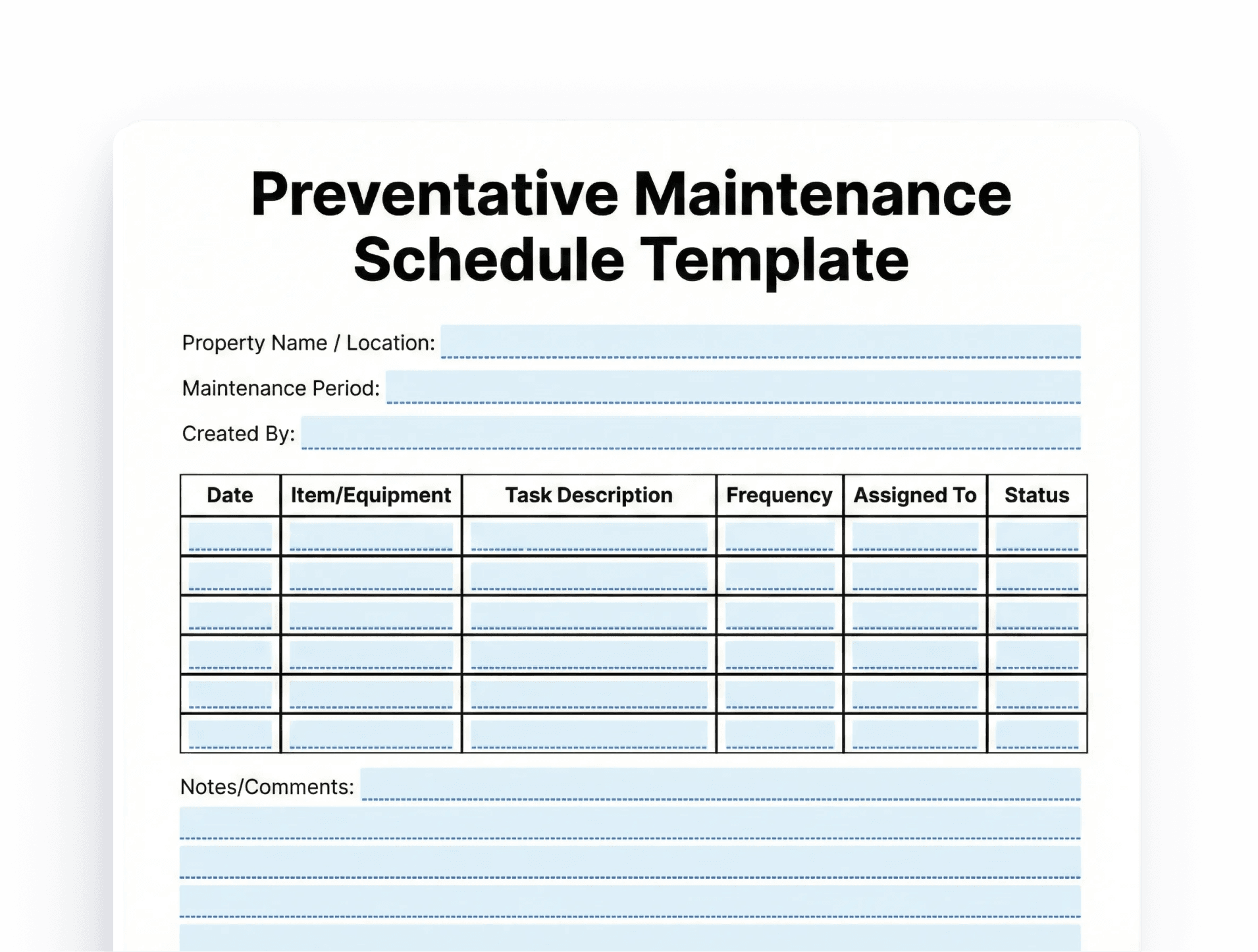
Download as PDF when complete


(No Ratings Yet)
What Is a Preventative Maintenance Schedule Template?
The template serves multiple critical functions in professional property management. First, it prevents equipment failures by ensuring timely servicing before breakdowns occur. Second, it maximizes equipment lifespan by following manufacturer maintenance recommendations consistently. Third, it helps budget maintenance expenses by identifying all anticipated costs throughout the year. Finally, it creates documentation proving diligent property care during insurance claims, property sales, or liability disputes. Property managers use this tool to ensure nothing gets overlooked while distributing maintenance activities evenly throughout the year.
Benefits of Systematic Preventative Maintenance
Cost Savings Through Prevention
Preventative maintenance costs significantly less than emergency repairs addressing failures after they occur. Regular HVAC servicing costing $150-300 annually prevents system replacements costing $5,000-15,000. Similarly, routine gutter cleaning prevents water damage repairs potentially costing thousands. These proactive investments deliver exceptional returns by avoiding catastrophic failures.
Additionally, well-maintained equipment operates more efficiently reducing utility costs. Clean HVAC filters and properly serviced systems consume less energy than neglected units. Water heater maintenance prevents sediment buildup improving efficiency. These operational savings accumulate substantially over time justifying preventative maintenance expenses.
Extended Equipment Lifespan
Regular maintenance extends equipment useful life significantly beyond typical lifespans for neglected systems. HVAC systems properly maintained last 15-20 years versus 10-12 years without service. Water heaters receiving annual flushing operate 12-15 years compared to 8-10 years when neglected. This extended lifespan delays major capital expenditures protecting your cash flow.
Furthermore, maintenance preserves manufacturer warranties often requiring documented regular service. Warranty claims for premature equipment failures get denied without maintenance records. Your preventative schedule template creates these essential records proving warranty compliance.
Reduced Tenant Complaints
Proactive maintenance prevents many problems tenants would otherwise report as emergency repair requests. Regularly serviced HVAC systems rarely fail during extreme weather. Clean gutters prevent water intrusion. Pest control programs stop infestations before tenants notice problems. This prevention improves tenant satisfaction while reducing your administrative burden addressing complaints.
Additionally, visible preventative maintenance demonstrates your commitment to property quality. Tenants appreciate landlords who maintain properties proactively rather than waiting for systems failing. This positive impression improves retention reducing costly turnover expenses.
Essential Maintenance Categories
Monthly Tasks
Monthly preventative maintenance includes activities requiring frequent attention preventing minor issues from escalating. Common monthly tasks include HVAC filter changes, checking smoke and carbon monoxide detectors, inspecting common areas in multi-family properties, and reviewing exterior lighting functionality. Additionally, inspect for pest activity, check plumbing fixtures for leaks, and test GFCI outlets.
These quick monthly checks take minimal time while catching problems early. Furthermore, monthly attention maintains your familiarity with property conditions helping you notice gradual changes requiring attention. Document monthly inspections briefly noting any concerns discovered for follow-up investigation.
Quarterly Maintenance
Quarterly tasks address items needing attention 3-4 times annually. These include gutter cleaning, HVAC system inspections, testing garage door auto-reverse safety features, checking caulking around tubs and showers, and inspecting roof flashing and shingles. Additionally, service fire extinguishers, check foundation for cracks, and lubricate door hinges and locks.
Schedule quarterly maintenance at seasonal transitions preparing properties for upcoming weather conditions. Spring preparations differ from fall requirements. This strategic timing maximizes effectiveness while distributing maintenance activities evenly throughout the year preventing overwhelming seasonal workloads.
Annual Service Requirements
Annual maintenance includes comprehensive servicing for major systems and equipment. Professional HVAC servicing, water heater flushing, chimney inspections and cleaning, septic tank pumping, and sprinkler system winterization all occur annually. Additionally, schedule professional pest control treatments, dryer vent cleaning, and pressure washing exterior surfaces.
Many annual tasks require professional contractors rather than property staff handling routine items. Budget for these professional services in your annual maintenance expenses. Furthermore, schedule annual tasks during traditionally slower maintenance periods avoiding conflicts with emergency repairs during peak seasons.
Multi-Year Projects
Some maintenance activities occur less frequently but require inclusion in long-term schedules. Exterior painting typically happens every 5-7 years. Carpet replacement occurs every 7-10 years depending on quality and wear. Roof replacements average 15-25 years based on materials. Major appliance replacements follow manufacturer expected lifespans.
Track these long-term items in your preventative maintenance schedule template creating capital reserve plans. Knowing when major replacements will occur allows adequate financial preparation. Additionally, this planning prevents multiple simultaneous major expenses straining your budget unexpectedly.
Creating Your Custom Template
Property-Specific Customization
Customize preventative maintenance schedule templates for your specific properties and climates. Properties in cold climates require winterization tasks unnecessary in warm regions. Coastal properties need additional corrosion prevention. Older buildings require more frequent inspections than new construction. Additionally, consider property type differences between single-family homes and multi-family buildings.
List all systems and components present in each property creating comprehensive maintenance inventories. Include HVAC systems, plumbing, electrical, roofing, exterior surfaces, appliances, and landscaping elements. This thorough inventory ensures nothing gets overlooked during template creation.
Organizing by Frequency
Structure your template organizing tasks by completion frequency creating clear monthly, quarterly, and annual sections. This organization makes schedule implementation straightforward by grouping similar-frequency activities together. Additionally, use calendar formats showing specific months for each task type preventing confusion about timing.
Color-code different maintenance categories making visual scanning easy. Use one color for HVAC tasks, another for plumbing, and different colors for exterior and interior maintenance. This visual organization helps you quickly identify task types and ensure balanced distribution throughout the year.
Assigning Responsibilities
Designate responsible parties for each maintenance task specifying whether property staff, contractors, or tenants handle activities. Some tasks like filter changes might become tenant responsibilities while professional servicing requires contractors. Clear responsibility assignment prevents tasks falling through cracks between different parties.
Include contractor contact information directly in templates alongside their assigned tasks. This integration streamlines scheduling by providing immediate access to vendor details when maintenance dates approach. Additionally, note any special requirements or access considerations for contractor visits.
Cost Estimation
Include estimated costs for each preventative maintenance activity helping you budget annual maintenance expenses accurately. Base estimates on historical costs or contractor quotes ensuring realistic projections. Additionally, note which expenses are fixed versus variable adjusting for inflation or price changes.
Total all scheduled maintenance costs creating annual maintenance budgets for each property. This comprehensive view reveals whether rental income adequately covers maintenance expenses or if rent adjustments are necessary. Furthermore, detailed cost estimates support discussions with property owners about maintenance funding requirements.
Implementation Best Practices
Digital vs Paper Systems
Choose between digital property management software or physical paper templates based on your portfolio size and preferences. Digital systems offer automatic reminders, mobile access, and integrated record-keeping. However, simple paper calendars work adequately for small portfolios providing visual reference without technology complexity.
Property management software typically includes maintenance scheduling modules with customizable templates. These systems send automatic notifications as task deadlines approach preventing missed activities. Additionally, they track completion dates and costs building comprehensive maintenance histories automatically.
Seasonal Planning and Preparation
Plan maintenance activities seasonally preparing properties for upcoming weather conditions. Schedule heating system service in fall before winter demands. Check air conditioning in spring before cooling season. Clean gutters before fall leaves accumulate. This strategic timing maximizes effectiveness while preventing emergency failures during extreme conditions.
Create seasonal checklists supplementing your annual template highlighting tasks specific to each season. These focused lists ensure you don’t overlook critical seasonal preparations. Additionally, they help you order supplies or schedule contractors well in advance avoiding last-minute rushes.
Documentation and Record Keeping
Document every completed maintenance activity including dates, costs, and any issues discovered during service. Attach contractor invoices, inspection reports, and photographs to your maintenance records. This comprehensive documentation proves your diligent property care during liability claims or property sales.
Store maintenance records digitally even if using paper schedules creating backup protection against lost documents. Organize records by property and year for easy retrieval. Additionally, maintain equipment manuals and warranty documents alongside maintenance records creating complete property care files.
Regular Template Review
Review and update your preventative maintenance schedule template annually incorporating lessons learned from past year experiences. Add tasks for new equipment installed. Remove items for systems replaced. Adjust frequencies if manufacturer recommendations change or experience suggests modifications.
Analyze actual costs against estimates improving budget accuracy for subsequent years. Note seasonal workload distributions adjusting timing if certain periods became overwhelming. This continuous improvement ensures your template remains effective and realistic as your portfolio and experience evolve.
Conclusion
A preventative maintenance schedule template transforms property management from reactive crisis response into proactive preservation protecting your investment value. By organizing routine maintenance activities systematically, following manufacturer recommendations consistently, and documenting all service activities thoroughly, you extend equipment lifespan, reduce emergency repairs, and improve tenant satisfaction significantly. Customize templates for your specific properties, implement them consistently, and review effectiveness regularly. Professional preventative maintenance demonstrates your commitment to quality property management while delivering exceptional long-term returns through cost savings and preserved property values.
FAQs
Monthly tasks should include HVAC filter changes, smoke detector testing, common area inspections, and basic plumbing checks. These frequent activities catch developing problems early while taking minimal time, preventing costly emergency repairs and maintaining safe conditions.
Follow manufacturer recommendations for equipment servicing, consult industry standards for building components, and adjust based on your property’s age and climate. Additionally, track actual maintenance outcomes over time refining frequencies based on experience and observed equipment performance.
Tenants can handle simple monthly tasks like HVAC filter changes, smoke detector battery replacements, and reporting minor issues early. However, professional servicing and technical maintenance remain landlord responsibilities ensuring proper completion and maintaining warranty compliance.
Budget 1-2% of property value annually for routine preventative maintenance on newer properties, increasing to 3-4% for properties over 20 years old. Additionally, maintain separate capital reserves for major replacements like roofs, HVAC systems, and appliances.
Skipping maintenance causes premature equipment failures, higher energy costs from inefficient systems, and expensive emergency repairs often costing 3-5 times more than preventative service. Furthermore, neglect voids manufacturer warranties and may violate habitability obligations creating legal liability.