
Lead Paint Disclosure Receipt
A Lead Paint Disclosure Receipt is a legally required document confirming that landlords informed tenants about lead-based paint and hazards in rental properties constructed before 1978. This receipt includes disclosure statements about known lead paint presence, records of lead inspection reports shared, and tenant acknowledgment signatures.
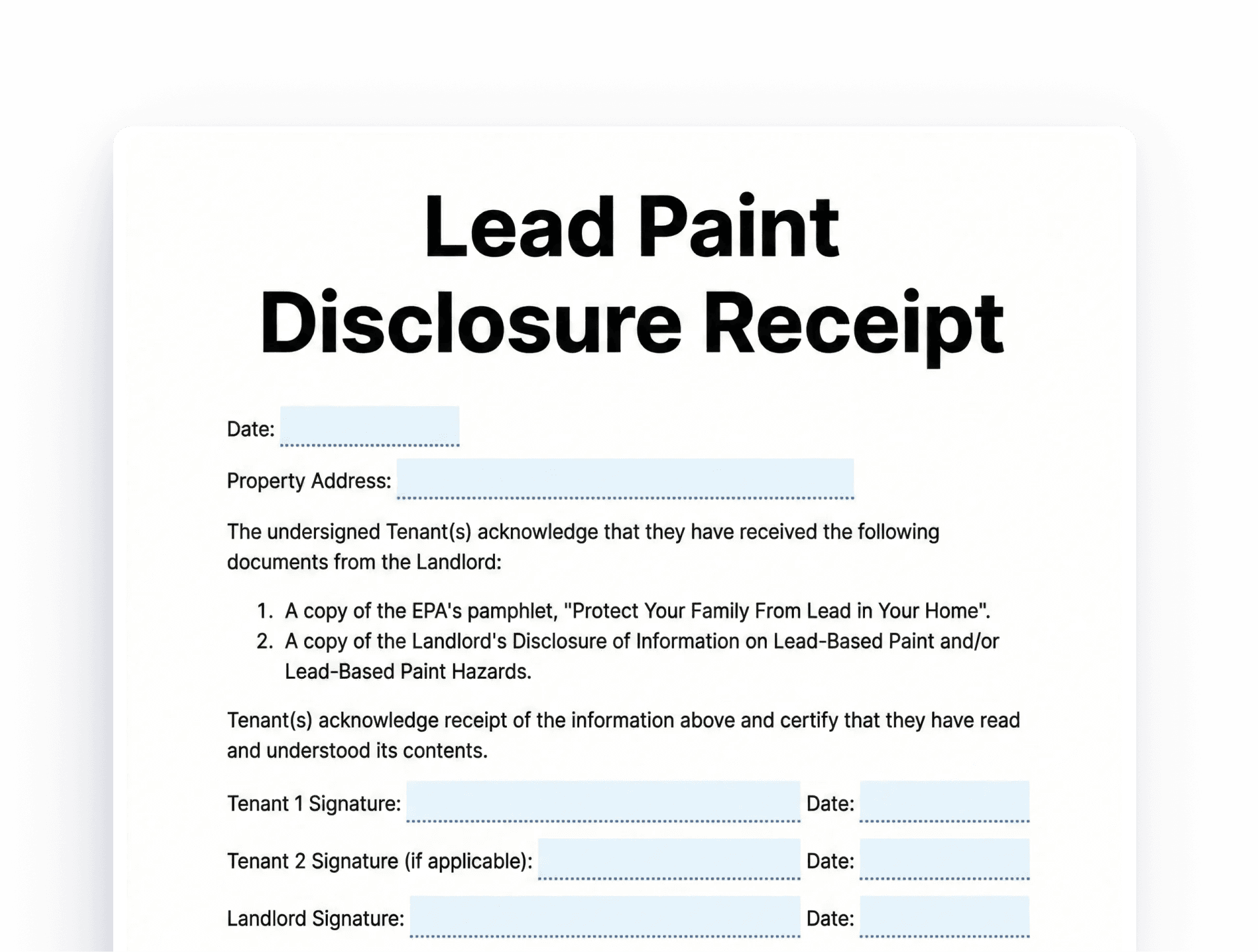
Download as PDF when complete


(No Ratings Yet)
What Is a Lead Paint Disclosure Receipt?
The receipt serves as your proof of compliance during inspections or legal disputes. Without signed receipts, you face severe penalties even if you verbally disclosed information. Additionally, the receipt protects tenants by ensuring they receive important health information before committing to leases. This documentation creates accountability for both parties regarding lead paint awareness. Property managers use this form to comply with federal Residential Lead-Based Paint Hazard Reduction Act requirements.
Federal Legal Requirements
Properties Subject to Disclosure
The federal lead paint disclosure law applies to all residential properties built before 1978, when the government banned lead-based paint for residential use. This includes single-family homes, apartments, condominiums, and multi-family buildings. Even if you believe your property contains no lead paint, you must still provide disclosure forms for pre-1978 construction.
Certain housing types receive exemptions from disclosure requirements. These include properties certified lead-free by qualified inspectors, housing for elderly or disabled persons unless children under six reside there, and short-term rentals of 100 days or less. However, most standard rental situations require full compliance regardless of actual lead paint presence.
Required Disclosure Components
Federal law mandates three specific elements in every lead paint disclosure. First, you must provide an EPA-approved information pamphlet titled “Protect Your Family from Lead in Your Home.” Second, you must disclose any known information about lead paint or hazards in the property. Third, you must provide any available records or reports regarding lead paint presence.
Tenants receive a ten-day opportunity to conduct lead inspections before finalizing lease agreements. You cannot waive this right, though tenants may voluntarily decline inspections. Additionally, disclosure must occur before lease signing, not after tenants move in or during tenancy.
Penalties for Non-Compliance
Failing to provide proper lead paint disclosure carries substantial penalties. The EPA can impose fines up to $16,000 per violation. Additionally, tenants can sue for actual damages, treble damages in some cases, and attorney fees. Criminal penalties including imprisonment apply for willful violations resulting in serious bodily injury.
Each missing disclosure receipt constitutes a separate violation. Therefore, landlords managing multiple properties without proper disclosures face cumulative penalties potentially totaling hundreds of thousands of dollars. Furthermore, real estate licensing boards may discipline property managers who repeatedly violate disclosure requirements.
Essential Components of the Receipt
Property Information Section
Begin your lead paint disclosure receipt with complete property identification. Include the full street address, unit number, city, state, and zip code. Add the property construction year if known with certainty. Document the lease commencement date and tenant names exactly as they appear on the lease agreement.
Include landlord or property management company information with complete contact details. This transparency establishes accountability and provides tenants with communication channels for lead-related questions. Additionally, reference the lease agreement by date connecting disclosure to specific rental contracts.
Landlord Disclosure Statements
Create clear sections where landlords indicate their knowledge about lead paint presence. Federal forms provide checkbox options stating either that lead paint is present, no knowledge of lead paint exists, or inspections confirmed lead-free status. Never claim lead-free status without proper certification from qualified inspectors.
If lead paint exists in your property, specify its locations such as “window frames in bedrooms” or “exterior trim.” General statements like “lead paint present” provide insufficient disclosure. Detailed location information helps tenants make informed decisions and take appropriate precautions.
Records and Reports
Document any lead inspection or assessment reports available for the property. List report dates, inspector names, and provide copies to tenants along with disclosure receipts. If no reports exist, clearly state this fact. Never withhold existing reports or inspection results from prospective tenants.
Attach copies of all relevant reports to disclosure receipts maintaining complete documentation packages. These attachments demonstrate full transparency and provide tenants with maximum information for decision-making. Additionally, comprehensive documentation strengthens your legal position if disputes arise later.
Tenant Acknowledgment Section
Include spaces for tenant signatures acknowledging they received required disclosures, the EPA pamphlet, and any available reports. Add signature date fields and checkboxes confirming receipt of each required element. Some forms include language where tenants acknowledge the ten-day inspection opportunity and indicate whether they exercised this right.
Require signatures from all adult tenants named on the lease agreement. Single tenant signatures on multi-tenant leases create compliance gaps potentially invalidating disclosures. Furthermore, obtain acknowledgment from co-signers or guarantors who sign lease agreements but don’t reside in properties.
Best Practices for Compliance
Using Standardized Forms
Always use EPA-approved lead paint disclosure forms rather than creating custom documents. The EPA provides standardized forms ensuring inclusion of all required elements in proper format. These forms are available free on the EPA website in multiple languages serving diverse tenant populations.
Some property management software includes compliant lead disclosure forms with electronic signature capabilities. These digital solutions streamline disclosure processes while maintaining legal compliance. However, verify that electronic versions contain all federally mandated elements before implementing them.
Timing and Documentation
Provide lead paint disclosure receipts before lease signing during application processing or property showing stages. Early disclosure allows tenants adequate time reviewing information and potentially conducting inspections. Never rush disclosure during lease signing appointments where tenants feel pressured to sign quickly.
Maintain original signed receipts in tenant files throughout tenancy and for at least three years after lease termination. This retention period matches federal record-keeping requirements for lead paint disclosures. Additionally, keep copies of EPA pamphlets distributed and any reports provided with disclosure receipts.
Language and Accessibility
Provide disclosure documents in languages tenants understand when possible. The EPA offers pamphlets in multiple languages including Spanish, Vietnamese, Russian, Arabic, and others. Using appropriate languages ensures tenants genuinely comprehend health risks rather than merely signing forms without understanding content.
Make accommodations for tenants with disabilities affecting reading or comprehension. Offer to read disclosure forms aloud, explain content in simpler terms, or provide additional assistance ensuring full understanding. These accommodations demonstrate good faith compliance while protecting vulnerable tenant populations.
Training and Oversight
Train all staff members involved in leasing about lead paint disclosure requirements. Ensure they understand which properties require disclosure, proper form completion, and timing requirements. Regular training prevents compliance gaps from staff turnover or knowledge gaps.
Implement quality control procedures verifying disclosure completion before lease execution. Create checklists ensuring every pre-1978 rental includes properly signed disclosure receipts in tenant files. Periodic audits identify compliance weaknesses requiring corrective action before violations occur.
Handling Common Scenarios
Properties with Unknown Lead Status
Most landlords lack definitive knowledge about lead paint presence in their properties. In these situations, honestly state you have no knowledge of lead paint rather than claiming properties are lead-free. Additionally, acknowledge that properties built before 1978 may contain lead paint requiring appropriate precautions.
Consider conducting professional lead inspections providing definitive answers about paint status. Certified properties receive exemptions from ongoing disclosure requirements saving administrative effort. However, inspections involve costs that some landlords prefer avoiding given that disclosure alone satisfies legal requirements.
Mid-Tenancy Disclosure Corrections
If you discover you failed providing proper disclosure to current tenants, correct violations immediately. Provide required forms and pamphlets requesting tenant signatures acknowledging receipt. Explain the oversight honestly and emphasize commitment to compliance going forward.
Document correction efforts thoroughly including dates you provided proper disclosure and obtained acknowledgments. While correction doesn’t erase original violations, it demonstrates good faith and may reduce penalties if violations come to regulatory attention. Furthermore, prompt correction protects current tenants from continued information deprivation.
Tenant Refusal to Sign
Occasionally tenants refuse signing disclosure receipts despite receiving information. Document your disclosure attempts including dates you provided forms and pamphlets. Consider sending disclosure packages via certified mail creating proof of delivery even without signature acknowledgment.
Never allow tenancies to proceed without attempting proper disclosure. Tenant signature refusal doesn’t excuse landlord compliance obligations. Furthermore, proceeding with leases lacking signed disclosures creates the same violation exposure as never providing disclosures initially.
Conclusion
A lead paint disclosure receipt represents non-negotiable legal requirement for landlords managing pre-1978 properties. By providing proper disclosures, using approved forms, and maintaining thorough documentation, you avoid substantial penalties while protecting tenant health. Always disclose honestly, provide complete information including available reports, and obtain acknowledgment signatures before lease execution. Implement systematic compliance procedures ensuring every eligible property includes proper lead paint disclosures. Prioritize this critical legal obligation protecting both your business and tenant wellbeing from lead exposure risks.
FAQs
No, federal law only requires disclosure for properties built before 1978 when lead-based paint was banned. However, maintain records proving construction dates since you bear the burden of demonstrating exemption eligibility.
You must still provide disclosure forms stating you have no knowledge of lead paint presence. Never claim a property is lead-free without certification from qualified inspectors, as false statements carry severe penalties.
Yes, electronic signatures are acceptable if they comply with the Electronic Signatures in Global and National Commerce Act (ESIGN). Ensure your electronic system maintains secure records and provides tenants with copies of signed disclosures.
This constitutes a compliance violation since all adult tenants must sign disclosure acknowledgments. Obtain the missing signature immediately and document the correction, though original violation may still carry penalties if discovered.
Short-term rentals of 100 days or less receive federal exemptions from disclosure requirements. However, if you rent the same property to the same tenant beyond 100 days, full disclosure becomes mandatory.