
Contractor Bid Comparison Sheet
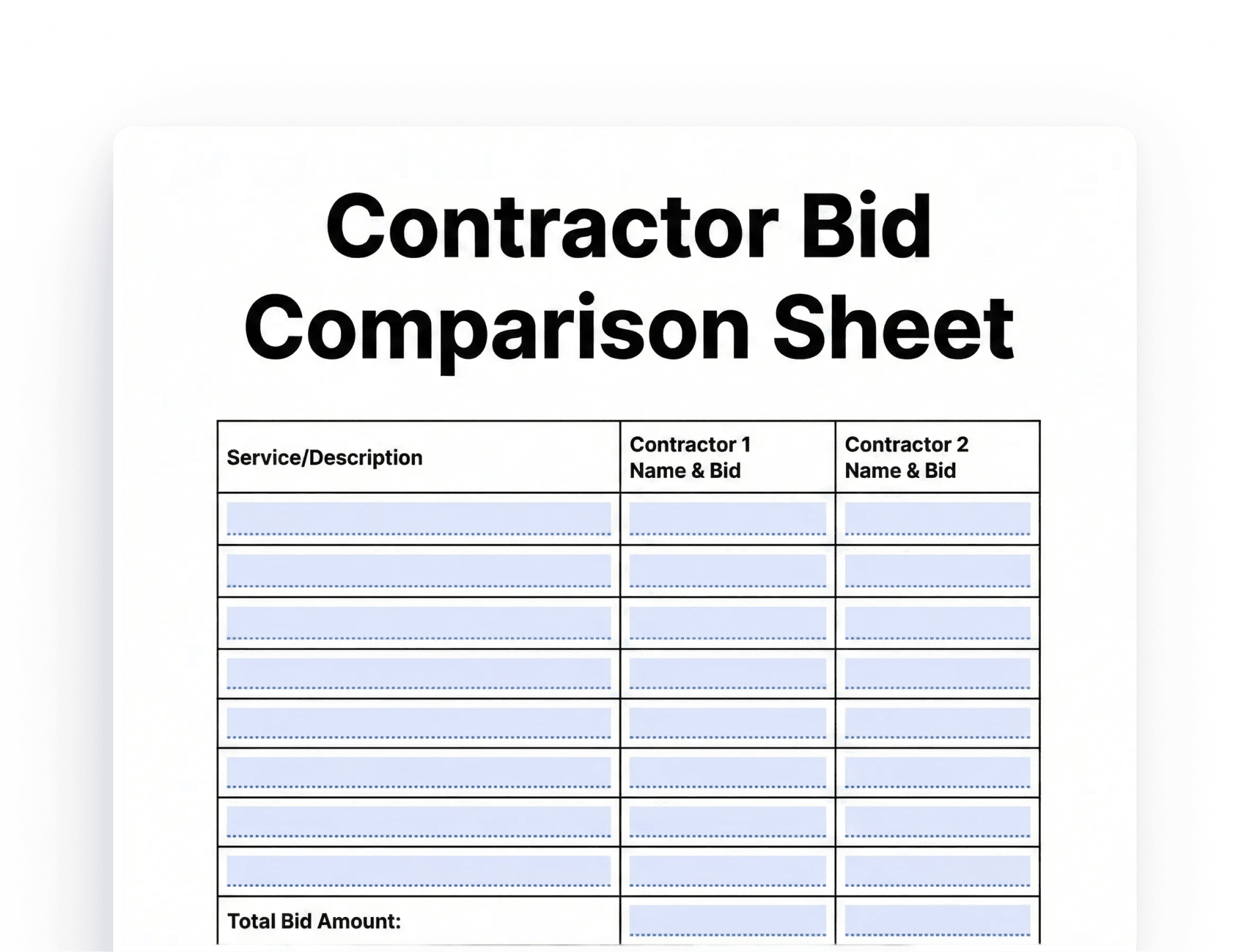
A Contractor Bid Comparison Sheet is a standardized document that organizes and compares proposals from multiple contractors for the same project. This tool displays key information from each bid in parallel columns, making differences immediately visible. Property managers use this sheet to evaluate pricing, scope variations, material quality, warranties, and completion schedules simultaneously.
Download as PDF when complete


(No Ratings Yet)
What Is a Contractor Bid Comparison Sheet?
The comparison sheet transforms overwhelming amounts of information into clear, actionable insights. Instead of flipping between different proposal formats and styles, you see all critical factors aligned for easy evaluation. This organization reveals which contractors offer genuine value versus those with misleadingly low quotes hiding significant limitations.
Why Property Managers Need This Tool
Ensuring Fair Price Comparisons
Contractors rarely submit identical bid formats, making direct price comparisons challenging. One might itemize labor and materials separately while another provides lump-sum pricing. Additionally, some include permits and disposal fees while others list these as separate line items. A contractor bid comparison sheet standardizes this information for accurate cost analysis.
The sheet helps you identify incomplete bids missing essential work components. Sometimes low bids exclude necessary tasks that other contractors included. Without systematic comparison, you might select a contractor based on incomplete pricing, leading to change orders and budget overruns later.
Protecting Against Hidden Costs
Many contractors submit attractive base prices but include unfavorable payment terms or expensive contingencies. Your comparison sheet highlights these hidden costs before contract signing. Additionally, it reveals differences in warranty coverage, insurance requirements, and cleanup responsibilities that impact total project cost.
Some bids include premium materials while others specify basic options without clearly stating the difference. Side-by-side comparison makes these quality variations obvious. Consequently, you can make informed decisions about whether upgrades justify higher costs or if standard materials meet your needs.
Documenting Decision Rationale
A completed contractor bid comparison sheet provides documentation explaining why you selected specific contractors. This record proves valuable when owners or board members question hiring decisions. Furthermore, it demonstrates due diligence during audits or legal disputes about contractor selection processes.
The documentation also helps future decision-making by revealing which evaluation criteria mattered most. Over time, you identify patterns about contractor reliability, pricing accuracy, and quality delivery. These insights improve your ability to pre-qualify contractors and streamline future bidding processes.
Essential Elements to Compare
Pricing and Payment Terms
Your contractor bid comparison sheet should break down total project costs into comparable categories. Include separate rows for labor, materials, equipment rental, permits, and disposal fees. This detailed breakdown reveals where price differences originate and helps identify unrealistic lowball bids.
Document payment schedules for each contractor. Some require large upfront deposits while others follow progress-based payment structures. Additionally, note any penalties for late payments or early completion bonuses. These terms significantly impact your cash flow and project risk exposure.
Scope of Work Accuracy
Create a detailed scope of work before soliciting bids, then verify each contractor addressed all requirements. Use your comparison sheet to check off which tasks each bid includes. This process identifies contractors who missed requirements or misunderstood project specifications.
Note any additional work contractors propose beyond your original scope. Sometimes experienced contractors identify necessary tasks you overlooked. However, distinguish between genuine value-adds and attempts to inflate pricing. Your comparison sheet helps evaluate whether scope additions make sense.
Timeline and Availability
Record each contractor’s proposed start date, estimated duration, and completion guarantee. Timeline differences often reflect contractor workload, crew size, or confidence levels. Extremely short completion promises might indicate unrealistic expectations or plans to rush quality.
Consider your property’s specific needs when evaluating timelines. Vacant units can accommodate longer projects without revenue loss. Occupied units require efficient work minimizing tenant disruption. Additionally, seasonal factors affect certain projects, making winter HVAC installations less disruptive than summer work.
Experience and Qualifications
Document relevant contractor experience and qualifications in your comparison sheet. Include years in business, similar project examples, and specialized certifications. Contractors with specific expertise often deliver better results despite higher pricing.
Verify license numbers, insurance coverage amounts, and bond information for each contractor. This verification prevents hiring unqualified contractors who create liability risks. Additionally, check references and online reviews, noting any patterns of complaints or praise. Your comparison sheet should include space for reference check summaries.
Warranty and Guarantee Terms
Compare warranty periods and coverage details carefully. Some contractors offer one-year workmanship warranties while others provide five-year guarantees. Additionally, material warranties vary based on product quality and manufacturer. Longer warranties demonstrate contractor confidence in their work quality.
Read warranty exclusions and conditions closely. Some warranties become void with missed maintenance or unauthorized repairs. Others require specific maintenance schedules or approved service providers. Understanding these conditions helps you evaluate true warranty value beyond stated time periods.
Creating Your Comparison Sheet
Establishing Evaluation Criteria
Before receiving bids, determine which factors matter most for your specific project. Safety-critical work might prioritize experience and insurance coverage over price. Cosmetic improvements could emphasize cost efficiency and timeline. Rank evaluation criteria by importance to guide final decisions.
Assign numerical weights to different criteria if making selection mathematically. Price might receive 40% weight, experience 25%, timeline 20%, and warranty 15%. This scoring system provides objectivity when multiple contractors offer comparable proposals. However, maintain flexibility to override numerical rankings when circumstances warrant.
Standardizing Information Format
Design your contractor bid comparison sheet with consistent categories across all contractors. Use rows for different evaluation criteria and columns for each bidding contractor. This matrix format makes scanning and comparing information intuitive.
Include space for notes about unique proposal elements or concerns. Some factors resist standardization but still influence decisions. Your notes section captures these qualitative observations for later consideration. Additionally, leave room for follow-up question responses clarifying ambiguous bid elements.
Requesting Additional Information
Use your comparison sheet to identify gaps requiring clarification. When one contractor provides detailed material specifications while others remain vague, request equivalent details from everyone. This leveling ensures you compare truly equivalent proposals.
Create standardized questions addressing common gaps. Ask about supervision frequency, crew size, subcontractor usage, and change order procedures. Contractors’ responses to these questions often reveal professionalism levels and communication styles affecting project success beyond technical capabilities.
Best Practices for Effective Use
Soliciting Competitive Bids
Obtain at least three bids for projects exceeding $5,000 to ensure competitive pricing. More bids provide better price benchmarks but require additional evaluation time. Balance thoroughness against urgency when deciding how many contractors to contact.
Provide identical project information to all bidders. Inconsistent specifications lead to incomparable proposals rendering your comparison sheet useless. Additionally, set clear bid submission deadlines and formats. Standardization during the bidding process simplifies comparison afterward.
Conducting Site Visits
Require all bidding contractors to visit the project site before submitting proposals. Site visits reduce misunderstandings and ensure contractors understand project challenges. Contractors who skip site visits often submit inaccurate bids requiring modifications later.
Offer group site visits where all contractors tour simultaneously. This approach guarantees everyone sees identical conditions and hears the same project description. However, some contractors prefer private visits for asking sensitive questions. Accommodate both preferences while ensuring thorough site evaluation occurs.
Avoiding Common Mistakes
Never automatically select the lowest bid without thorough evaluation. Unrealistically low pricing often indicates missing work, inferior materials, or contractors desperate for work who might cut corners. Use your comparison sheet to understand why pricing differences exist.
Similarly, avoid assuming highest prices guarantee best quality. Some contractors simply charge premium rates without delivering proportionally better results. Your comparison sheet helps identify the best value, balancing cost with quality, reliability, and appropriate service levels.
Conclusion
A contractor bid comparison sheet transforms complex procurement decisions into manageable evaluations. By systematically comparing pricing, scope, timelines, qualifications, and warranties, you select contractors offering genuine value rather than simply lowest cost. This structured approach protects your properties while building relationships with reliable contractors who deliver quality results consistently. Implement a standardized comparison sheet today to improve contractor selection outcomes and demonstrate professional property management practices.
FAQs
Obtain at least three bids for projects exceeding $5,000 to ensure competitive pricing and meaningful comparison. Smaller routine maintenance projects may only require two bids, while major capital improvements often benefit from four or five competitive proposals.
No, the lowest bid often excludes important work elements or uses inferior materials that other contractors included. Use your comparison sheet to understand pricing differences and select the best overall value considering quality, timeline, experience, and warranty terms.
Different approaches can indicate creative problem-solving or fundamental misunderstanding of your needs. Request clarification about why each contractor recommends their approach, then evaluate which solution best addresses your property’s specific requirements and constraints.
Some contractors prefer lump-sum bidding to protect proprietary pricing strategies. However, you should still request basic breakdowns into major categories like labor, materials, and permits to enable meaningful comparison with other bids.
Yes, many contractors expect some negotiation after bid submission. Use your comparison sheet to identify specific areas where costs seem high, then discuss potential value engineering or alternative approaches that reduce expenses without sacrificing quality.