
Annual Property Maintenance Budget


(1)
An Annual Property Maintenance Budget is a financial plan that forecasts all maintenance and repair costs for your rental properties over twelve months. Specifically, it covers routine maintenance, anticipated repairs, seasonal expenses, and emergency reserves. Property managers use this tool to allocate funds and track actual spending against projections throughout the year.
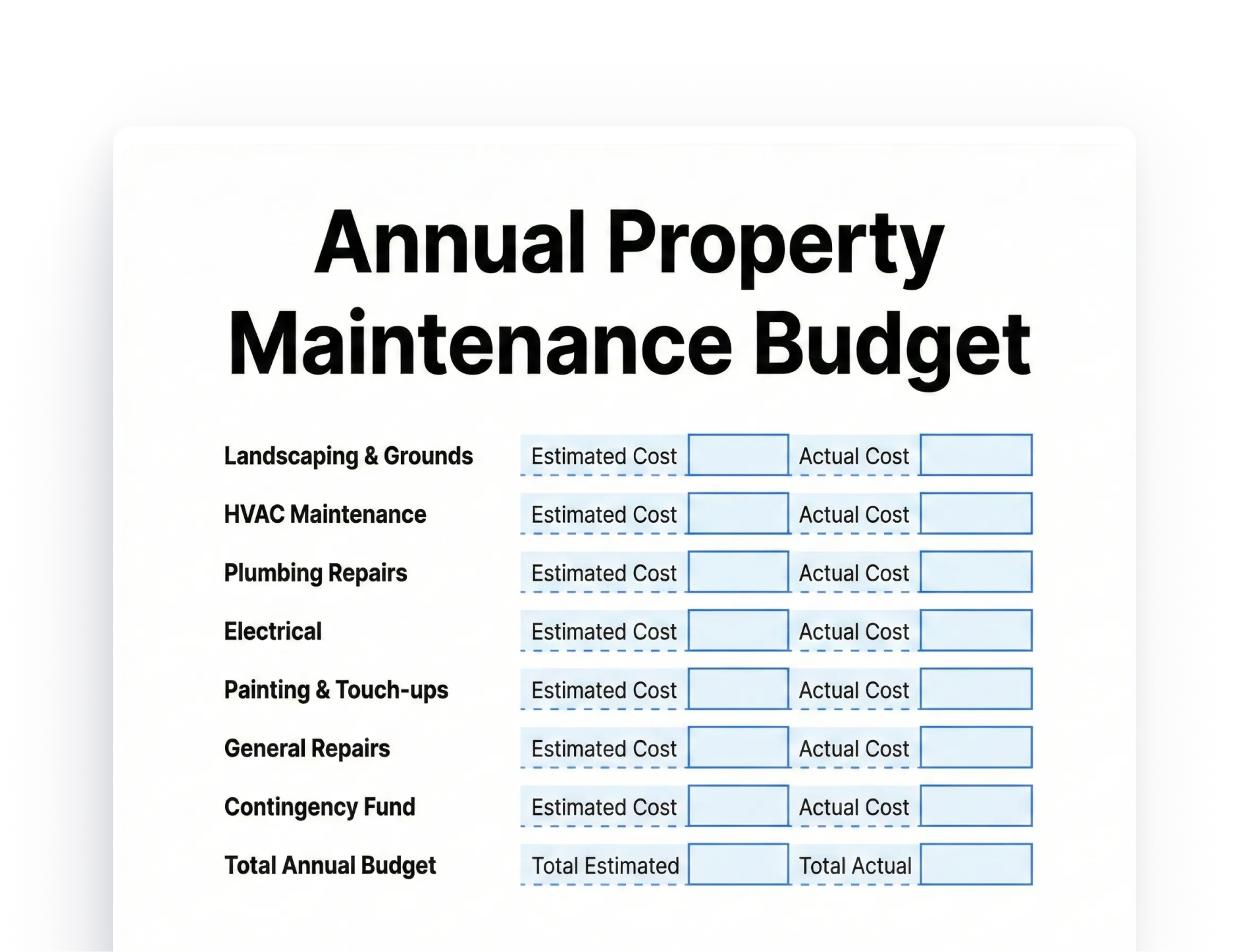
Download as PDF when complete
Your annual property maintenance budget serves several key functions. First, it helps you set rent levels that cover all operating costs. Second, it identifies cash flow problems before they become crises. Third, it provides records for tax purposes and financial reporting. Finally, it creates discipline in your spending decisions.
Essential Components of Your Annual Property Maintenance Budget
Routine Maintenance Expenses
Routine maintenance covers predictable, recurring costs needed to keep properties running. These expenses include:
- Lawn care and snow removal
- Pest control
- HVAC filter changes
- Regular property inspections
Calculate these costs by reviewing past invoices and vendor contracts. Most property managers allocate 1 to 2% of property value each year for routine maintenance. However, older properties or those in harsh climates may need higher allocations. Track these expenses monthly to spot seasonal patterns and adjust future budgets accordingly.
Preventive Maintenance Costs in Your Property Maintenance Budget
Preventive maintenance stops small problems from turning into expensive emergencies. This category includes:
- Annual HVAC servicing
- Gutter cleaning
- Chimney inspections
- Septic tank pumping
- Water heater flushing
These steps extend equipment life and reduce long-term costs. In addition, schedule preventive tasks at the right times of year. For example, service air conditioning in spring before the cooling season starts. Similarly, inspect heating systems in fall before winter arrives. This timing prevents tenant discomfort and costly emergency service fees.
Repair and Replacement Reserves
Even well-maintained properties need occasional repairs and part replacements. Your annual property maintenance budget should include reserves for:
- Appliance failures
- Plumbing leaks
- Electrical issues
- Structural repairs
- Major system replacements like roofs, HVAC units, and water heaters
Calculate replacement reserves based on component age and expected lifespan. For example, a roof lasting 20 years that costs $10,000 requires $500 in annual reserves. Similarly, a $3,000 water heater with a 10-year lifespan needs $300 set aside each year. These calculations ensure you have funds ready when replacements become necessary.
Seasonal and Weather-Related Budget Costs
Seasonal expenses vary widely by location and climate. For instance:
- Northern properties face snow removal, ice dam prevention, and frozen pipe costs
- Southern properties need more frequent air conditioning service and storm preparation
- Coastal properties require extra weatherproofing and rust prevention
Review past weather patterns and previous expenses to plan seasonally. Also, include landscaping costs that change with growing seasons. Furthermore, consider that extreme weather events are becoming more common, and plan your reserves accordingly.
How to Calculate Your Annual Property Maintenance Budget Accurately
Property Age and Condition Assessment
Older properties naturally need higher maintenance budgets than newer ones. Specifically:
- Buildings over 20 years old often need 3 to 4% of property value allocated each year
- Properties under 10 years old may only need 1% since major systems are often still under warranty
Inspect your properties thoroughly before finalizing your budget. Document the condition of all major systems, structural elements, and finishes. This review reveals upcoming replacement needs and helps you prioritize spending throughout the year.
Square Footage and Property Size Factors
Property size directly affects maintenance costs. Larger properties have:
- More systems that need servicing
- Greater exterior surfaces that require care
- More components that can fail
Calculate per-square-foot maintenance costs from past data to estimate expenses for new properties. However, managing multiple units in one building often costs less per unit than managing several single-family homes. Factor these savings into your annual property maintenance budget calculations when planning for a portfolio.
Local Market Factors That Affect Your Budget
Labor and material costs vary across different markets. In addition:
- Urban areas typically have higher service rates but more vendor competition
- Rural areas may offer lower rates but fewer available contractors
Research local pricing before finalizing your projections. Also, local rules affect maintenance requirements and costs. Some areas require specific inspection schedules or licensed contractors for routine tasks. Understanding these rules helps you avoid budget shortfalls from compliance expenses.
Tracking and Adjusting Your Annual Property Maintenance Budget
Monthly Monitoring Systems
Track actual expenses against budgeted amounts every month rather than waiting until year-end. This regular check-in reveals overspending early, when you can still take corrective action. Use a simple spreadsheet or property management software to compare projections with actual costs.
Categorize expenses consistently to spot patterns and trends. Note whether overspending happens in specific categories or across all areas. This analysis helps you understand whether changes reflect one-time events or ongoing underestimation.
Variance Analysis and Budget Adjustments
Expect some difference between budgeted and actual expenses throughout the year. Small gaps under 10% are normal. However, large gaps need investigation and possible budget revisions. Determine whether unexpected costs represent real emergencies or poor initial planning.
Adjust future budgets based on what you find. For instance:
- If HVAC repairs consistently exceed projections, increase that category
- If landscaping costs run lower than expected, reduce that allocation and move funds elsewhere
Emergency Fund Management for Property Maintenance
Maintain a separate emergency fund equal to 3 to 6 months of total operating expenses. This reserve handles truly unexpected events like storm damage, vandalism, or sudden system failures. Never rely solely on your annual property maintenance budget for emergency situations.
Replenish emergency funds quickly after use. Set aside extra amounts each month until the reserve reaches its target again. This habit ensures you are always ready for unexpected maintenance costs.
Best Practices for Annual Property Maintenance Budget Success
Vendor Relationship Development
Build relationships with reliable contractors before emergencies happen. Negotiate annual service contracts that offer priority scheduling and possibly lower rates. These relationships ensure quality work and more predictable costs throughout the year.
Get multiple quotes for major projects to ensure fair pricing. However, do not always choose the lowest bid. Consider contractor reputation, warranty terms, and completion time when making decisions. Quality work often costs more upfront but saves money in the long run.
Technology Tools to Support Your Property Maintenance Budget
Use property management software to streamline budget tracking and maintenance scheduling. These tools:
- Send automatic reminders for preventive maintenance tasks
- Track expenses in real time
- Generate reports showing spending patterns and budget performance
Also, consider smart home technology for remote monitoring. Water leak sensors, HVAC monitors, and security cameras help you catch problems early before they become costly repairs. These investments often pay for themselves through fewer emergency expenses.
Tenant Communication and Education
Teach tenants about their maintenance responsibilities versus yours. Clear communication prevents disputes and ensures minor issues get reported quickly. In addition, encourage tenants to report problems early when repairs are still simple and low-cost.
Give tenants a clear maintenance request process and expected response times. This transparency builds trust and helps manage expectations. Furthermore, responding quickly to maintenance requests improves tenant retention and lowers turnover costs.
Annual Property Maintenance Budget: Key Takeaways
An annual property maintenance budget is essential for protecting property value and keeping your finances stable. To do it right, start with conservative estimates, track expenses monthly, maintain a 3 to 6 month emergency reserve, build strong vendor relationships, and use software to automate reminders and track spending. Ultimately, landlords who master maintenance budgeting enjoy fewer surprises, better cash flow, and more profitable rentals over time.
FAQs
Most experts recommend allocating 1-2% of property value annually for maintenance, which typically equals 20-30% of monthly rental income. Older properties or those in harsh climates may require allocating 3-4% of property value for adequate maintenance coverage.
First, use your emergency fund to cover unexpected costs without disrupting cash flow. Then analyze why the overage occurred and adjust future budgets accordingly to prevent recurring shortfalls.
No, capital improvements that add value or extend property life should be tracked separately from routine maintenance. Maintenance preserves existing condition while improvements enhance property beyond original specifications, requiring different accounting treatment.
Review your budget monthly to track variance and quarterly to make adjustments. Additionally, conduct a comprehensive annual review incorporating lessons learned to create a more accurate budget for the following year.
A maintenance budget covers routine upkeep and minor repairs during the current year. Capital reserves are long-term savings for major component replacements like roofs, HVAC systems, and structural repairs that occur every 10-30 years.