
ADA Accommodation Request Form
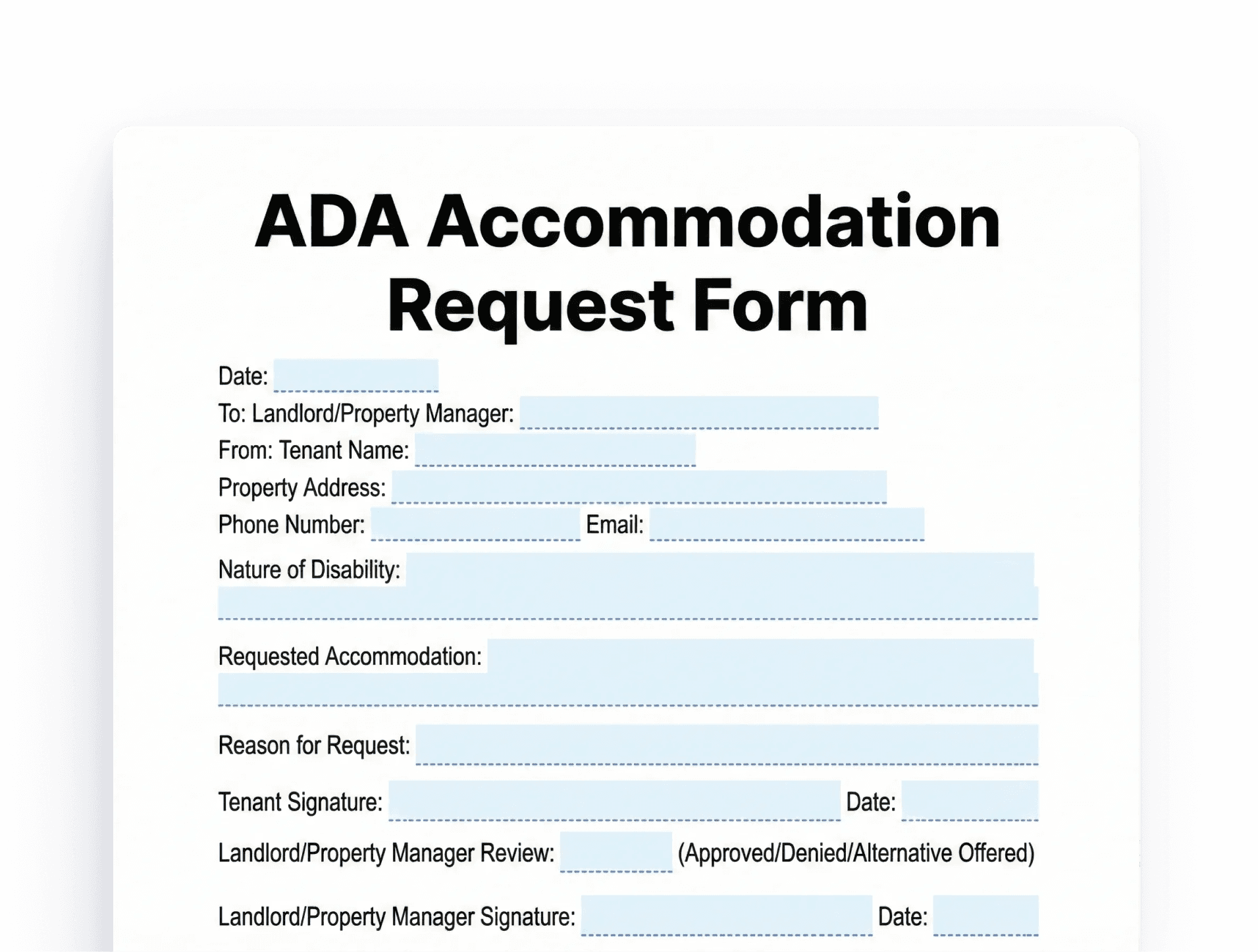
An ADA accommodation request form is a standardized document that tenants use to formally request modifications or exceptions to housing policies due to disabilities. This form captures essential information about the requested accommodation, the disability-related need, and supporting documentation. Property managers use this tool to evaluate requests fairly and maintain thorough records of all accommodation decisions.


(No Ratings Yet)
What Is an ADA Accommodation Request Form?
The Americans with Disabilities Act (ADA) and Fair Housing Act require landlords to provide reasonable accommodations to tenants with disabilities. These accommodations might include allowing service animals in no-pet buildings, assigning accessible parking spaces, or modifying lease terms. A structured form ensures you collect necessary information while respecting tenant privacy and legal requirements.
Legal Requirements and Obligations
Fair Housing Act Compliance
The Fair Housing Act prohibits discrimination based on disability in housing transactions. Landlords must provide reasonable accommodations unless doing so creates undue financial burden or fundamentally alters the housing program. You cannot charge extra fees for disability-related accommodations, though you may charge for modifications beyond normal wear and tear.
Reasonable accommodations include policy exceptions, rule modifications, and service adjustments. For example, you might waive a no-pets policy for an emotional support animal or allow a tenant to pay rent by mail instead of online. These changes help disabled tenants use and enjoy their housing equally.
When Accommodations Are Required
You must consider accommodation requests when a tenant has a physical or mental impairment that substantially limits major life activities. The disability must have a direct connection to the requested accommodation. However, you cannot demand detailed medical records or ask intrusive questions about the nature of someone’s disability.
Requests can come at any time during the tenancy, not just during the application process. Additionally, tenants may make verbal requests, though a written form creates better documentation. You should respond promptly to all requests, typically within 10 business days according to HUD guidelines.
Essential Components of the Form
Tenant Information Section
Your ADA accommodation request form should begin with basic tenant identification details. Include the tenant’s full name, rental unit address, phone number, and email address. Add the lease start date and current lease status. This information helps you locate the correct file and track the request through your system.
Keep this section simple and straightforward. Avoid asking for unnecessary personal details that don’t relate to processing the accommodation request. Remember that privacy concerns are paramount when dealing with disability-related matters.
Description of Requested Accommodation
Create a clear section where tenants describe their specific accommodation request. Provide adequate space for detailed explanations of what they need. Examples include installing grab bars, allowing an assistance animal, providing a designated accessible parking space, or modifying communication methods.
Encourage tenants to be specific about their request. Vague descriptions make evaluation difficult and delay the approval process. Additionally, include space for tenants to explain how the accommodation relates to their disability without requiring detailed medical information.
Disability-Related Need Documentation
While you cannot demand extensive medical records, you may request verification that a disability exists and connects to the accommodation request. The form should include a section for healthcare provider information. Ask for the provider’s name, contact details, and license type.
Many landlords attach a separate verification form that healthcare providers complete. This form should ask only whether the patient has a disability and whether the requested accommodation is necessary. Avoid questions about diagnosis, treatment, or prognosis that invade privacy unnecessarily.
Supporting Documentation Guidelines
Clearly explain what documentation you need from tenants. State that verification must come from qualified healthcare providers, including physicians, psychiatrists, therapists, or social workers. Specify acceptable formats, such as letters on professional letterhead or completed verification forms.
Set reasonable deadlines for submitting documentation, typically 10-14 days. However, remain flexible for tenants who experience delays obtaining provider verification. Consider granting temporary approval while waiting for documentation in urgent situations.
Processing and Evaluating Requests
Initial Review Process
When you receive an ADA accommodation request form, acknowledge receipt immediately. Send written confirmation to the tenant within 2-3 business days. This acknowledgment should include the expected timeline for your decision and any additional information needed.
Review the request carefully to determine if it meets the criteria for reasonable accommodation. Ask yourself whether the request addresses a disability-related need and whether granting it creates undue burden. Consult with legal counsel when facing complex or unclear situations.
Interactive Dialogue
Fair housing law requires an interactive process between landlords and tenants. You may need to discuss alternative accommodations if the original request proves unreasonable. For example, if a tenant requests a ground-floor unit but none are available, you might offer assistance with moving belongings or installing a stair lift.
Document all conversations and communications during this dialogue. Keep detailed notes of what was discussed, alternatives proposed, and reasoning behind decisions. This documentation protects you if disputes arise later.
Making Your Decision
Approve reasonable accommodation requests whenever possible. Denial should occur only when accommodation creates undue financial burden, requires fundamental program alteration, or poses direct threat to others’ safety. Document your reasoning thoroughly in writing.
Provide written notice of your decision within 10 business days. If approved, explain how and when you will implement the accommodation. For denials, state specific reasons and offer to discuss alternatives. Always maintain respectful, professional communication regardless of the outcome.
Best Practices for Property Managers
Staff Training and Education
Ensure all staff members understand fair housing laws and accommodation procedures. Provide regular training on disability rights, appropriate questions, and privacy requirements. Train employees to recognize accommodation requests even when not explicitly labeled as such.
Create clear internal procedures for handling requests consistently. Designate specific staff members responsible for processing forms and making decisions. Consistency across your organization demonstrates commitment to fair housing compliance.
Documentation and Record-Keeping
Maintain comprehensive files for every accommodation request. Store the initial request form, supporting documentation, decision letters, and implementation records together. Keep these files separate from general tenant files to protect privacy.
Retain accommodation records for at least three years after the tenancy ends. Some jurisdictions require longer retention periods. Additionally, ensure records remain confidential and accessible only to staff with legitimate need to know.
Proactive Communication
Include information about accommodation procedures in your lease agreements and tenant handbooks. Provide the request form on your website and in your rental office. Making the process transparent encourages tenants to request needed accommodations officially.
Display fair housing posters prominently and include accessibility information in property marketing materials. These actions demonstrate your commitment to disability rights and may prevent discrimination complaints.
Regular Policy Review
Review your accommodation procedures annually to ensure continued compliance with evolving laws. Update forms and policies as needed based on new regulations or court decisions. Consider consulting with fair housing attorneys during these reviews.
Track accommodation requests and outcomes to identify patterns or potential problems. High denial rates or frequent similar requests might indicate systemic accessibility issues requiring property modifications.
Conclusion
An ADA accommodation request form streamlines the process of evaluating and documenting disability-related accommodation requests. By implementing a clear, consistent procedure, you protect tenant rights while maintaining thorough records for your business. Always respond promptly to requests, engage in good faith dialogue, and approve reasonable accommodations whenever possible. Proper handling of these requests demonstrates professionalism and prevents costly fair housing violations. Consult with legal counsel when uncertain about specific situations to ensure you meet all federal, state, and local requirements.
FAQs
No, tenants can make accommodation requests verbally, and you must still consider them. However, using a standardized form creates better documentation and helps ensure you collect all necessary information for proper evaluation.
No, you cannot request detailed medical information or specific diagnoses. You may only verify that a disability exists and that the requested accommodation is necessary to address a disability-related need.
You must engage in an interactive dialogue with the tenant to explore alternative accommodations. Document all discussions and consult legal counsel before denying any request to ensure you’re not violating fair housing laws.
HUD guidelines recommend responding within 10 business days. Delays in responding could be considered discrimination, so acknowledge receipt immediately and provide updates if you need additional time for evaluation.
No, you cannot charge fees or deposits for reasonable accommodations like allowing service animals or modifying policies. However, tenants remain responsible for damages beyond normal wear and tear caused by approved modifications.