
Abandoned Property Notice
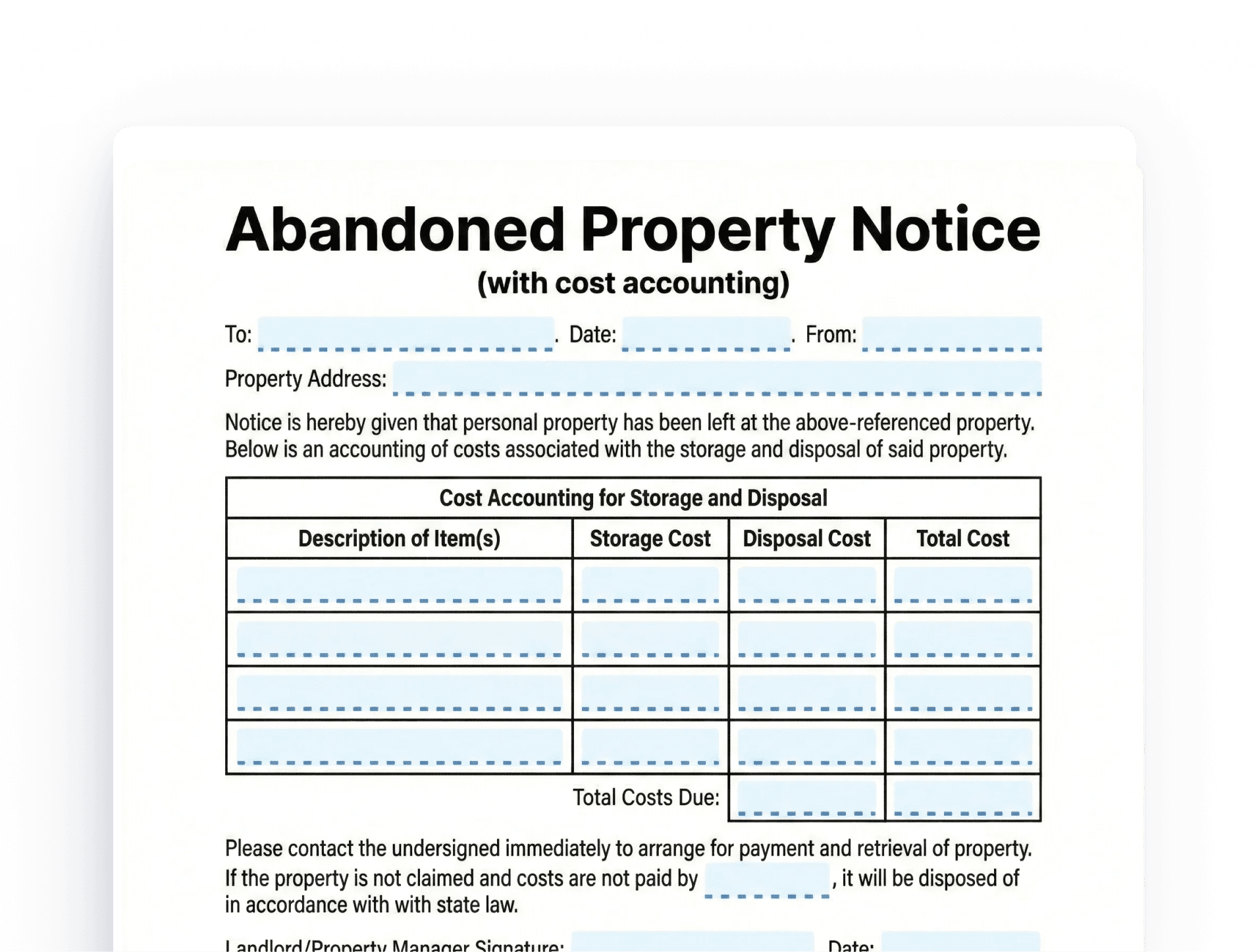
An Abandoned Property Notice is a formal legal document that informs former tenants about personal property left behind in a rental unit. Landlords send this notice after a tenant vacates the premises, whether voluntarily or through eviction. The notice describes the abandoned items, explains storage arrangements, and specifies deadlines for retrieval.
Download as PDF when complete


(No Ratings Yet)
What Is an Abandoned Property Notice?
This document serves multiple purposes in the landlord-tenant relationship. First, it creates a paper trail demonstrating your good faith effort to return tenant property. Second, it establishes legal grounds for disposing of items after the deadline passes. Moreover, it outlines what happens if the tenant fails to claim their belongings within the required timeframe. Finally, it helps you recover storage costs and unpaid rent from the value of abandoned belongings when permitted by law.
When Do You Need This Notice?
After Voluntary Move-Out
Sometimes tenants move out quickly and leave items behind accidentally or intentionally. They might abandon furniture they no longer want, forgotten storage boxes, or unwanted appliances. You discover these items during your move-out inspection. Consequently, you cannot immediately dispose of these belongings, even if they appear worthless.
Send an abandoned property notice whenever you find tenant possessions after lease termination. This requirement applies regardless of whether the items seem valuable or not. Courts have ruled that landlords must follow proper procedures even for apparent trash or junk.
Following Eviction Proceedings
Evicted tenants frequently leave substantial amounts of property behind. The stress and urgency of eviction often prevent tenants from removing all belongings. Additionally, some tenants abandon property deliberately to avoid moving costs. Either way, you must handle these items according to your state’s abandoned property laws.
Never throw away tenant belongings immediately after an eviction. Even though the tenant lost their right to occupy the unit, they retain ownership of personal property. Failing to follow proper notice procedures can result in lawsuits for illegal disposal or conversion of property.
State-Specific Requirements and Timelines
Notice Delivery Methods
State laws specify exactly how you must deliver abandoned property notices. Most states require certified mail with return receipt to the tenant’s last known address. Some jurisdictions also accept personal delivery or posting at the rental property. Check your state’s specific requirements before sending any notice.
Always send notices to multiple addresses when possible. Mail to the rental unit, any forwarding address provided, and emergency contact addresses from the lease. This extra effort demonstrates reasonable attempts to contact the tenant. Additionally, photograph the abandoned items and document your notice delivery attempts thoroughly.
Storage Period Requirements
Each state mandates minimum storage periods before landlords can dispose of abandoned property. Common timelines range from 10 to 30 days, though some states require longer periods. California, for example, requires 18 days for personal service or 21 days if sent by mail. Texas allows disposal after 30 days following proper notice.
The storage period begins when you send the notice, not when the tenant receives it. Therefore, use certified mail to prove the mailing date. Some states calculate deadlines differently for high-value versus low-value items. Research your jurisdiction’s specific rules or consult a local attorney for guidance.
Value Thresholds and Requirements
Many states categorize abandoned property by value, with different procedures for each category. Low-value items might require only basic notice and short storage periods. High-value property often demands additional steps, such as newspaper publication or court approval before disposal. The value threshold varies significantly between states.
For example, items worth less than $500 might follow simplified procedures in one state, while another sets the threshold at $1,000. Always appraise abandoned property conservatively and document your valuation process. Overestimating value provides extra protection, while underestimating could lead to legal problems.
Essential Elements of the Notice
Detailed Property Description
Your abandoned property notice must clearly describe each item left behind. List furniture pieces, appliances, boxes, and other belongings specifically. Avoid vague descriptions like “miscellaneous items” or “household goods.” Instead, write “queen-size mattress, wooden dining table with four chairs, and three cardboard boxes.”
Include identifying details when possible. Note brand names, colors, approximate condition, and distinguishing features. Take photographs of all abandoned items before storage. These photos serve as evidence if disputes arise later about what was actually left behind.
Storage Location and Access
Inform the tenant exactly where you stored their belongings. Provide the complete address, building name, and unit number if applicable. Explain any access restrictions, such as specific hours for retrieval or requirements for advance notice. Make retrieval as straightforward as possible to demonstrate good faith.
If you moved items to a storage facility, include the facility’s contact information. Specify whether the tenant should contact you or the storage company directly. Clarify any costs associated with retrieval, such as moving fees or storage charges you plan to deduct from the security deposit.
Retrieval Deadline and Consequences
State clearly the exact date by which the tenant must claim their property. Use specific dates rather than phrases like “within 15 days” to avoid confusion. Explain precisely what happens if the tenant misses this deadline. Most states allow landlords to sell, donate, or dispose of unclaimed property.
Outline any costs the tenant must pay before retrieving belongings. Many states permit landlords to charge reasonable storage fees and moving expenses. However, you cannot hold property hostage for unpaid rent in most jurisdictions. Specify acceptable payment methods and where payments should be sent.
Best Practices for Property Managers
Documentation and Record-Keeping
Create a comprehensive file for each abandoned property situation. Include copies of the lease agreement, move-out inspection report, and photographs of abandoned items. Save certified mail receipts, delivery confirmations, and any tenant responses. This documentation proves invaluable if legal disputes develop months or years later.
Maintain detailed logs of all actions taken. Record when you discovered the abandonment, sent notices, stored items, and eventually disposed of property. Note any communication attempts and tenant responses. Thorough records demonstrate professionalism and legal compliance during potential court proceedings.
Fair Disposal Procedures
When the retrieval deadline passes, follow your state’s disposal requirements carefully. Some states mandate selling valuable items and applying proceeds to unpaid rent or storage costs. Others require donating to charity or offering property to homeless shelters. Disposing items in landfills should be your last resort.
Always obtain receipts when donating or selling abandoned property. These documents prove proper disposal and show you didn’t personally profit inappropriately. If selling items, use fair market value and document the sale price. Many states require remitting any excess sale proceeds to the tenant or state treasury.
Preventive Measures
Include clear abandoned property language in your lease agreements. Specify that property left behind after move-out will be considered abandoned. Reference your state’s specific laws and timelines. This proactive approach educates tenants and establishes expectations from the start.
Conduct thorough move-out inspections with departing tenants whenever possible. Create detailed checklists and document the unit’s condition together. Address any remaining belongings immediately during the inspection. This process often prevents abandonment situations from developing in the first place.
Conclusion
An abandoned property notice protects both landlords and tenants when belongings are left behind. By following your state’s specific requirements for notice delivery, storage periods, and disposal procedures, you minimize legal risks while handling tenant property responsibly. Always document every step thoroughly, from discovery to final disposal. When you treat abandoned property situations with professionalism and care, you maintain your reputation and avoid costly legal complications. Consult a local attorney if you’re uncertain about your jurisdiction’s requirements or face complex situations involving high-value items.
FAQs
No, you must follow your state’s abandoned property laws before disposing of any tenant belongings. Most states require you to send a formal notice and store items for a specified period, typically 10-30 days.
You still must follow proper notice procedures even if items appear to be junk or garbage. Courts have ruled that landlords cannot unilaterally decide what is valuable, and tenants may sue for improper disposal of their property.
Most states do not allow landlords to hold property hostage for unpaid rent. However, you may be able to sell valuable abandoned items and apply the proceeds toward outstanding debts after following proper legal procedures.
Property is typically considered abandoned when the lease has ended, rent is unpaid, the tenant hasn’t responded to communications, and utilities are disconnected. Send an abandoned property notice if you’re uncertain to protect yourself legally.
Send the notice to the rental unit address, any forwarding address on file, and emergency contacts from the lease. If all attempts fail, some states allow alternative notice methods like newspaper publication or posting at the property.