
Real Estate Investor Due Diligence


(1)
A Real Estate Investor Due Diligence Checklist protects your capital and helps identify profitable opportunities. Thorough due diligence reveals potential problems and verifies property value. In short, it confirms your investment projections before you close.
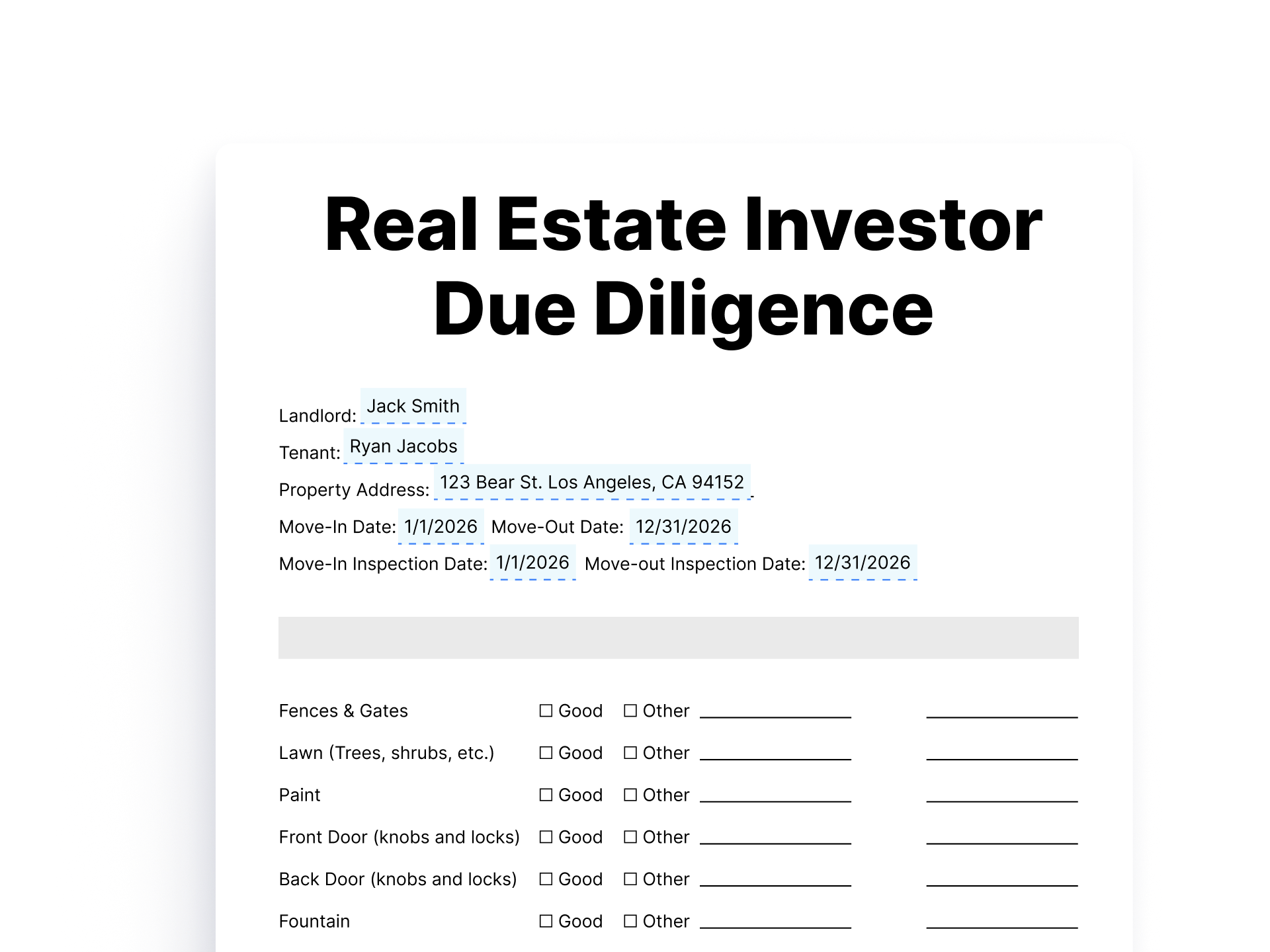
Download as PDF when complete
Real Estate Investor Due Diligence Checklist: Complete Property Evaluation Guide
Whether you’re buying your first rental or expanding a portfolio, a clear investor due diligence checklist prevents costly mistakes. Specifically, this guide covers:
- Market analysis and rent comparables
- Zoning verification and property condition
- Title review and financial document verification
Overall, our checklist helps you make informed decisions based on verified facts — not seller projections.
Real Estate Market and Neighborhood Analysis Checklist
Evaluating Local Market Conditions for Real Estate Investors
Analyze the local market thoroughly before purchasing. Your Real Estate Investor Due Diligence Checklist should evaluate:
- Population and job growth trends
- Median income levels and employment diversity
- Crime statistics and school district ratings
- Future development plans
Strong markets show consistent population growth and rising property values. In contrast, declining markets with job losses create vacancy and cash flow risks. As a result, market analysis should always be your first step before making any investment decision.
Researching Neighborhood Characteristics for Rental Demand
Study neighborhood characteristics that affect rental demand. Specifically:
- Visit the area at different times of day and week
- Drive surrounding streets and note property conditions
- Assess proximity to employers, schools, shopping, and transit
- Talk to neighbors about area issues and future changes
Additionally, check city planning departments for proposed developments. Strong neighborhoods signal appreciation potential, while declining areas suggest caution.
Comparable Rent Data Research Checklist for Investors
Finding Verified Rental Rates for Investment Properties
Research actual rental rates for comparable properties nearby. Your checklist requires verified rent data — not seller projections. Specifically, check listings on:
- Zillow and Apartments.com
- Craigslist and Facebook Marketplace
Look for properties with similar bedrooms, bathrooms, square footage, and amenities. Also, contact local property management companies to learn typical rents and vacancy rates.
Analyzing Rent Trends to Support Investment Projections
Adjust comparable rents for property differences including condition, amenities, and location. Be conservative in rent estimates, especially if the property needs work. Furthermore, document at least five to ten comparable rentals with verified monthly rents. Review rent trends over the past year:
- Rising rents indicate strong demand
- Flat or declining rents signal market weakness
Zoning and Land Use Verification Checklist for Real Estate Investors
Confirming Zoning Allows Your Investment Strategy
Verify zoning and permitted uses before purchasing. Your Real Estate Investor Due Diligence Checklist must confirm zoning allows your intended use, whether:
- Single-family rental
- Multi-family property
- Short-term rental
- Mixed-use property
Visit the local planning department to get official zoning information. In particular, ask about current zoning, permitted uses, nonconforming status, and any pending zoning changes nearby.
Identifying Rental Restrictions That Affect Investment Returns
Review zoning restrictions that affect property use and development. These may include:
- Setback requirements and building coverage limits
- Parking requirements and height restrictions
- Limits on unrelated occupants
- Short-term rental regulations
Many cities have enacted strict short-term rental rules. Therefore, verify you can legally operate your intended rental strategy before closing. Otherwise, violations can result in fines, forced sale, or restrictions that eliminate your returns.
Property Condition and Rehab Cost Estimate Checklist
Professional Property Inspections for Real Estate Investors
Hire qualified inspectors to evaluate property condition thoroughly. Your checklist requires professional inspections covering:
- General home inspection
- Roof inspection by certified roofers
- HVAC evaluation by licensed technicians
- Plumbing and electrical system review
- Pest inspection for termites and wood damage
- Specialized inspections such as foundation, septic, or environmental assessments
Attend all inspections to ask questions firsthand. In addition, take notes and photos documenting all major problems.
Calculating Rehab Costs and Total Investment Value
Obtain detailed repair estimates from licensed contractors. Written bids should cover:
- Repair costs and material specifications
- Labor expenses and completion timelines
Add 10% to 20% contingency for unexpected issues. Then, calculate your total investment including:
- Purchase price and closing costs
- Inspection fees and renovation expenses
- Holding costs during renovation
Most investors target 70% to 75% of after-repair value as the maximum all-in cost for properties needing substantial work.
Title, Taxes, and Liens Review Checklist for Investors
Title Search and Ownership Verification for Investment Properties
Order a title search early to identify ownership issues and encumbrances. Title companies examine public records revealing:
- Current ownership and existing mortgages
- Judgments against current or previous owners
- Easements affecting property use
- Deed restrictions and ownership chain problems
Consequently, review the preliminary title report carefully. Note any issues requiring resolution before closing.
Resolving Common Title Problems Before Closing
Common title issues include:
- Mechanic’s liens from unpaid contractor work
- Tax liens from unpaid property or income taxes
- Judgment liens from lawsuit awards
- Mortgage liens not properly released
Most issues can be resolved through payoffs or corrective documentation. Furthermore, require sellers to clear all liens before closing. Also, purchase owner’s title insurance to protect against undiscovered defects throughout your ownership period.
Property Tax Assessment Review Checklist for Investors
Verifying Property Taxes for Accurate Investment Analysis
Verify current tax amounts and understand potential increases after purchase. Contact the county tax assessor to obtain:
- Current assessed value and annual tax amount
- Payment schedule and reassessment policies
Ask whether the property will be reassessed at sale, as this can significantly increase your tax burden.
Reviewing Tax History and Special Assessments That Affect Cash Flow
Review assessment history over the past five years. Properties with recent large increases may indicate aggressive assessments. Additionally, verify any special assessments, bonds, or Mello-Roos taxes affecting the property. These charges appear separately from standard taxes but still affect your costs. If assessments exceed comparable valuations, challenge them — as a result, successful appeals can save thousands annually.
Environmental and Building Code Research Checklist
Environmental Due Diligence for Real Estate Investors
Research environmental issues as part of your investor due diligence checklist. Order Phase I Environmental Site Assessments for:
- Commercial properties
- Properties with industrial history
- Properties near gas stations, dry cleaners, or landfills
These reports review property history, identify contamination sources, and recommend further testing if needed. Moreover, residential properties near industrial sites warrant particularly close environmental scrutiny.
Building Code Compliance Verification for Investment Properties
Verify that existing structures comply with building codes and were properly permitted. Specifically, your checklist should:
- Review building permits for past additions and renovations
- Contact the building department for full permit history
- Schedule code compliance inspections if needed
Unpermitted work creates liability when selling and may not meet safety standards. In addition, some lenders won’t finance properties with unpermitted additions. Therefore, factor correction costs into your investment analysis.
Financial Document Verification Checklist for Real Estate Investors
Verifying Income and Expenses for Investment Property Analysis
Request and verify financial documents for income-producing properties. Your checklist requires:
- At least two years of operating statements
- Rent rolls showing tenant payment history
- Current lease agreements
- Security deposit documentation
- Utility expense records
Compare seller-provided information to actual documentation. In fact, many sellers overstate income or understate expenses, so independent verification is essential. Consequently, never rely solely on seller-provided financials when evaluating an investment property.
Analyzing Tenant Quality and Lease Terms for Future Cash Flow
Analyze tenant quality and lease terms that affect future cash flow. Specifically:
- Review payment histories for late payers or problem tenants
- Check lease expiration dates for high turnover risks
- Verify security deposits are properly held in escrow
Inherited problem tenants or below-market leases affect your returns immediately. Therefore, factor tenant turnover costs and rent adjustments into your projections.
Real Estate Investor Due Diligence Takeaways
A complete Real Estate Investor Due Diligence Checklist protects your capital and helps you build wealth through informed investing. Analyze the market, verify rent data, confirm zoning, inspect the property, review title and taxes, and verify all financial documents before closing. Overall, thorough due diligence prevents costly surprises and ensures every investment decision is based on verified facts.
FAQs
A real estate investor due diligence checklist is an investigation tool that helps investors verify property value, identify potential problems, and confirm investment projections before closing.
Check online listings on Zillow, Apartments.com, and Craigslist, and contact local property management companies to verify actual rental rates for at least five to ten comparable properties in the area.
Zoning determines whether you can legally operate your intended rental strategy — violations can result in fines, forced sale, or use restrictions that eliminate your investment returns.
At minimum, hire qualified inspectors to cover the general home, roof, HVAC, plumbing, electrical systems, and pests, plus any specialized inspections like foundation, septic, or environmental assessments based on the property’s characteristics.
Request at least two years of operating statements, rent rolls, current lease agreements, security deposit documentation, and utility expense records to verify the seller’s income and expense claims.