
Pre-Renovation Planning


(1)
A Pre-Renovation Planning Checklist helps you address all critical steps before breaking ground. It helps you make informed decisions and set realistic expectations. In short, careful planning prevents budget overruns, permit issues, and contractor disputes.
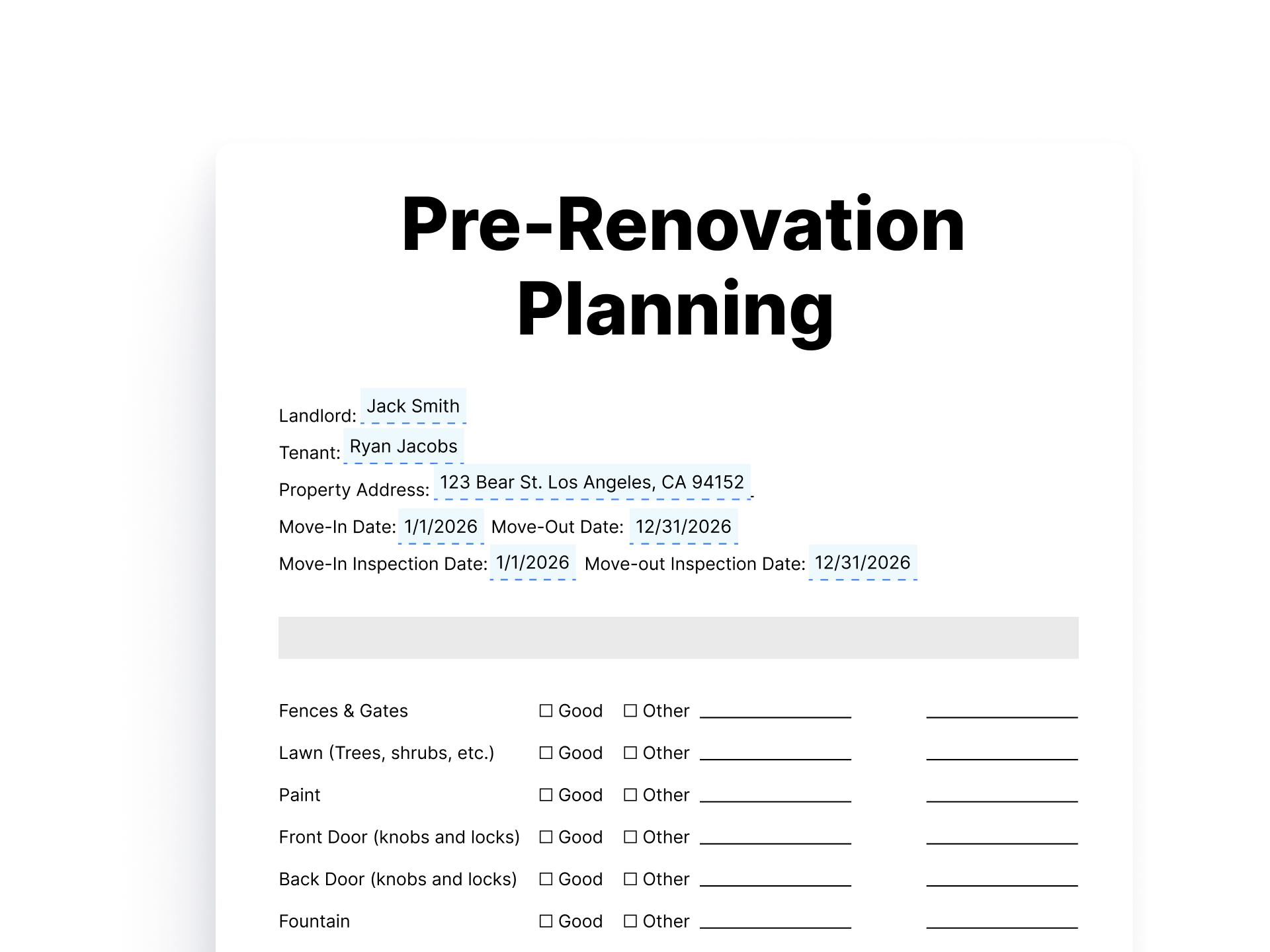
Download as PDF when complete
Pre-Renovation Planning Checklist: Complete Guide for Property Owners
A complete Pre-Renovation Planning Checklist helps property owners avoid costly mistakes and delays. Whether you’re updating one room or renovating your entire home, a clear checklist keeps your project on track. Specifically, this guide covers:
- Scope definition and contractor selection
- Permit requirements and material choices
- Insurance needs and timeline planning
Our checklist helps you approach renovations with confidence and clear procedures.
Define Scope of Work and Get Contractor Bids
Create Your Scope of Work
Start by creating a detailed scope of work document. List every task in your renovation project, including:
- Demolition needs and structural changes
- Electrical and plumbing work
- Flooring installation and painting
- Fixture installation and finishes
Your checklist should describe desired outcomes, quality standards, and specific materials. Detailed scope documents prevent misunderstandings. Furthermore, they ensure everyone understands expectations from the start.
Request and Compare Contractor Bids
Request bids from at least three licensed contractors for projects over $5,000. Provide each contractor with identical scope documents to ensure a fair comparison. Before requesting bids, verify that each contractor has:
- An active license
- General liability insurance
- Workers’ compensation coverage
- Strong references
Review bids carefully. Compare total cost, payment schedules, timelines, warranty terms, and materials. Remember, the lowest bid isn’t always the best choice. Consider experience, references, and communication quality when deciding.
Obtain Permits and Zoning Approvals
Identify Required Permits
Research permit requirements through your local building department. Most renovations require permits, including:
- Building permits for structural work
- Electrical permits for wiring or panel upgrades
- Plumbing permits for fixture or pipe changes
- Mechanical permits for HVAC work
Additionally, some areas require separate permits for roofing, window replacement, or deck construction.
Submit Permit Applications
Submit applications with all required documents, such as:
- Detailed project plans
- Engineering drawings if needed
- Contractor license information
- Property surveys or plot plans
Allow 2 to 6 weeks for permit approval. Starting work without permits risks stop-work orders, fines, and problems when selling your property. Furthermore, some insurance policies won’t cover damage from unpermitted work. Also, check zoning rules if your renovation adds square footage or changes property use.
Select Materials and Finishes
Choose Materials Early
Select materials early to lock in costs and ensure availability. Start with major items like:
- Flooring, cabinets, and countertops
- Fixtures, appliances, and tile
- Paint colors and finishes
Visit showrooms to see materials in person. Colors and textures often look different from online photos or small samples.
Create a Material List
Create a detailed list with model numbers, colors, quantities, and costs. Include backup options in case first choices become unavailable. Order long lead-time items like custom cabinets or specialty tiles as early as possible — some take 8 to 12 weeks to deliver. Coordinate delivery timing with your contractor. Additionally, keep all receipts and warranty information organized for future claims or repairs.
Verify Insurance Coverage
Review Your Homeowner’s Policy
Review your homeowner’s insurance policy before starting work. Standard policies may not cover damage during major renovations. Therefore, contact your insurance agent to discuss your plans. Specifically, verify whether you need additional builder’s risk insurance. This policy covers:
- Materials and work in progress
- Theft and vandalism
- Weather damage during construction
Confirm Contractor Insurance
Confirm your contractor carries adequate coverage, including:
- General liability of at least $1 million
- Workers’ compensation for all employees
Request certificates of insurance naming you as additional insured. Verify coverage is current and won’t expire during your project. Never hire uninsured contractors — one accident could cost hundreds of thousands in liability.
Create Timeline and Contingency Plans
Build a Realistic Timeline
Develop a realistic project timeline with your contractor. Break the project into phases with estimated completion dates:
- Demolition
- Rough-in work (electrical, plumbing, HVAC)
- Inspections
- Insulation and drywall
- Finish work and final touches
Add 20% to 30% buffer time between phases for unexpected delays.
Plan for Contingencies
Set aside 10% to 20% of your budget for unexpected issues like:
- Hidden damage or structural problems
- Necessary code upgrades
- Design changes mid-project
If renovations affect your kitchen or bathroom, plan for temporary living arrangements. Also, discuss dust control, work hours, and property access with your contractor before work begins. Clear communication prevents frustration during construction.
Document Everything
Keep a Project Record
Keep detailed records throughout the renovation process. Create a project binder or digital folder with:
- Contracts and permits
- Material receipts and photos
- Correspondence with contractors
Take before photos from every angle. These prove existing conditions if disputes arise. Document decisions, material selections, and contractor communications with dated notes.
Review All Contracts
Review and understand all contracts before signing. Renovation contracts should include:
- Detailed scope of work and total cost
- Payment schedule and start/completion dates
- Materials to be used and warranty information
- Change order procedures
Never pay contractors in full upfront. Instead, use a standard payment schedule:
- Initial deposit of 10% to 20%
- Progress payments tied to completed milestones
- Final payment after completion and inspection
Plan for Living During Renovation
Set Up Temporary Spaces
Major renovations disrupt daily life. Therefore, plan ahead for how you’ll manage during construction. If renovating your kitchen, set up temporary facilities using:
- Microwaves and toaster ovens
- Portable cooktops
- A small prep area
If renovating bathrooms, identify alternatives in advance. Use plastic sheeting to create dust barriers between construction and living areas.
Establish Work Rules
Set clear rules with your contractor before work begins. Specifically, address:
- Work hours and parking locations
- Bathroom access for workers
- Cleanup expectations and noise levels
Additionally, notify neighbors about construction plans. Set up a secure area for tool and material storage. Remove valuables and fragile items from construction areas before work starts.
Pre-Renovation Planning Takeaways
A complete Pre-Renovation Planning Checklist keeps your project on track and prevents costly mistakes. By defining your scope, securing permits, selecting materials early, verifying insurance, and building in contingencies, you set your renovation up for success from the start.
FAQs
Get bids from at least three licensed contractors for any project over $5,000, providing each with identical scope documents to ensure a fair comparison.
Most renovations affecting structure, electrical, plumbing, or square footage require permits, and starting without them risks stop-work orders, fines, and complications when selling your property.
Choose materials as early as possible to lock in costs and ensure availability, especially for custom items like cabinets or specialty tiles that can take 8 to 12 weeks to deliver.
Review your homeowner’s policy with your insurance agent and consider additional builder’s risk insurance, while also confirming your contractor carries at least $1 million in general liability coverage and workers’ compensation.
Set aside 10% to 20% of your total budget for hidden damage, structural surprises, or code upgrades that may arise during construction.