
Home Seller Checklist


(1)
A Home Seller Checklist guides you through every step of selling your property. Specifically, it covers everything from choosing an agent to closing day. Selling your home is a major financial transaction. As a result, it requires careful planning, smart decisions, and attention to detail. Overall, a detailed home seller checklist helps you maximize your sale price, reduce time on market, and avoid costly mistakes.
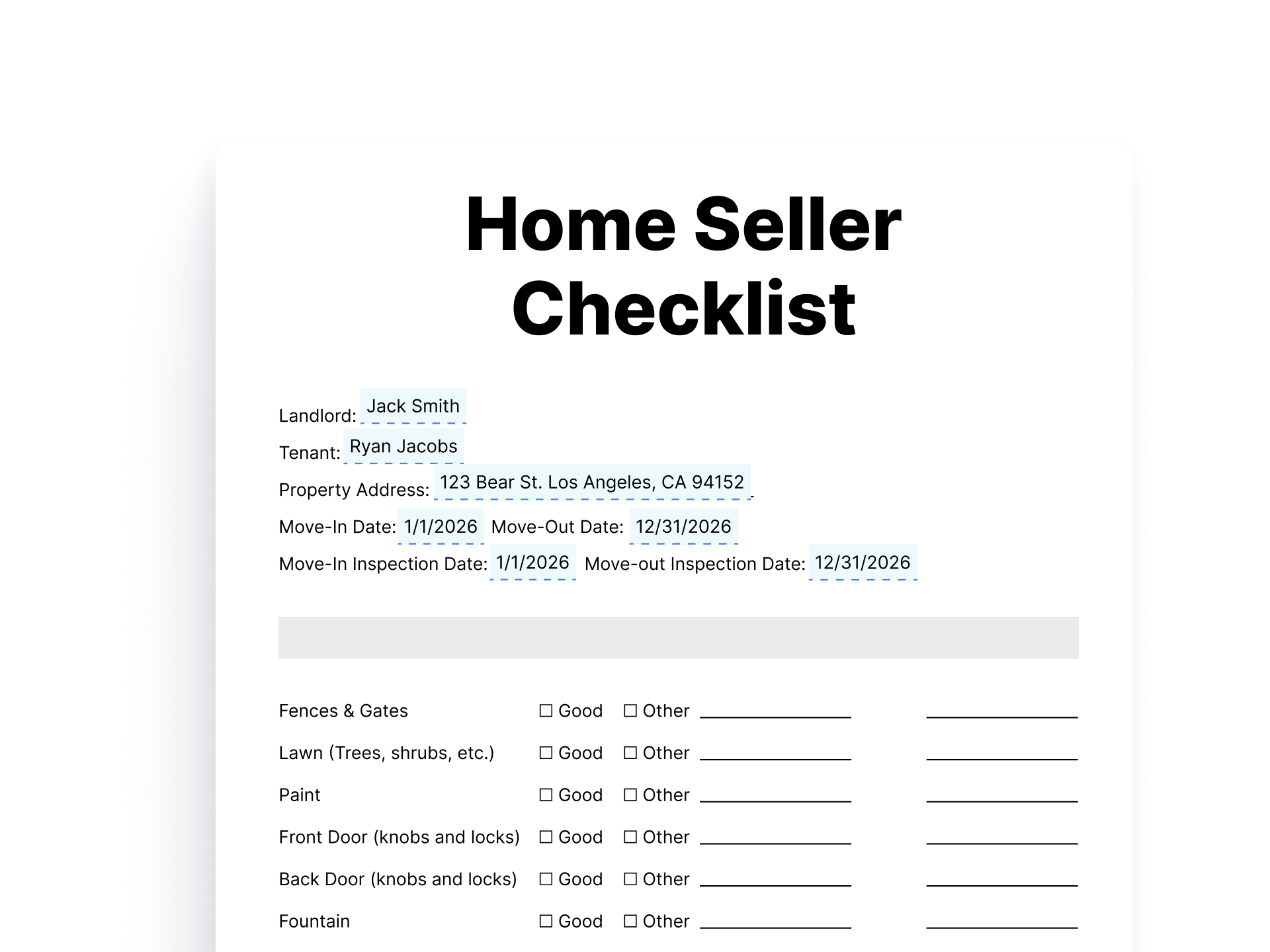
Download as PDF when complete
Home Seller Checklist: Complete Guide to Selling Your Property
Whether you’re a first-time seller or experienced homeowner, a thorough checklist keeps your sale on track. In particular, this guide covers agent selection, pricing, property preparation, marketing, negotiations, inspections, and closing. Our checklist helps you approach each phase with confidence.
Choose Listing Agent Checklist
Choosing the right listing agent is the foundation of your home seller checklist. Therefore, interview three to five candidates. Ask each one about:
- Experience selling homes in your area
- Recent sales and average days on market
- Pricing strategy and marketing plan
- Communication style and availability
Additionally, verify each agent’s credentials, including:
- Active real estate license
- Professional designations like CRS (Certified Residential Specialist)
- Online reviews from past clients
Also, request references from recent sellers to confirm their service quality.
Understanding Listing Agreements
Review listing agreements carefully before signing. Specifically, these documents outline:
- The agent’s duties and responsibilities
- Commission rate (typically 5–6% split between agents)
- Listing period duration (usually 3–6 months)
- Marketing commitments
Evaluating the Marketing Plan
Review each agent’s marketing plan carefully. In particular, look for strategies that include:
- Professional photography
- MLS listing and major real estate websites
- Social media campaigns
- Open houses and direct buyer outreach
Set Asking Price and Review Comps Checklist
Pricing your home correctly is critical. Consequently, ask your agent for a Comparative Market Analysis (CMA). This report shows:
- Recently sold comparable properties
- Active listings competing with your home
- Pending sales showing current market activity
Furthermore, compare properties based on:
- Square footage and room count
- Property condition and updates
- Location and sale prices
Pricing for Market Conditions
Consider current market conditions when setting your price. For example, keep these points in mind:
- Seller’s markets support higher prices due to low inventory
- Buyer’s markets require more competitive pricing
- Seasonal factors and interest rates affect buyer affordability
Many agents recommend pricing slightly below market value to generate multiple offers. Therefore, discuss pricing strategy thoroughly with your agent before listing.
Prepare Home for Sale Checklist
Property preparation directly impacts buyer interest and your final sale price. In short, focus on repairs, cleaning, staging, and photography.
Complete Necessary Repairs
Fix obvious defects before listing. Specifically, prioritize issues that affect functionality, safety, or buyer perception. Common repairs include:
- Leaky faucets and plumbing issues
- Broken doors or windows
- Wall damage and burned-out light bulbs
- Electrical problems
Additionally, consider a pre-listing inspection to find problems early. For major issues like roof, HVAC, or foundation problems, get contractor quotes to support negotiations. Furthermore, focus improvements on:
- Fresh paint
- Kitchen and bathroom updates
- Flooring replacement or refinishing
- Landscaping for curb appeal
Stage Your Home Effectively
Staging helps buyers picture themselves living in your home. First, start by decluttering and depersonalizing:
- Remove excess furniture and personal photos
- Clear countertops and organize closets
- Arrange furniture to highlight each room’s function
In addition, improve curb appeal by:
- Maintaining the lawn
- Adding plants near the entry
- Power-washing surfaces
- Painting the front door
Moreover, consider hiring a professional stager for occupied or vacant homes.
Professional Photography
Most buyers search online first. Therefore, quality photography is essential. Professional photographers use wide-angle lenses, proper lighting, and editing to present your home attractively. Consequently, schedule photography after completing repairs and staging. Make sure your home is:
- Spotlessly clean
- Well-lit with all lights on
- Bright with curtains open
Furthermore, many agents also offer drone photography and virtual tours for added marketing value.
Marketing Plan Checklist
Strong marketing maximizes exposure and reaches the broadest possible audience. In general, a solid plan combines MLS listings, open houses, and digital marketing.
MLS Listing
Your MLS listing is the foundation of your marketing plan. Specifically, it automatically syndicates to major sites like Zillow and Realtor.com. Make sure your listing includes:
- Accurate square footage and room counts
- High-quality photos and virtual tours
- Compelling descriptions highlighting key features
Additionally, review your listing carefully before it goes live.
Open Houses Strategy
Open houses create buyer traffic and urgency. Therefore, schedule them on weekends when most buyers are available. Your agent should market open houses through:
- Online listings and social media
- Yard signs and neighborhood flyers
Furthermore, before each open house, secure valuables and remove pets to create a welcoming environment.
Online Marketing
Digital marketing reaches today’s buyers across multiple platforms. Consequently, your agent should:
- Post on Facebook, Instagram, and LinkedIn
- Run targeted advertising campaigns
- Send email marketing to their network
- Create video tours for remote or busy buyers
Review Offers and Negotiate Checklist
Evaluate each offer carefully. Specifically, look beyond price and consider:
- Buyer financing type and pre-approval strength
- Earnest money deposit size
- Contingency types and timelines
- Requested closing date and unusual terms
Remember, the highest offer isn’t always the best. For instance, cash offers close faster. Similarly, strongly pre-approved buyers pose less financing risk. Moreover, flexible timing matters if you need a specific closing date.
Negotiation Tips
Negotiate strategically by:
- Accepting offers that meet your price and terms
- Countering offers that need adjustment
- Rejecting offers below your minimum
In multiple-offer situations, ask all buyers for their highest and best offer. Additionally, keep copies of all offers and counteroffers. Furthermore, note all verbal communications in writing.
Inspection Response and Repairs Checklist
Review the inspection report carefully. Then, sort findings by severity:
- Safety hazards and major system failures — address seriously
- Significant defects affecting habitability — consider fixing
- Minor cosmetic issues and normal wear — rarely require response
Your response options include:
- Making repairs using licensed contractors
- Offering closing credits for buyers to handle repairs
- Negotiating a price reduction
- Declining unreasonable requests
Additionally, get contractor quotes for major items to support your position. Furthermore, document all completed repairs with receipts and warranties.
Closing Prep and Utility Transfer Checklist
Review closing documents carefully when you receive them. Specifically, verify:
- Settlement statement and proceeds calculation
- Mortgage payoffs and prorated taxes
- HOA fees and closing costs
Preparing the Property
Before closing, make sure to:
- Complete all agreed-upon repairs
- Remove all personal belongings
- Clean the property thoroughly
- Vacate by the agreed-upon date
Utility and Document Transfer
Transfer or cancel utilities including electricity, gas, water, internet, and cable. Specifically, schedule disconnection shortly after closing. Additionally, gather important documents for the buyer:
- Appliance manuals and warranties
- Garage door openers and codes
- Keys for all locks
- HOA documents and repair receipts
Furthermore, file a change of address with the post office. Also, update financial institutions, insurance companies, and subscriptions.
Closing Day Tasks Checklist
Arrive on time with your government-issued photo ID. Before signing, review the settlement statement carefully. Specifically, verify that all numbers match your expectations, including:
- Purchase price and payoffs
- Prorations, credits, and adjustments
Sign all required closing documents, including the deed, settlement statement, affidavits, and disclosures. After signing, you will receive your proceeds by wire transfer or cashier’s check. Finally, hand over all keys, garage door openers, mailbox keys, alarm codes, and access devices to the buyer.
Home Seller Checklist Takeaways
A home seller checklist protects your interests and helps you achieve the best possible outcome. First, choose a qualified agent and price your home strategically. Then, prepare your property thoroughly and market aggressively. Finally, evaluate offers carefully and complete closing preparations on time. In short, your checklist is your roadmap to a smooth and successful sale.
FAQs
Interview three to five candidates and evaluate their local experience, recent sales, marketing plan, and communication style before signing any listing agreement.
Focus on fixing obvious defects like leaky faucets, broken doors, wall damage, and electrical or plumbing issues, as well as improvements that offer the best return such as fresh paint, updated flooring, and landscaping.
Ask your agent for a Comparative Market Analysis comparing recent sales, active listings, and pending sales to set a competitive asking price based on current market conditions.
Review findings by severity and choose to make repairs, offer closing credits, reduce the purchase price, or decline unreasonable requests based on current market conditions.
Bring a government-issued photo ID, review the settlement statement carefully, sign all required documents, and hand over all keys and access devices to the buyer.