
Tennessee Property Management Agreement
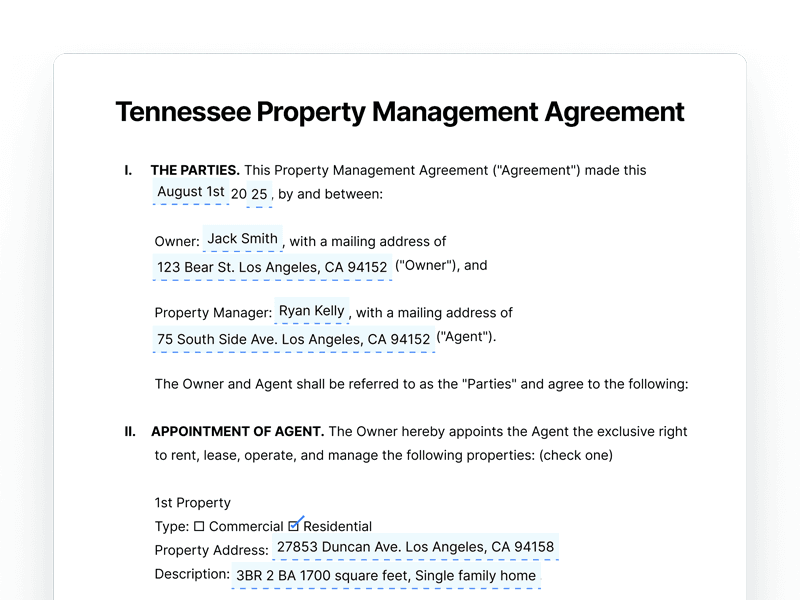
A Tennessee property management agreement creates a written contract between real estate professionals and property owners. Furthermore, this agreement establishes the legal framework for managing commercial or residential real estate. Additionally, management contracts serve to appoint representatives who manage properties on behalf of owners.
Download as PDF when complete


(No Ratings Yet)
Understanding Tennessee Property Management Contracts
How Property Management Agreements Function
Property management contracts establish comprehensive working relationships between real estate owners and licensed professionals. Moreover, these agreements define specific management responsibilities and compensation structures clearly. Therefore, well-structured contracts prevent disputes and ensure effective property oversight throughout Tennessee.
Key Elements of Management Agreements
Professional Representation Framework Tennessee property management agreements appoint qualified representatives to manage properties professionally. Furthermore, these contracts establish clear authority and responsibility frameworks for all parties. Additionally, agreements specify the scope of managerial powers and operational duties throughout the management relationship.
Legal Documentation Requirements Management contracts provide essential legal documentation for property management relationships. Moreover, these written agreements protect both owners and managers through clear terms. Therefore, proper documentation ensures enforceability and regulatory compliance throughout Tennessee.
Key Components of Tennessee Property Management Agreements
Terms of Payment and Compensation
Payment Structure and Scheduling The property management agreement outlines how property managers receive compensation for their services. Furthermore, payment terms specify when compensation occurs and what methods apply. Additionally, clear payment structures prevent disputes and ensure predictable financial arrangements.
Compensation Methods and Rates Moreover, agreements detail whether managers receive commissions, flat fees, or hourly rates. Furthermore, compensation structures may include performance incentives and bonus arrangements. Therefore, transparent payment terms benefit both parties throughout the management relationship.
Duties and Responsibilities Framework
Manager Obligations and Standards The agreement specifies comprehensive obligations for property managers including tenant relations and maintenance coordination. Furthermore, these duties ensure professional service delivery and property protection. Additionally, clear responsibilities establish performance standards and accountability measures.
Owner Responsibilities and Requirements Moreover, agreements outline specific obligations for property owners including financial support and decision-making authority. Furthermore, owner responsibilities ensure effective collaboration and property management success. Therefore, balanced obligations create successful management partnerships.
Tennessee Laws Governing Property Management
Real Estate Broker License Requirements
General Licensing Mandates Tennessee generally requires property managers to obtain real estate broker licenses for professional services. Furthermore, this requirement stems from typical property management duties falling under broker definitions. Additionally, licensing ensures professional competency and regulatory compliance throughout management operations.
Activities Requiring Professional Licensing
Broker-Level Services and Responsibilities Property managers need broker licenses when performing duties classified as real estate broker activities. Moreover, these activities include lease negotiation, property marketing, and tenant placement services. Therefore, comprehensive property management typically requires professional licensing compliance.
Professional Service Standards Furthermore, licensed brokers must maintain continuing education and professional development requirements. Additionally, they must adhere to ethical standards and regulatory oversight throughout their careers. Consequently, licensing ensures professional accountability and service quality.
Licensing Exemptions in Tennessee
Limited Duty Exemptions
Supervision and Showing Activities Tennessee property managers do not need real estate broker licenses when their duties remain limited to specific activities. Furthermore, supervising and showing rental units fall within exempt activities. However, these exemptions apply only when duties remain strictly limited.
Collection Activities Exemption
Security Deposit and Rent Collection Additionally, collecting security deposits and rent payments falls within exempt activities under Tennessee law. Moreover, these basic collection duties do not require broker licensing. Therefore, limited collection activities allow exemption from licensing requirements.
Requirements for Exempt Status
Activity Limitation Criteria Exempt property managers must strictly limit their activities to supervisory and collection functions only. Furthermore, expanding beyond these limited duties requires proper licensing. Additionally, exempt managers cannot provide comprehensive property management services without licenses.
Compliance and Restriction Monitoring Moreover, exempt managers must ensure their activities remain within legal boundaries consistently. Furthermore, exceeding exempt activity limitations requires immediate licensing compliance. Therefore, careful activity monitoring prevents legal violations.
Verifying Tennessee Property Manager Credentials
Department of Commerce and Insurance Resources
Official Verification Process Individuals can verify property manager credentials through the Department of Commerce and Insurance. Furthermore, this official verification ensures managers meet necessary legal requirements. Therefore, verification protects property owners from unlicensed service providers effectively.
Available Credential Information
License Status and Professional Standing The verification process confirms current licensing status and professional qualifications. Moreover, this system displays any disciplinary actions or license restrictions. Additionally, verification shows license expiration dates and renewal compliance clearly.
Continuing Education Compliance Furthermore, the system shows continuing education completion and professional development records. Consequently, owners can assess their manager’s ongoing qualifications accurately. Therefore, regular verification maintains service quality standards consistently.
Essential Elements of Tennessee Management Agreements
Contract Terms and Duration Specifications
Agreement Timeframes and Renewal Procedures Tennessee property management agreements should specify clear contract durations and renewal options. Furthermore, these terms protect both parties from unexpected contract modifications. Additionally, defined timeframes allow for performance evaluation and necessary adjustments.
Scope of Management Services
Comprehensive Service Definitions Management contracts must clearly outline all services included in the base agreement. Moreover, these definitions prevent disputes about service expectations and deliverables. Therefore, detailed descriptions benefit all parties and prevent misunderstandings throughout relationships.
Service Limitations and Additional Charges Additionally, contracts should specify services not included in standard agreements clearly. Furthermore, these exclusions clarify when additional fees apply to specialized services. Therefore, clear limitations protect both owners and managers from unexpected costs.
Financial Terms and Fee Structure
Management Fee Arrangements Property management agreements should detail fee structures and payment schedules transparently. Furthermore, contracts must specify whether managers receive commissions or flat fees. Additionally, clear pricing prevents disputes and ensures predictable costs throughout relationships.
Performance Incentives and Bonus Structure Some Tennessee management agreements include performance-based compensation for managers. Moreover, these arrangements can motivate better property performance and tenant satisfaction. However, owners should evaluate incentive structures carefully before agreeing to terms.
Compliance and Professional Standards
State Regulation Adherence
Ongoing Compliance Requirements Tennessee property management agreements must maintain compliance with evolving state regulations. Furthermore, these requirements change through legislative updates and regulatory modifications. Therefore, contracts should include provisions for automatic regulatory compliance updates.
Professional Development and Education
Continuing Education Requirements Licensed property managers must maintain their qualifications through continuing education programs. Moreover, these requirements ensure current knowledge of laws and industry best practices. Additionally, ongoing education protects property owners’ investments and interests effectively.
Professional Association Participation Furthermore, many managers participate in professional associations for networking and continued education. Moreover, these memberships provide access to industry resources and standards. Therefore, professional involvement demonstrates commitment to excellence and quality service.
Risk Management and Insurance Considerations
Professional Liability Protection
Insurance Coverage Requirements Tennessee property management agreements should address professional liability insurance comprehensively. Furthermore, adequate coverage protects both parties from potential legal claims and financial losses. Therefore, insurance becomes essential for comprehensive risk management strategies.
Property Insurance Coordination
Insurance Management Responsibilities Management contracts should specify who handles property insurance coordination and claims processing. Additionally, agreements must clarify communication procedures with insurance companies and adjusters. Consequently, both parties understand their insurance obligations and responsibilities clearly.
Financial Protection and Bonding
Surety Bond Requirements Furthermore, property management agreements may require managers to obtain surety bonds for financial protection. Moreover, bonding protects owners from potential financial misconduct or negligence issues. Therefore, bonding requirements add another essential layer of security and protection.
Dispute Resolution and Contract Management
Conflict Resolution Procedures
Alternative Dispute Resolution Options Property management contracts should include efficient dispute resolution procedures and mechanisms. Moreover, mediation and arbitration can resolve conflicts without expensive litigation processes. Therefore, alternative resolution methods save time and money for both parties involved.
Contract Modification and Updates
Amendment Procedures Tennessee management agreements should establish clear procedures for contract modifications and updates. Furthermore, these procedures ensure all changes receive proper documentation and approval. Additionally, formal amendment processes prevent unauthorized contract alterations and disputes.
Contract Termination Guidelines
Notice Requirements and Timelines Management agreements must specify termination notice periods and required procedures clearly. Furthermore, these requirements protect both parties from sudden contract endings and operational disruptions. Additionally, proper termination procedures ensure smooth transitions between managers.
Post-Termination Responsibilities Additionally, contracts should outline post-termination duties for both parties involved. Furthermore, these responsibilities include property transfers and final financial reconciliation. Therefore, clear post-termination terms prevent ongoing disputes and complications.
Best Practices for Tennessee Property Owners
Manager Selection and Due Diligence
Comprehensive Evaluation Process Property owners should thoroughly research potential managers before signing agreements. Furthermore, this research includes verifying licenses and checking professional references carefully. Therefore, proper vetting prevents future management problems and costly disputes.
Contract Review and Legal Consultation
Professional Legal Review Tennessee property management agreements benefit significantly from professional legal review before execution. Moreover, attorneys can identify potential issues and suggest contract improvements proactively. Consequently, legal guidance protects owner interests and ensures full regulatory compliance.
Performance Monitoring and Assessment
Regular Management Evaluation Property owners should consistently evaluate their manager’s performance against established contract terms. Furthermore, this monitoring ensures service quality and compliance with agreement provisions. Additionally, regular assessment facilitates necessary adjustments and continuous improvements.
Financial Performance Tracking Moreover, owners should monitor financial performance metrics and rental income optimization regularly. Furthermore, tracking these metrics helps identify areas for improvement and growth opportunities. Therefore, active monitoring maximizes property investment returns consistently.
Tenant Satisfaction Monitoring Additionally, owners should track tenant satisfaction levels and retention rates regularly. Furthermore, these metrics indicate management effectiveness and property desirability. Therefore, monitoring tenant satisfaction helps maintain stable rental income and property value.
Tennessee Real Estate Market Considerations
Market-Specific Strategies
Local Market Knowledge and Expertise Successful Tennessee property management requires understanding local market conditions and rental trends. Furthermore, managers should understand regional tenant preferences and pricing strategies. Additionally, market expertise ensures competitive positioning and optimal rental income generation.
Commercial vs. Residential Management
Property Type Considerations Tennessee property management agreements should address specific requirements for commercial or residential properties. Moreover, different property types require specialized expertise and service approaches. Therefore, tailored agreements ensure appropriate management strategies for each property type.
A well-structured Tennessee property management agreement protects both owners and managers while ensuring complete legal compliance. Furthermore, these contracts establish clear expectations and professional standards for all parties involved. Therefore, investing time in proper agreement development creates successful long-term management relationships and profitable property investments.
Statutes
- Tenn. Code Ann. § 66-28-301(a) – Security deposits
- Tenn. Code Ann. § 66-28-301(b)(2)(A) – Security deposits
- Tenn. Code Ann. § 66-28-301(g)(1) – Security deposits
- Tenn. Code Ann. § 66-28-301(b)(2) – Security deposits
- Tenn. Code Ann. § 66-28-301(b)(1)(B) – Security deposits
- Tenn. Code Ann. § 66-28-201(c) – Terms and conditions
- Tenn. Code Ann. § 66-28-201(d) – Terms and conditions
- Rent
- Tenn. Code Ann. § 47-29-102 – Handling charge
- Tenn. Code Ann. § 68-111-104 – Inspection
- Tenn. Code Ann. § 66-28-502 – Failure to supply essential services
- Tenn. Code Ann. § 66-28-512(c) – Landlord Recover Court and Attorney Fees
- Tenn. Code Ann. § 66-28-512(b) – Termination of periodic tenancy – Holdover remedies
- Tenn. Code Ann. § 66-28-512(a) – Termination of periodic tenancy – Holdover remedies
- Tenn. Code Ann. § 66-28-507 – Landlord Mitigate Damages
- Tenn. Code Ann. § 66-28-501 – Noncompliance with rental agreement by landlord
- Tenn. Code Ann. § 66-7-109(d) – Notice of termination by landlord – Testimony of manager against tenant
- Tenn. Code Ann. § 66-7-109 and § 66-28-505 – Notice of termination by landlord – Testimony of manager against tenant
- Tenn. Code Ann. § 66-7-109 – Termination for Lease Violation and Tenn.Code Ann. § 66-28-505 – Noncompliance by tenant – Failure to pay rent
- Tenn. Code Ann. § 66-7-107(a) – Termination for knowing controlled substance or prostitution violations
- Tenn. Code Ann. § 66-28-403(a) – Access by landlord
- Tenn. Code Ann. § 66-28-403(b) – Access by landlord
- Tenn. Code Ann. § 66-28-403(e)(5) – Access by landlord
- Tenn. Code Ann. § 66-28-519 – Towing of vehicles
- Tenn. Code Ann. § 66-28-404 – Use and occupation by tenant
- Tenn. Code Ann. § 66-28-405 – Abandonment
- Tenn. Code Ann. § 66-28-304 – Maintenance by landlord
- Tenn. Code Ann. § 66-28-401 – General maintenance and conduct obligations
- Tenn. Code Ann. § 66-28-302 – [Effective 1/1/2025] Address of landlord or agent
- Tenn. Code Ann. § 66-7-101 – Writing required for long term leases – Authentication and registration
- Tenn. Code Ann. § 66-7-104 and § 66-7-106 – Physically disabled persons’ access to housing accommodations
- Tenn. Code Ann. § 66-28-108 – Notification sent by e-mail
- Tenn. Code Ann. § 66-28-402 – Rules and regulations
- Tenn. Code Ann. § 66-28-514 – Retaliatory conduct prohibited
- Tenn. Code Ann. § 66-28-107 – Business License
- Tenn. Code Ann. § 16-15-501(d) – General jurisdiction
- Tenn. Code Ann. § 28-3-109 – Rent – Official misconduct – Contracts not otherwise covered – Title insurance – Demand notes
- Tenn. Code Ann. § 28-3-105 – Property tort actions – Statutory liabilities
- Tenn. Code § 66-28-521 – Termination of utility services
- Tenn. Code Ann. § 66-28-517 – Domestic Violence Situations
FAQs
A Tennessee property management agreement is a written contract between a real estate professional and a property owner, outlining the terms of payment and the responsibilities of both parties in managing the property.
Yes, property managers in Tennessee typically need to obtain a real estate broker license, as their duties generally fall under the definition of a real estate broker. However, if their responsibilities are limited to showing rental units and collecting security deposits and rent, licensing may not be required.
The main duties of a property manager in Tennessee include overseeing the property, managing tenant relations, collecting rent, and ensuring the property is maintained. Specific responsibilities can vary based on the terms outlined in the property management agreement.
To verify a property manager in Tennessee, you can check with the Department of Commerce and Insurance, which oversees licensing and regulatory compliance for real estate professionals in the state.
A property management agreement should include details such as the scope of services provided, payment terms, duration of the agreement, and the responsibilities of both the property manager and the owner.
If a property manager operates without the necessary license in Tennessee, they may face legal penalties, including fines or restrictions on their ability to manage properties. It’s important for property managers to comply with state licensing requirements.