
Alaska Property Management Agreement
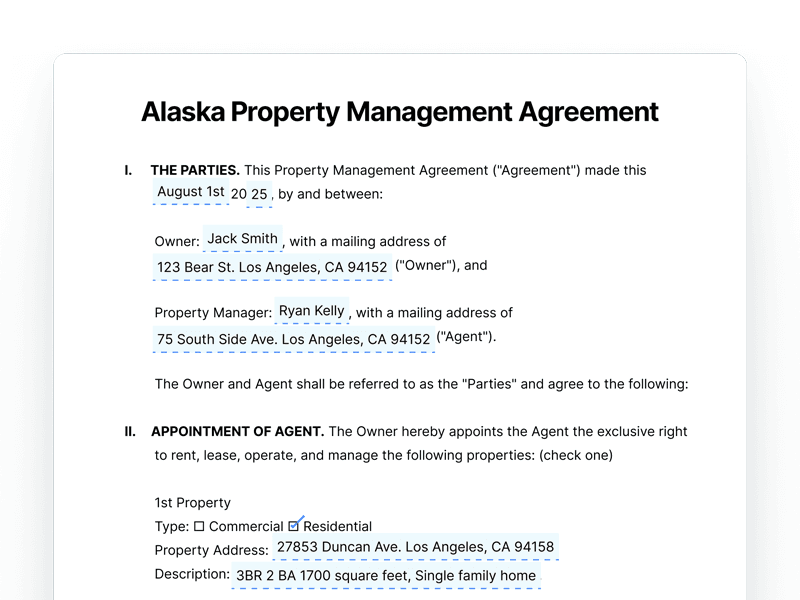
An Alaska property management agreement creates a legal contract between property owners and professional management companies. Furthermore, this agreement establishes the framework for managing residential or commercial properties throughout Alaska’s unique market conditions. Additionally, management contracts define specific responsibilities, compensation terms, and operational procedures for all parties involved.
Download as PDF when complete


(No Ratings Yet)
Understanding Alaska Property Management Contracts
How Property Management Agreements Function
Property management contracts establish comprehensive working relationships between real estate owners and licensed professionals. Moreover, these agreements define specific management responsibilities and operational frameworks clearly. Therefore, well-structured contracts prevent disputes and ensure effective property oversight throughout Alaska’s challenging climate and market conditions.
Key Elements of Management Agreements
Professional Relationship Framework Alaska property management agreements establish clear relationships between owners and professional management companies. Furthermore, these contracts define the scope of authority and responsibility for all parties. Additionally, agreements specify communication protocols and reporting requirements throughout management partnerships.
Legal Documentation Requirements Management contracts provide essential legal documentation for property management relationships. Moreover, these formal documents protect both owners and managers through clear terms. Therefore, proper documentation ensures enforceability and regulatory compliance throughout Alaska.
Alaska Legal Requirements for Property Managers
Real Estate License Mandates
Professional Licensing Standards Alaska requires property managers to obtain real estate licenses when providing services for compensation under Alaska Statutes. Furthermore, this requirement ensures professional competency and regulatory compliance throughout management operations. Additionally, licensing mandates guarantee adequate knowledge of Alaska real estate laws and regulations.
Activities Requiring Professional Licensing
Property Management Services Licensed property managers can provide comprehensive management services including tenant placement and lease administration. Moreover, they can collect rent payments and coordinate maintenance activities professionally. Therefore, licensed managers offer complete property oversight capabilities under Alaska law.
Real Estate Transaction Management Furthermore, licensed managers can market rental properties and advertise available units professionally. Additionally, they can screen potential tenants and negotiate lease agreements effectively. Consequently, professional marketing improves property performance and rental income generation.
Continuing Education Requirements
Professional Development Standards Licensed property managers must maintain their qualifications through continuing education programs. Moreover, these requirements ensure current knowledge of laws and industry best practices. Additionally, ongoing education protects property owners’ investments and interests effectively.
Licensing Exemptions in Alaska
Property Owner Exemptions
Self-Management Rights Alaska law provides exemptions for property owners managing their own properties without licensing requirements. Furthermore, owners can personally handle tenant relations, rent collection, and maintenance coordination. However, these exemptions apply only to properties they personally own and operate.
Employee Exemptions
Direct Employee Status Additionally, employees of property owners receive exemptions from licensing requirements for management activities. Furthermore, these employees can handle daily operations and tenant relations without real estate licenses. However, their activities must fall within their employment scope and compensation structure.
Requirements for Exempt Status
Employment Criteria and Limitations Exempt employees must maintain direct employment relationships with property owners rather than independent contractor status. Moreover, they must work exclusively for their employing property owners. Therefore, meeting these criteria allows management activities without licensing requirements.
Permitted Activities for Exempt Staff Exempt employees can handle routine maintenance coordination and basic tenant communications effectively. Furthermore, they can collect rent payments and manage day-to-day property operations. Additionally, these employees provide valuable services within their employment scope.
Verifying Alaska Property Manager Credentials
Alaska Division of Banking and Securities
Official Verification Process Property owners can verify manager credentials through the Alaska Division of Banking and Securities verification system. Furthermore, this official platform provides current licensing status and professional information. Therefore, verification protects owners from unlicensed service providers effectively.
Available Credential Information
License Status and Professional History The verification system displays current licensing status and renewal dates for property managers. Moreover, this platform shows any disciplinary actions or license restrictions clearly. Additionally, verification confirms manager qualifications and professional standing throughout Alaska.
Continuing Education Compliance Furthermore, the system shows continuing education compliance and professional development records. Consequently, owners can assess their manager’s ongoing qualifications and training effectively. Therefore, regular verification ensures service quality standards consistently.
Essential Components of Alaska Management Agreements
Contract Terms and Duration Specifications
Agreement Timeframes and Renewal Options Alaska property management agreements should specify clear contract durations and renewal procedures. Furthermore, these terms protect both parties from unexpected contract modifications. Additionally, defined timeframes allow for performance evaluation and necessary adjustments throughout relationships.
Scope of Management Services
Comprehensive Service Definitions Management contracts must clearly outline all services included in the base agreement. Moreover, these definitions prevent disputes about service expectations and deliverable requirements. Therefore, detailed descriptions benefit all parties and prevent misunderstandings throughout management partnerships.
Service Limitations and Additional Charges Additionally, contracts should specify services not included in standard agreements clearly. Furthermore, these exclusions clarify when additional fees apply to specialized services. Therefore, clear limitations protect both owners and managers from unexpected costs.
Financial Terms and Compensation Structure
Management Fee Arrangements Property management agreements should detail fee structures and payment schedules transparently. Furthermore, contracts must specify whether managers receive commissions, flat fees, or percentage-based compensation. Additionally, clear pricing prevents disputes and ensures predictable costs throughout relationships.
Performance Incentives and Bonus Structure Some Alaska management agreements include performance-based compensation for managers. Moreover, these arrangements can motivate better property performance and tenant satisfaction. However, owners should evaluate incentive structures carefully before agreeing to terms.
Alaska-Specific Property Management Challenges
Climate-Related Considerations
Winter Maintenance Requirements Alaska property management requires specialized knowledge of extreme weather conditions and winter maintenance needs. Furthermore, managers must coordinate snow removal, heating system maintenance, and pipe freeze prevention. Additionally, climate considerations significantly impact maintenance schedules and emergency response procedures.
Seasonal Property Access Moreover, Alaska’s remote locations and seasonal access challenges affect property management operations. Furthermore, managers must plan maintenance activities around weather patterns and accessibility limitations. Therefore, Alaska-specific expertise becomes essential for effective property management.
Remote Property Management
Communication and Technology Solutions Alaska property management often involves managing remote properties with limited access and communication options. Furthermore, managers must utilize technology solutions for effective remote monitoring and tenant communication. Additionally, satellite communication and digital platforms enhance management capabilities in remote areas.
Emergency Response Coordination Moreover, emergency response procedures require specialized planning for Alaska’s unique conditions and remote locations. Furthermore, managers must establish relationships with local contractors and emergency services. Therefore, comprehensive emergency planning protects properties and ensures tenant safety.
Duties and Responsibilities in Alaska Management Agreements
Property Manager Responsibilities
Tenant Relations and Lease Management Alaska property managers handle comprehensive tenant relations including lease administration and communication. Furthermore, they manage tenant screening processes and lease renewal negotiations. Additionally, managers coordinate move-in and move-out procedures effectively.
Maintenance and Repair Coordination Moreover, property managers coordinate routine maintenance and emergency repairs throughout properties. Furthermore, they manage contractor relationships and ensure quality workmanship under challenging conditions. Therefore, effective maintenance coordination protects property investments and ensures tenant satisfaction.
Property Owner Responsibilities
Financial Support and Decision Making Property owners must provide necessary financial support and maintain decision-making authority for major property decisions. Furthermore, owners should respond promptly to manager communications and requests. Additionally, timely owner engagement ensures effective property management outcomes.
Property Insurance and Legal Compliance Moreover, owners must maintain appropriate property insurance coverage and ensure legal compliance. Furthermore, they should provide managers with necessary documentation and authority. Therefore, owner cooperation enables comprehensive property management services.
Alaska Landlord-Tenant Law Considerations
Tenant Rights and Property Standards
Habitability Requirements Alaska property management must comply with state habitability standards and tenant rights protections. Furthermore, managers must ensure properties meet safety and health requirements under challenging climate conditions. Additionally, compliance protects both owners and tenants throughout rental relationships.
Security Deposit Management
Deposit Handling Requirements Alaska law establishes specific requirements for security deposit handling and return procedures. Furthermore, managers must maintain proper deposit accounting and timely returns. Additionally, compliance prevents legal disputes and protects tenant rights.
Eviction Procedures
Legal Process Compliance Alaska eviction procedures require specific notice requirements and court processes. Furthermore, managers must follow proper legal procedures for lease terminations. Therefore, professional legal knowledge ensures compliance and protects owner interests.
Risk Management and Insurance Considerations
Alaska-Specific Insurance Needs
Weather-Related Coverage Alaska property management requires comprehensive insurance coverage addressing extreme weather risks and natural disasters. Furthermore, policies should cover freeze damage, snow load, and earthquake risks. Additionally, specialized coverage protects against Alaska’s unique environmental challenges.
Remote Property Protection Moreover, remote property insurance considerations include extended vacancy coverage and limited emergency response capabilities. Furthermore, policies should address communication delays and access limitations. Therefore, comprehensive coverage becomes essential for Alaska property protection.
Professional Liability Protection
Insurance Coverage Requirements Alaska property management agreements should address professional liability insurance comprehensively. Furthermore, adequate coverage protects both parties from potential legal claims and financial losses. Therefore, insurance becomes essential for comprehensive risk management strategies.
Technology Integration for Alaska Properties
Remote Monitoring Solutions
Digital Property Management Modern Alaska property management benefits from remote monitoring technology including smart thermostats and security systems. Furthermore, digital solutions enable effective management of remote properties with limited access. Additionally, technology integration improves efficiency and tenant satisfaction.
Communication Systems Moreover, satellite communication and internet connectivity enhance property management capabilities in remote Alaska locations. Furthermore, digital platforms facilitate tenant communication and maintenance coordination. Therefore, technology solutions become essential for effective Alaska property management.
Major Alaska Market Areas
Anchorage Metropolitan Area
Urban Property Management Anchorage represents Alaska’s largest rental market with diverse property types and tenant demographics. Furthermore, urban management requires understanding of local regulations and market dynamics. Therefore, metropolitan expertise ensures effective property management in Alaska’s primary market.
Fairbanks and Interior Alaska
Interior Market Considerations Fairbanks and interior Alaska properties present unique challenges including extreme temperature variations and seasonal access limitations. Furthermore, interior properties require specialized maintenance and emergency response planning. Additionally, market knowledge ensures effective management in challenging conditions.
Southeast Alaska Communities
Coastal Property Management Southeast Alaska communities like Juneau and Ketchikan require specialized knowledge of coastal conditions and tourism impacts. Furthermore, seasonal rental patterns and weather challenges affect management strategies. Therefore, regional expertise ensures successful coastal property management.
Best Practices for Alaska Property Owners
Manager Selection and Due Diligence
Alaska-Specific Expertise Property owners should select managers with demonstrated Alaska experience and climate-specific knowledge. Furthermore, this expertise includes understanding extreme weather challenges and remote property management. Therefore, specialized knowledge becomes essential for successful Alaska property management.
Performance Monitoring and Assessment
Climate-Specific Metrics Alaska property owners should monitor performance metrics including heating costs, maintenance response times, and weather-related repairs. Furthermore, tracking these metrics helps identify areas for improvement and cost optimization. Therefore, climate-specific monitoring maximizes property investment returns.
Emergency Preparedness and Response
Winter Emergency Procedures
Heating System Management Alaska property management requires comprehensive winter emergency procedures including heating system backup plans and freeze prevention protocols. Furthermore, managers must coordinate emergency repairs under extreme weather conditions. Additionally, preventive measures protect properties and ensure tenant safety.
Communication During Emergencies
Emergency Contact Systems Moreover, emergency communication systems must account for Alaska’s remote locations and potential communication disruptions. Furthermore, backup communication methods ensure tenant safety and property protection. Therefore, comprehensive emergency planning becomes essential for Alaska property management.
A well-structured Alaska property management agreement protects both owners and managers while addressing the state’s unique challenges and requirements. Furthermore, these contracts establish clear expectations and professional standards for all parties involved throughout relationships. Therefore, investing time in proper agreement development creates successful long-term management relationships and profitable property investments throughout Alaska’s challenging but rewarding market.
Statutes
- Alaska Stat. §§ 09.10.010 – Limitations of Actions
- Alaska Stat. §§ 34.03.070(a) – Security Deposit Maximum
- Alaska Stat. §§ 34.03.020(c) – Rent Due Date
- Alaska Stat. §§ 34.03.180 – Tenant Allowed to Withhold Rent for Failure to Provide Essential Services
- Alaska Stat. §§ 34.03.350 – Landlord Allowed to Recover Court and Attorney Fees
- Alaska Stat. §§ 34.03.320 – Landlord Duty to Mitigate Damages
- Alaska Stat. §§ 34.03.230(c) – Tenant Abandonment
- Alaska Stat. §§ 34.03.290(b) – Notice to Terminate Tenancy – Month-to-Month Lease
- Alaska Stat. §§ 34.03.220(a)(1) – Termination of Tenancy with 24 Hours Notice
- Alaska Stat. §§ 34.03.140(c) – Required Notice before Entry
- Alaska Stat. §§ 34.03.150 – Entry Allowed During Tenant’s Extended Absence
- Alaska Stat. §§ 34.03.280 – Prohibition on Lockouts
- Alaska Stat. §§ 34.03.210 – Prohibition on Utility Shut-offs
- Alaska Stat. §§ 34.03.100 – Landlord’s Duties
- Alaska Stat. §§ 34.03.120 – Tenant’s Duties
- Alaska Stat. §§ 18.70.095 – Smoke Detectors and Carbon Monoxide Detectors
- Alaska Stat. §§ 29.35.125 – Municipal Fees for Police Response
- Alaska Stat. §§ 34.03.060 – Subleasing
- Alaska Stat. §§ 34.03.310 – Retaliation
- Alaska Stat. §§ 09.10.053 – Statute of Limitations for Written and Oral Contracts
- Alaska Stat. §§ 09.10.050 – Statute of Limitations for Real Property Damage
- Alaska Stat. § 34.03.080 – Disclosures
- The Alaska Landlord and Tenant Act Page 21
- The Alaska Landlord and Tenant Act Page 4
FAQs
Yes, Alaska requires property managers to obtain real estate licenses when providing management services for compensation under Alaska Statutes. Furthermore, this licensing requirement ensures professional competency and regulatory compliance throughout management operations. Additionally, licensed managers must demonstrate comprehensive knowledge of Alaska real estate laws and maintain continuing education requirements.
However, certain exemptions exist under Alaska law. Moreover, property owners managing their own properties do not need licenses for self-management activities. Additionally, direct employees of property owners can perform basic management duties without licensing requirements, provided their activities remain within employment scope and compensation structure.
Alaska property management presents several unique challenges including extreme weather conditions and remote property locations. Furthermore, winter maintenance requirements include specialized snow removal, heating system management, and pipe freeze prevention. Additionally, seasonal access limitations and communication challenges affect property management operations significantly.
Moreover, Alaska’s remote locations require specialized emergency response planning and contractor relationships. Furthermore, technology solutions become essential for effective remote property monitoring and tenant communication. Therefore, Alaska property management demands specialized expertise and climate-specific knowledge for successful operations.
Property owners can verify manager credentials through the Alaska Division of Banking and Securities verification system. Furthermore, this official platform provides current licensing status, professional history, and disciplinary information. Additionally, the system displays license expiration dates and continuing education compliance records.
Moreover, verification protects property owners from unlicensed service providers and ensures professional accountability. Furthermore, Alaska property owners should specifically verify manager experience with extreme weather conditions and remote property management. Therefore, thorough verification including Alaska-specific expertise becomes essential for selecting qualified property management professionals.
Alaska property management agreements should include comprehensive winter maintenance provisions addressing extreme weather conditions. Furthermore, contracts must specify snow removal responsibilities, heating system maintenance schedules, and emergency repair procedures. Additionally, agreements should outline freeze prevention protocols and backup heating arrangements.
Moreover, contracts should address seasonal access limitations and emergency response procedures during extreme weather events. Furthermore, agreements must specify contractor relationships and emergency service availability throughout winter months. Therefore, comprehensive winter provisions protect properties and ensure tenant safety during Alaska’s challenging winter conditions.
Alaska property management fees typically range from 10% to 15% of monthly rental income due to the state’s unique challenges and specialized requirements. Furthermore, remote properties and extreme weather conditions often justify higher management fees. Additionally, managers may charge separate fees for specialized services including winter maintenance and emergency response.
Moreover, fee structures should account for Alaska-specific challenges including seasonal access limitations and extreme weather maintenance requirements. Furthermore, performance-based incentives may motivate effective winter maintenance and emergency response. However, property owners should carefully evaluate fee structures against specialized Alaska expertise and service quality.
Alaska’s remote locations significantly impact property management agreements through communication challenges and seasonal access limitations. Furthermore, contracts must address technology solutions for remote monitoring and tenant communication. Additionally, agreements should specify emergency response procedures and contractor availability in remote areas.
Moreover, remote property management requires specialized planning for maintenance schedules and emergency situations. Furthermore, contracts should address extended response times and limited service provider availability. Therefore, Alaska property management agreements must include comprehensive remote management provisions and specialized expertise requirements to ensure effective property oversight in challenging locations.