
Storage Space
A storage space rental agreement is a legal contract between a property owner (the landlord) and a renter (the tenant) that outlines the terms and conditions for renting a designated storage unit or space. It establishes the rental rate, lease duration, access rules, liability terms, and any restrictions on what can be stored in the unit.
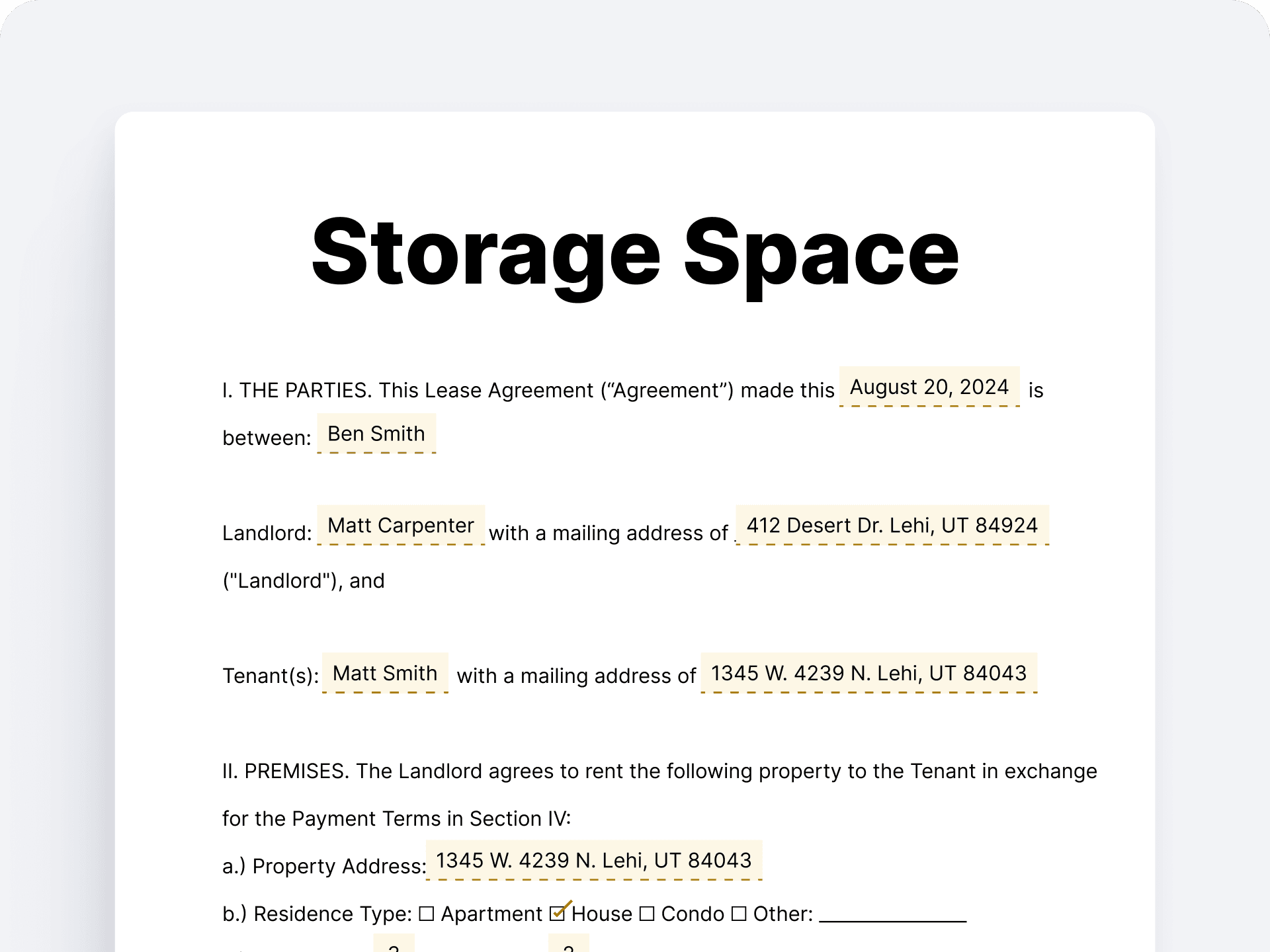
Download as PDF when complete


(No Ratings Yet)
What Is a Storage Space Rental Agreement?
Unlike a residential lease agreement, a storage space rental agreement does not grant the tenant the right to occupy the space as a dwelling. Instead, it is strictly limited to the storage of personal or commercial property. This distinction is important because different laws govern storage rentals compared to standard residential tenancies in most states.
A storage space rental agreement can apply to a wide range of situations, including self-storage units at a dedicated facility, basement or garage storage within a residential property, and commercial storage spaces within a larger building.
Why You Need a Storage Space Rental Agreement
Many landlords and property managers make the mistake of renting out storage spaces informally — with nothing more than a handshake or a casual email exchange. This approach can create significant legal and financial risks for both parties.
A properly drafted storage space rental agreement protects the landlord by clearly limiting liability for loss, theft, or damage to stored items. It also protects the tenant by documenting exactly what space they are paying for, the amount of rent owed, and the conditions under which their deposit will be returned.
Without a written storage space rental agreement, disputes over rent, access, abandoned property, or damage can quickly become complicated and expensive to resolve. Having everything in writing is always the safest approach.
What to Include in a Storage Space Rental Agreement
A comprehensive storage space rental agreement should cover the following key elements:
1. Party Information Include the full legal names and contact details of both the landlord and the tenant. This identifies who is responsible for the obligations outlined in the agreement.
2. Storage Unit Description Describe the storage space in detail — including its unit number, size, dimensions, and location on the property. This ensures both parties are clear about exactly what is being rented.
3. Lease Term Specify whether the agreement is month-to-month, fixed-term, or week-to-week. Storage space rental agreements are most commonly structured as month-to-month arrangements, giving both parties the flexibility to terminate with 30 days’ written notice.
4. Rent and Payment Terms State the exact rental amount, the due date each month, accepted payment methods, and the late fee that applies if rent is not paid on time. Most storage rental agreements include a late fee that kicks in after a specified grace period, typically five to ten days.
5. Security Deposit Outline the deposit amount required upfront, the conditions under which deductions may be made, and the timeframe for returning the deposit after the tenant vacates. Most landlords require a deposit equal to one month’s rent.
6. Permitted Use and Prohibited Items Clearly define what the storage space may and may not be used for. The tenant should be prohibited from using the unit as a living space, business operation, or for any illegal activity. Prohibited items commonly include hazardous materials, flammable substances, perishable food, firearms, live animals, and stolen goods.
7. Access Rights Define when and how the tenant may access the storage space. Also specify the landlord’s right to enter the unit for inspections, repairs, or emergencies, and whether advance notice is required.
8. Liability and Insurance One of the most critical sections of any storage space rental agreement is the liability clause. In most cases, the landlord is not responsible for any loss, theft, or damage to the tenant’s stored belongings. Tenants should be encouraged — or required — to carry their own renters or storage insurance to protect their property.
9. Lien Rights Most states give storage facility owners an automatic lien on the tenant’s property if rent goes unpaid. Your storage space rental agreement should explain the lien process, including how long the landlord must wait before selling the tenant’s property and how the tenant will be notified.
10. Termination Conditions Outline the conditions under which either party can terminate the agreement, how much notice is required, and what happens to any property left behind after the tenant moves out.
Storage Space Rental Agreement vs. Residential Lease: Key Differences
It is important to understand that a storage space rental agreement operates under different legal rules than a standard residential lease. Landlord-tenant protections that apply to residential tenancies — such as habitability requirements and eviction procedures — generally do not apply to storage rentals.
Additionally, storage lien laws, which allow landlords to sell a tenant’s property after a period of non-payment, are specific to storage rentals and do not apply to residential or commercial leases. Every state has its own self-storage lien laws, so it is important to ensure your storage space rental agreement complies with the laws in your state.
Create a Free Storage Space Rental Agreement with RocketRent
Protecting your storage rental business does not have to be complicated or expensive. RocketRent offers a free storage space rental agreement template that you can customize to fit your property, your state’s requirements, and your specific rental terms — all in just a few minutes.
With RocketRent, you can also collect rent online, manage documents digitally, track expenses, and give tenants a dedicated portal to manage their rental experience. Everything you need to run your storage rental professionally is available at no cost.
FAQs
Yes, a storage space rental agreement is a legally binding contract once both the landlord and tenant have signed it. It outlines the rights and responsibilities of each party and can be enforced in court if either party fails to honor its terms. Even for short-term or informal storage arrangements, having a signed written agreement is always strongly recommended.
Most storage space rental agreements prohibit tenants from storing hazardous or flammable materials, perishable food, live animals, stolen property, firearms and ammunition, and illegal substances. Tenants are also prohibited from using the storage unit as a living space or place of business. These restrictions protect the landlord’s property and ensure the safety of all other tenants at the facility.
In most cases, the landlord is not liable for any loss, theft, or damage to a tenant’s stored property. The storage space rental agreement typically includes a liability disclaimer making the tenant solely responsible for insuring their belongings. Tenants are encouraged to purchase renters insurance or a dedicated storage insurance policy to protect their items while stored.
In most states, yes. Storage lien laws give landlords the legal right to place a lien on a tenant’s property when rent goes unpaid and, after a specified notice and waiting period, to sell the property to recover the unpaid balance. The specific rules and timelines vary by state, so landlords should ensure their storage space rental agreement references the applicable state lien law.
For month-to-month storage rental agreements, either party typically needs to provide at least 30 days’ written notice to terminate the agreement. For fixed-term agreements, the tenancy ends on the agreed expiration date unless both parties agree to renew. Always check your state’s storage rental laws to confirm the required notice period in your area.