
Utility Billing Invoice
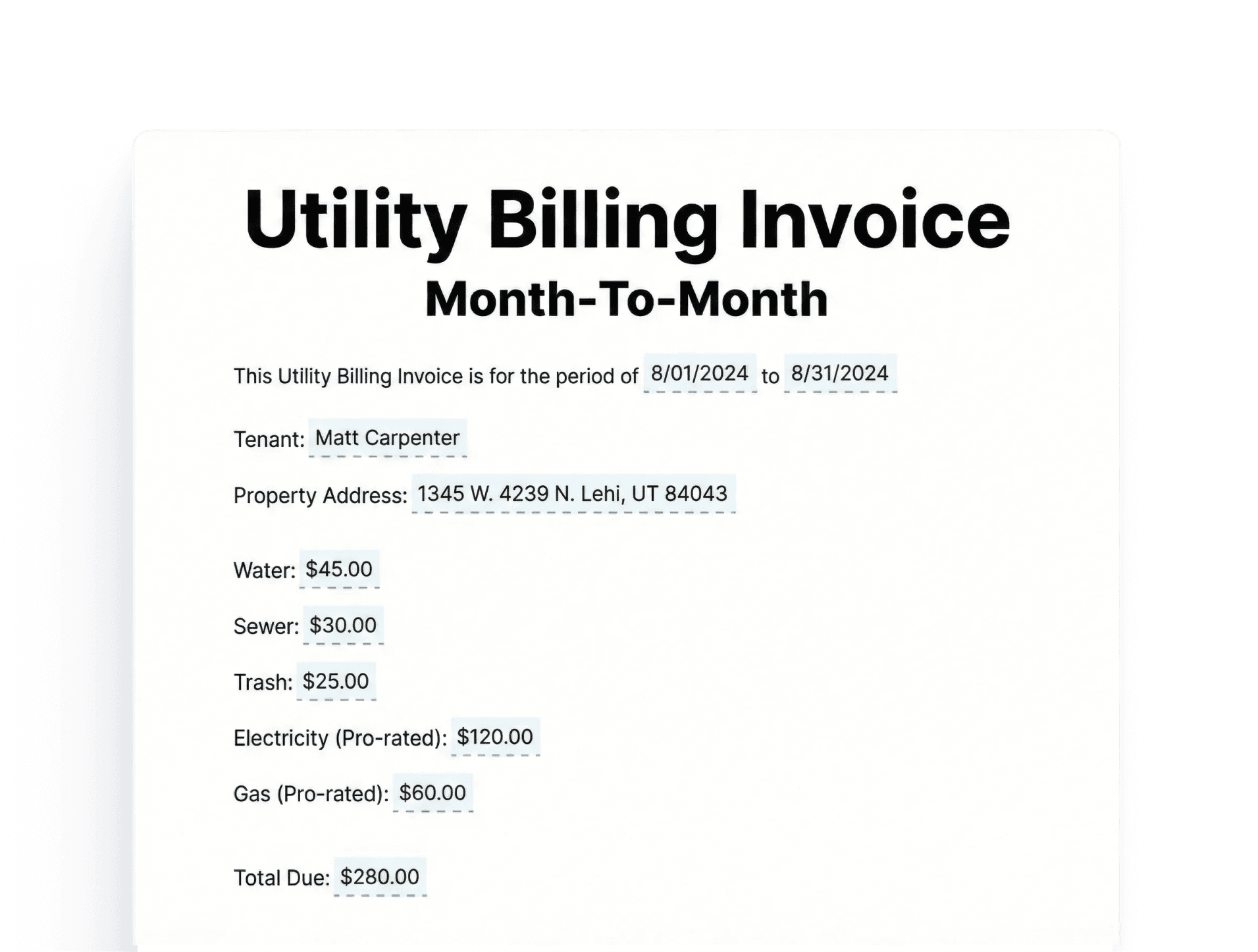
A utility billing invoice is a formal billing document property managers send to tenants specifying their share of utility costs for defined billing periods. This invoice itemizes different utility types like water, sewer, electricity, gas, or trash removal showing calculation methods, consumption amounts if applicable, and charges due.
Download as PDF when complete


(No Ratings Yet)
What Is a Utility Billing Invoice?
Property managers issue these invoices monthly or quarterly depending on utility billing cycles and lease agreement terms creating systematic cost recovery processes. The invoice serves multiple important functions in property management operations. First, it creates transparency about utility costs and allocation methods preventing tenant disputes about charge fairness. Second, it documents utility expense recovery supporting accurate accounting and financial reporting. Third, it provides clear payment instructions streamlining collection processes. Finally, it establishes records supporting eviction proceedings if tenants fail paying legitimate utility charges specified in lease agreements.
Utility Billing Methods
Direct Metering
Properties with individual utility meters for each unit enable direct billing where tenants receive invoices directly from utility providers. Landlords avoid utility billing entirely as tenants establish accounts and pay providers directly. This method provides simplest administration and ensures tenants pay only actual consumption amounts.
However, direct metering proves impractical for many multi-unit properties lacking individual meters for all utilities. Additionally, some landlords prefer maintaining control over utility accounts preventing service disconnections from tenant non-payment affecting other residents. Furthermore, direct billing eliminates opportunities for landlords negotiating bulk rate discounts benefiting entire properties.
Submetering Systems
Submetering involves installing individual meters measuring each unit’s utility consumption allowing landlords billing tenants based on actual usage. Property managers pay master utility bills then recover costs from tenants proportionally according to submetered readings. This method ensures fair allocation rewarding conservation while charging heavy users appropriately.
Submetering requires initial installation investments and ongoing meter reading labor or automated reading systems. Additionally, some jurisdictions regulate submetering practices requiring specific meter types, reading frequencies, or rate limitations. Research local regulations before implementing submetering ensuring compliance with utility billing laws.
Ratio Utility Billing System (RUBS)
RUBS allocates utility costs among tenants using formulas based on unit characteristics rather than actual consumption measurement. Common allocation factors include square footage, number of occupants, number of bedrooms, or combinations thereof. For example, water costs might be divided by occupancy while electricity allocates by square footage.
RUBS provides cost recovery without expensive submetering installations. However, allocation formulas sometimes create perceived unfairness when conservative users subsidize wasteful neighbors. Additionally, many states regulate RUBS implementation requiring specific disclosure timing, formula transparency, and rate limitations. Verify that your lease agreements properly authorize RUBS billing before implementation.
Flat-Rate Utility Fees
Some landlords charge fixed monthly utility fees rather than allocating actual costs. These flat fees simplify administration and create predictable tenant expenses. However, flat fees must reasonably approximate actual costs avoiding profit-seeking through excessive charges. Additionally, flat fees eliminate conservation incentives since usage doesn’t affect costs.
Ensure lease agreements clearly authorize flat utility fees and specify amounts. Some jurisdictions prohibit profit from utility charges requiring fees reflecting actual proportional costs. Furthermore, document that flat fees represent good faith estimates of utility expenses rather than arbitrary amounts.
Essential Invoice Components
Billing Period and Property Information
Begin utility billing invoices with clear billing period identification specifying exact start and end dates covered by charges. Include complete property addresses, unit numbers, and tenant names. Additionally, add landlord or property management contact information and invoice numbers creating tracking references.
Note the invoice issue date and payment due date prominently. Specify acceptable payment methods and where to submit payments. Furthermore, reference lease agreement sections authorizing utility charges establishing legal basis for billing.
Itemized Utility Charges
List each utility type separately showing water, sewer, electricity, gas, trash, and any other services billed. For each utility, display total property costs, allocation method descriptions, individual unit allocations, and resulting charges. This itemization demonstrates calculation transparency helping tenants understanding how charges were determined.
Include utility account numbers or service addresses verifying charges stem from legitimate utility bills rather than arbitrary amounts. Additionally, specify measurement units like gallons, kilowatt-hours, or therms when billing based on consumption. These details support charge legitimacy and reduce dispute likelihood.
Allocation Method Explanation
Clearly explain how utility costs were allocated among units. For submetered billing, show individual meter readings and consumption calculations. For RUBS, display allocation formulas with specific factors applied like “Your unit: 850 sq ft ÷ Total property: 12,000 sq ft = 7.08% allocation.”
Provide simple examples helping tenants verifying calculations independently. Transparency about allocation methods builds trust and demonstrates fairness. Furthermore, clear explanations reduce questions and disputes about charge accuracy requiring time-consuming resolution efforts.
Supporting Documentation
Attach or reference master utility bills supporting total costs allocated among tenants. Some jurisdictions require providing utility bill copies proving actual expenses rather than inflated charges. Additionally, include meter reading logs for submetered properties documenting consumption amounts.
For RUBS billing, attach allocation factor documentation like square footage measurements or occupancy records. This supporting evidence proves charges reflect established formulas rather than arbitrary adjustments. Furthermore, comprehensive documentation protects you during disputes requiring charge justification.
Payment Instructions and Terms
Provide detailed payment instructions including acceptable methods, payment submission addresses, online portal information, and office hours for in-person payments. Specify whether utility charges are due with rent or separately. Additionally, note any late fees or penalties applying to delinquent utility payments.
Include your contact information encouraging tenants with questions contacting you before payments become overdue. Responsive communication often resolves confusion preventing payment delays. Furthermore, accessible customer service demonstrates professionalism building positive tenant relationships.
Legal Compliance Considerations
Lease Agreement Authorization
Ensure lease agreements explicitly authorize utility charge recovery and specify billing methods used. Vague lease language might not support utility billing particularly for RUBS allocations. Additionally, leases should describe allocation formulas, billing frequencies, and payment terms establishing clear expectations.
Never begin utility billing without proper lease authorization regardless of actual cost recovery needs. Unauthorized charges create legal vulnerabilities and might constitute lease violations. Furthermore, retroactive billing for periods before lease disclosure typically proves unenforceable.
State and Local Regulations
Many jurisdictions regulate utility billing practices imposing disclosure requirements, rate limitations, or method restrictions. Some states prohibit landlords profiting from utility resale requiring pass-through of actual costs only. Additionally, certain locations mandate specific meter types, reading frequencies, or billing cycle limitations.
Research your state and local utility billing regulations before implementation. Consult attorneys specializing in landlord-tenant law ensuring complete compliance. Furthermore, monitor regulatory changes as utility billing laws evolve requiring periodic policy updates.
Fair Housing Considerations
Apply identical utility billing methods and rates to all comparable units avoiding discrimination. Charging different rates or using varying allocation methods for similar units creates fair housing risks particularly if disparities correlate with protected class characteristics. Additionally, document objective reasons for any unit-specific billing variations.
Ensure allocation formulas don’t inadvertently discriminate against families with children or other protected groups. For example, per-occupant allocations might disproportionately burden families versus singles. Furthermore, maintain consistent billing practices across all properties preventing selective enforcement allegations.
Technology Solutions
Automated Billing Systems
Property management software includes utility billing modules automating invoice generation, allocation calculations, and payment tracking. These systems import meter readings or master utility bills, apply allocation formulas automatically, and generate professional invoices requiring minimal manual effort. Additionally, automated systems reduce calculation errors ensuring accuracy.
Integration with tenant portals enables online invoice delivery and payment processing. Tenants access utility invoices anytime viewing consumption history and making electronic payments. Furthermore, automated reminders notify tenants about upcoming due dates improving payment timeliness.
Submetering Technology
Modern submetering systems offer automated reading capabilities transmitting consumption data wirelessly to central management systems. These technologies eliminate manual reading labor while providing real-time consumption monitoring. Additionally, automated systems generate detailed reports supporting accurate billing and identifying unusual consumption patterns.
Smart metering enables tenant access to personal consumption dashboards showing real-time usage. This transparency encourages conservation and allows tenants tracking expenses before receiving invoices. Furthermore, automated metering reduces billing cycle delays providing more current information.
Conclusion
A utility billing invoice provides systematic cost recovery ensuring tenants pay fair shares of utility expenses while maintaining transparent allocation documentation. By selecting appropriate billing methods, creating detailed itemized invoices, complying with regulatory requirements, and leveraging technology for efficiency, you establish professional utility management practices supporting property profitability. Always ensure lease authorization exists, explain allocation methods clearly, attach supporting documentation, and respond promptly to tenant questions. Professional utility billing demonstrates financial transparency while protecting cash flow through systematic expense recovery supporting long-term rental property success.
FAQs
Most states prohibit landlords profiting from utility resale requiring pass-through of actual costs only. Some jurisdictions allow small administrative fees covering billing system expenses, but charges must reasonably approximate actual proportional utility expenses without markup for profit.
No, individual meters aren’t required as you can use Ratio Utility Billing Systems (RUBS) allocating costs by square footage, occupancy, or other factors. However, sub-metering provides most accurate billing reflecting actual consumption, and some jurisdictions regulate or restrict RUBS implementations requiring research before adoption.
Utility invoice frequency typically matches utility provider billing cycles, usually monthly or quarterly. Lease agreements should specify billing frequency, and consistent scheduling helps tenants budgeting for utility expenses while maintaining predictable cash flow.
Provide detailed calculation breakdowns with supporting documentation like master utility bills and allocation formulas. Walk tenants through calculations step-by-step explaining methodology. Additionally, ensure your allocation methods comply with lease terms and applicable regulations supporting charge legitimacy.
Changing billing methods mid-lease typically requires tenant consent or lease amendment unless original agreements specifically authorized landlord discretion over billing method selection. Significant changes like implementing new charges or allocation methods generally need agreement modification protecting both parties’ interests.