
Change Order Form
A change order form is a written document that formally records any modification to an original construction or repair contract. It serves as a legally recognized amendment to the agreed-upon scope of work, adjusting the project’s cost, timeline, or both whenever something changes from what was originally planned.
Download as PDF when complete


(No Ratings Yet)
What Is a Change Order Form?
For landlords and property managers, a change order form is used whenever a contractor, vendor, or maintenance professional needs to perform work that goes beyond — or differs from — what was outlined in the original agreement. Whether you are renovating a rental unit between tenants, upgrading shared amenities in an apartment complex, or addressing an unexpected structural issue discovered mid-project, a change order form creates a clear paper trail that protects your financial interests and prevents misunderstandings.
It is important to understand that verbal agreements about changes are not enough. A change order form that is signed by both the landlord and the contractor is the only way to ensure that both parties are legally bound to the updated terms.
Why Landlords and Property Managers Need a Change Order Form
Managing rental properties means managing contractors, budgets, and timelines simultaneously. Without a formal change order process, even a minor scope adjustment can lead to unexpected invoices, project delays, and strained relationships with vendors.
Here is why using a change order form consistently is non-negotiable for any landlord or property manager:
Budget Control: Every unplanned addition to a project has a cost. A change order form documents the exact dollar amount of each adjustment, so you always know what you are authorizing and what to expect on the final invoice. This prevents contractors from adding surprise charges after the work is completed.
Legal Protection: If a dispute arises over payment, scope of work, or project quality, a signed change order form is your primary evidence. It documents exactly what was agreed upon at every stage of the project and gives you a clear basis for resolving disagreements without resorting to litigation.
Accountability and Transparency: A change order form creates a shared record that both you and the contractor can refer to throughout the project. This promotes transparency, reduces confusion, and keeps everyone aligned on expectations — especially when managing multiple vendors across a large rental portfolio.
Expense Tracking for Tax Purposes: As a landlord, keeping accurate records of all property-related expenses is essential for maximizing your tax deductions. A well-documented change order form supports your records of capital improvements and renovation costs, which can be deducted or depreciated on your tax return.
What to Include in a Change Order Form
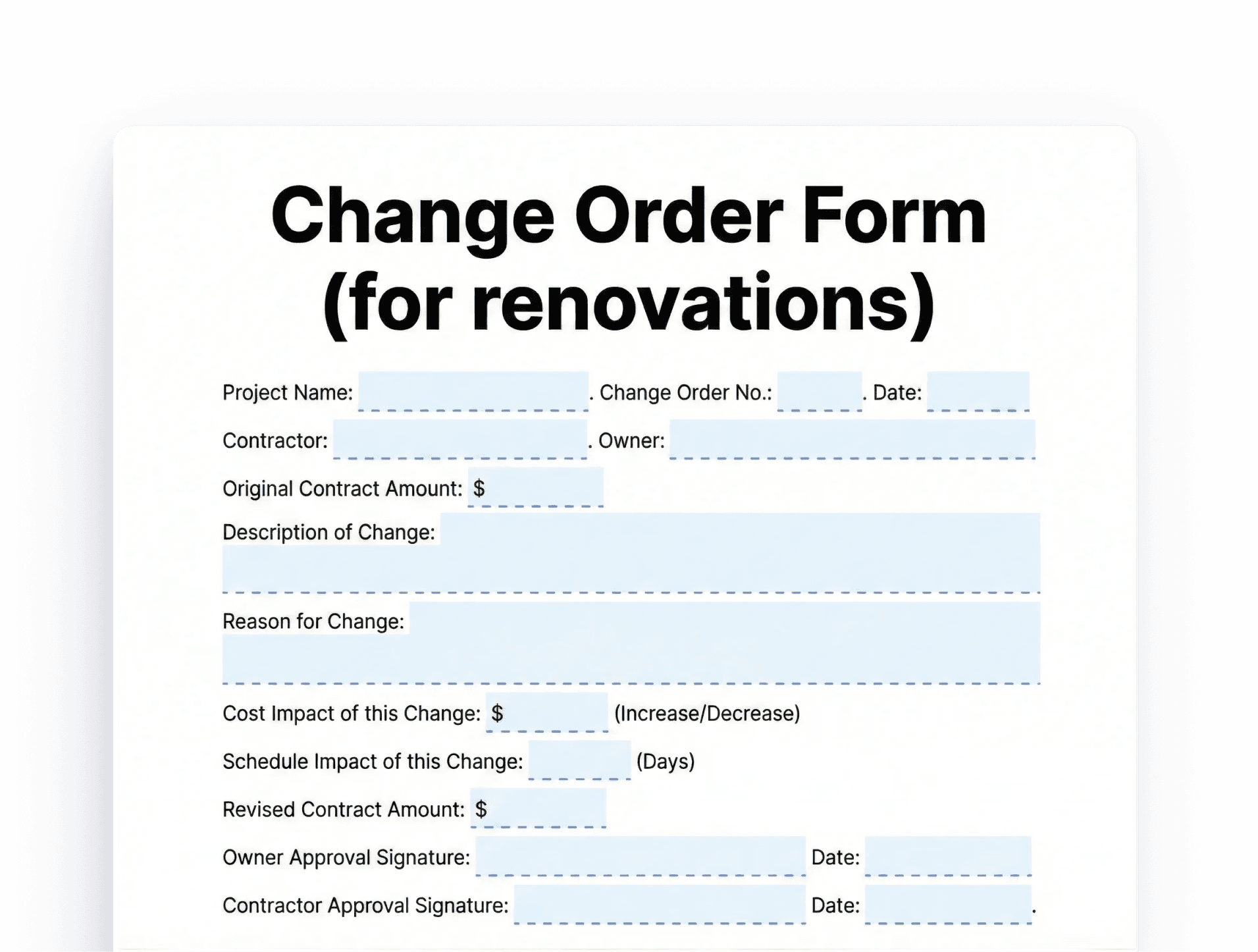
A thorough change order form should cover every detail of the modification being made. Here are the key elements your form should include:
1. Project and Property Information Include the address of the rental property where the work is being performed, the name of the original contract, and the date the change order is being issued.
2. Change Order Number Assign a unique number to each change order for easy tracking and reference. This is especially helpful when managing large renovation projects with multiple adjustments.
3. Description of the Change Provide a clear, detailed description of the modification being requested. Specify what is being added, removed, or altered compared to the original contract. Vague descriptions lead to disputes — the more specific, the better.
4. Reason for the Change Document why the change is necessary. Common reasons include unforeseen site conditions such as hidden water damage or structural issues, design modifications requested by the landlord, material substitutions due to availability or cost, and errors or omissions discovered in the original contract.
5. Cost Adjustment Clearly state the additional cost — or cost reduction — resulting from the change. Break down the adjustment into labor costs, material costs, and any other applicable fees. The change order form should also update the revised total contract value.
6. Schedule Impact If the change affects the project timeline, document the number of additional days required to complete the work. This helps you manage tenant move-in schedules and minimizes disruption to occupied units.
7. Signatures of Both Parties A change order form is only legally binding once both the landlord (or property manager) and the contractor have signed and dated it. Never authorize a contractor to begin modified work without a fully signed change order form in place.
Common Situations That Require a Change Order Form
As a landlord or property manager, you may need to issue a change order form in a wide range of scenarios, including:
- Discovering water damage, mold, or structural issues behind walls during a renovation
- Upgrading materials or finishes at the landlord’s request after work has begun
- Adding new work to the project scope, such as installing additional fixtures or appliances
- Adjusting the project timeline due to permit delays or supply chain issues
- Addressing code compliance issues identified during an inspection
- Substituting specified materials that are no longer available or within budget
In each of these situations, issuing a formal change order form before any additional work begins protects both you and the contractor from misunderstandings and financial risk.
Change Order Form vs. Original Contract: Understanding the Difference
A change order form does not replace the original contract — it amends it. The original contract remains the governing document for all work that was initially agreed upon, while each change order form becomes a legal addendum that modifies specific terms. All signed change order forms should be kept on file alongside the original contract for the full duration of the project and beyond.
For landlords managing multiple properties and contractors, maintaining an organized system for tracking change order forms is critical. RocketRent’s document management feature allows you to store, organize, and access all your property-related documents in one secure location — so nothing falls through the cracks.
Manage Your Rental Property Projects with RocketRent
A change order form is just one of the many documents landlords and property managers need to run a professional and legally sound rental operation. RocketRent offers a free change order form template that you can customize for any renovation or repair project on your rental property.
Beyond document management, RocketRent’s free property management platform helps you track maintenance requests, manage expenses, collect rent online, and keep all your property records organized — so you can focus on growing your portfolio instead of chasing paperwork.
FAQs
A change order form serves as a formal, written amendment to an existing construction or repair contract. For landlords and property managers, it documents any modification to the original scope of work — including changes to cost, timeline, or materials — and must be signed by both the property owner and the contractor before the modified work begins. Its primary purpose is to protect both parties from disputes, ensure budget transparency, and maintain a clear paper trail for all project adjustments.
A landlord should issue a change order form any time the scope, cost, or timeline of an existing repair or renovation contract needs to be modified. This includes situations such as discovering hidden damage during a renovation, requesting material upgrades, adding new work to the project, or dealing with unexpected delays. As a best practice, never allow a contractor to begin any work that falls outside the original contract without a signed change order form in place first.
In most cases, verbal change orders are very difficult to enforce and are strongly discouraged in property management. Without written documentation, disputes over what was agreed upon — including cost and scope — become a matter of one party’s word against another’s. A signed change order form is the only reliable way to ensure that both parties are legally bound to the updated terms of a project. Most construction contracts also include a clause stating that verbal change orders will not be compensated.
A change order form does not replace or void the original contract. Instead, it acts as a legal addendum that amends specific terms — such as the total project cost, scope of work, or completion date. All other terms of the original contract remain in full effect. For this reason, it is important to keep all signed change order forms filed alongside the original contract so you have a complete record of every agreed-upon modification throughout the project.
Yes. Maintaining accurate and detailed change order forms supports your financial record-keeping for rental property tax purposes. The IRS allows landlords to deduct routine repair expenses in the year they occur and to depreciate capital improvements over the useful life of the property. Having signed change order forms that document the exact cost and nature of each project modification helps you accurately categorize expenses, substantiate deductions, and stay prepared in the event of an audit.